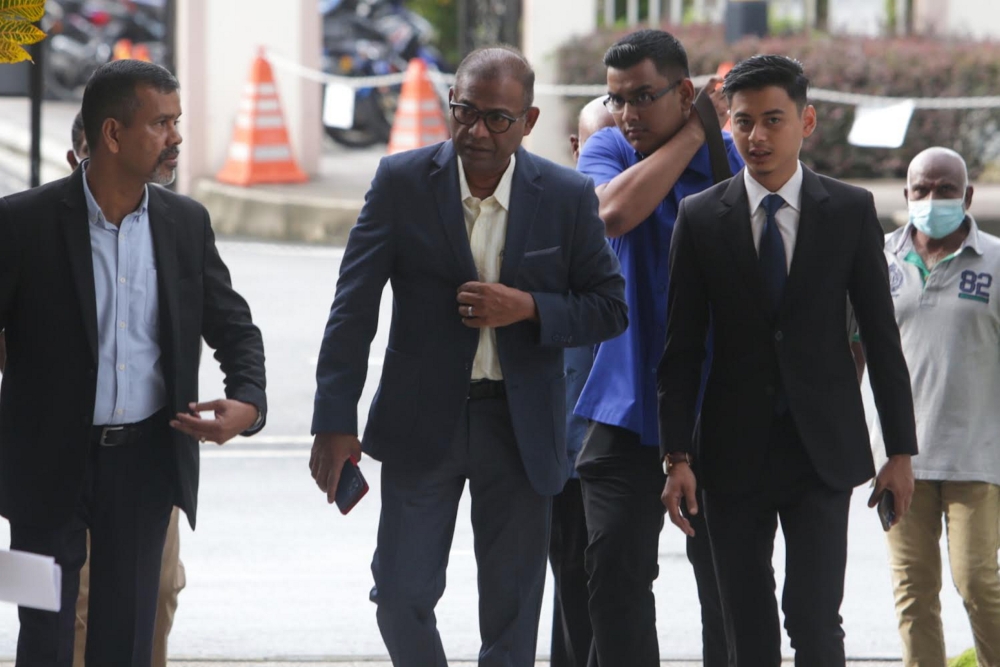
The family of former Baling Member of Parliament Datuk Seri Abdul Azeez Abdul Rahim moved swiftly to quash circulating rumours on social media platforms, with his son categorically stating that no arrest has taken place involving the Malaysian Anti-Corruption Commission (MACC) in connection with the Tabung Haji Royal Commission of Inquiry (RCI). The denial came amid a flurry of unverified claims spreading across Facebook, WhatsApp, and other digital channels, reflecting the persistent challenge authorities face in managing misinformation during politically sensitive investigations.
The timing of these rumours raises questions about the current trajectory of the Tabung Haji inquiry, which has become one of Malaysia's most scrutinised financial investigations in recent years. The pilgrimage fund's management and governance failures have triggered widespread concern among the over two million Malaysians who contribute to the scheme annually, expecting their savings to be safeguarded for their hajj pilgrimage. The RCI, tasked with examining the circumstances leading to financial irregularities and mismanagement at the institution, has examined numerous individuals connected to the fund's operations across different administrations and periods.
Abdul Azeez, who represented the Baling constituency in Kedah during his parliamentary tenure, previously held positions of influence in various government-linked agencies and business entities. His involvement in scrutiny surrounding Tabung Haji operations reflects the broader pattern of investigations touching multiple figures from different political backgrounds and government periods. The public denial by his family member underscores the emotional and reputational dimensions of such investigations, particularly when unverified allegations gain traction through social media echo chambers before official confirmations can be made.
The proliferation of such rumours highlights a significant governance concern for Malaysia's institutions tasked with investigating financial crimes and misconduct. When unsubstantiated claims circulate faster than official communications can address them, it creates confusion among the public and potentially undermines public confidence in both the investigative process and the institutions involved. The MACC's communication strategy regarding active investigations must balance the need for transparency with the imperative to maintain investigative integrity and protect the rights of individuals under examination.
Tabung Haji itself has faced mounting scrutiny following revelations of substantial financial losses, failed investments, and governance lapses that accumulated over many years. The RCI's mandate extends beyond identifying individual wrongdoing to understanding systemic failures, institutional weaknesses, and policy gaps that allowed such problems to develop unchecked. For Malaysian pilgrims and their families, the investigation represents an opportunity for accountability and institutional reform, though the slow pace of official findings has tested public patience.
The broader political context cannot be ignored when examining such investigations. Malaysia's competitive political landscape means that allegations—whether substantiated or rumoured—can become entangled with partisan interests and electoral calculations. This reality places investigators and public institutions under pressure to maintain credibility through transparent processes, clear communication, and adherence to due process standards. Public denials, while necessary, also highlight the inadequacy of relying solely on social media rebuttals when establishing factual truth requires official institutional responses.
For government agencies and law enforcement bodies, the incident underscores the importance of proactive public communication strategies. When investigations of public interest progress through confidential processes, information vacuums inevitably fill with speculation and unverified claims. The MACC and other relevant authorities might benefit from establishing regular, neutral public briefings that provide factual updates without compromising investigative sensitivity or prejudging outcomes. Such approaches have proven effective in other jurisdictions facing similar challenges with financial crime investigations.
The Tabung Haji RCI investigation continues to examine multiple aspects of the fund's operations, including investment decisions, financial reporting, procurement practices, and institutional governance structures. Multiple individuals across different time periods and political administrations remain subjects of examination or interest. The investigation's eventual findings are expected to shape future governance frameworks for pilgrimage fund management and may influence broader reforms in how Malaysia oversees large, public-serving financial institutions.
As the investigation progresses, Malaysian society faces the ongoing challenge of distinguishing rumour from reality in an environment saturated with digital information flows. For individuals implicated in investigations, both directly and indirectly, the ability to credibly communicate with the public becomes increasingly important. Simultaneously, authorities must demonstrate that their investigative processes operate independently of political pressure and remain focused on establishing factual truth rather than pursuing particular individuals or outcomes.
The denial issued by Abdul Azeez's family serves as a reminder that many claims circulating online during high-profile investigations lack foundation or context. However, it also highlights that institutional credibility ultimately rests with official agencies conducting investigations and communicating their progress through established channels. For ordinary Malaysians seeking answers about Tabung Haji's troubled history, patience with formal processes remains essential, even as concerns about transparency and accountability continue to mount.

