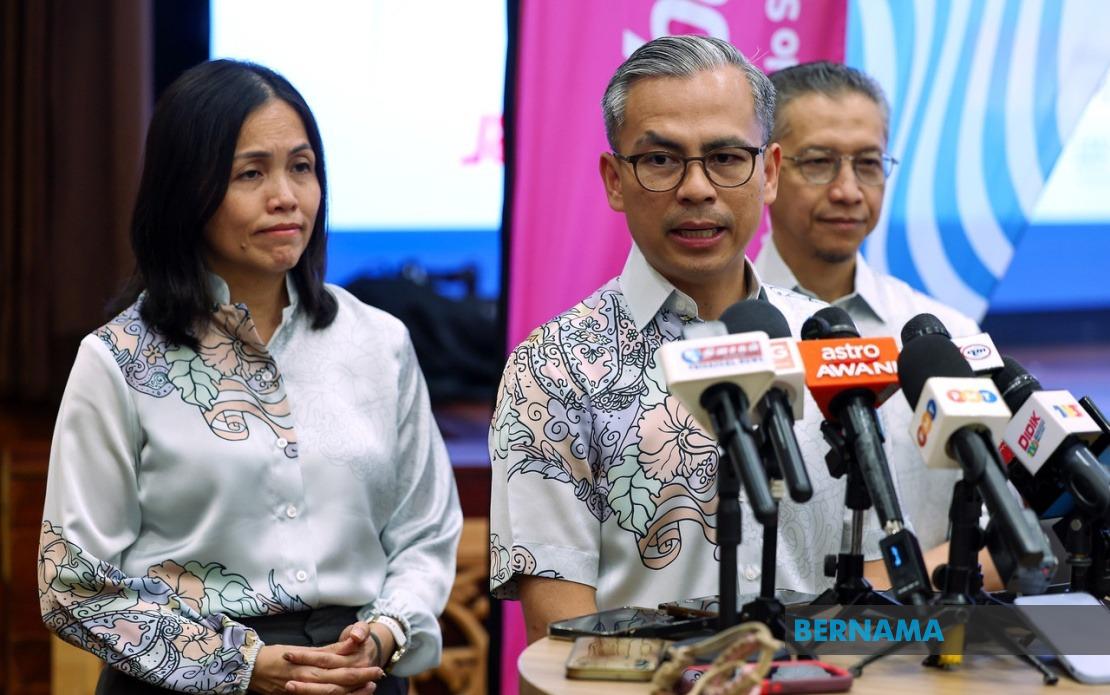
The Malaysian government has formally committed to referring the Royal Commission of Inquiry report on Lembaga Tabung Haji to law enforcement and regulatory agencies for thorough investigation into findings spanning 2014 to 2020. Communications Minister Datuk Seri Fahmi Fadzil made the announcement in Putrajaya, confirming that multiple authorities will now examine the report's conclusions and pursue potential cases where warranted. This marks the transition from fact-finding to enforcement phase for an investigation that has consumed significant public attention since its public release in late July.
The investigation will involve a coordinated multi-agency approach, reflecting the complexity and scope of issues identified in the RCI report. The Royal Malaysia Police, Malaysian Anti-Corruption Commission, Bank Negara Malaysia, and Inland Revenue Board will each examine aspects of the inquiry's findings relevant to their respective mandates. Additionally, agencies overseeing anti-money laundering and counter-terrorism financing provisions will review the report for any activities falling under the Anti-Money Laundering, Anti-Terrorism Financing and Proceeds of Unlawful Activities Act. This broad institutional approach suggests the government views potential misconduct as requiring simultaneous examination across criminal, financial regulatory and tax compliance dimensions.
Fahmi emphasized that the referral encompasses not merely the RCI report itself, but also supplementary information provided during parliamentary proceedings. Finance Minister II Datuk Seri Amir Hamzah Azizan and Minister in the Prime Minister's Department (Religious Affairs) Dr Zulkifli Hasan presented additional evidence during yesterday's special Dewan Rakyat sitting dedicated to debating the RCI findings. By incorporating this parliamentary testimony into the investigative mandate, authorities gain access to material that may have emerged during public debate or subsequent ministerial statements, potentially expanding the evidentiary foundation for prosecutorial decisions.
The RCI's work examined Tabung Haji's operations across a critical seven-year period, identifying management deficiencies, operational vulnerabilities and governance weaknesses affecting the Islamic pilgrimage fund's stewardship. The commission formulated 25 recommendations intended to remedy identified shortcomings, with Tabung Haji management demonstrating substantial compliance by implementing 75 percent of suggested reforms as of late July. Despite this progress on structural improvements, the referral to law enforcement agencies suggests that investigative bodies consider certain findings may warrant criminal or administrative action beyond mere organizational remediation.
The parliamentary session reviewing the RCI report exposed significant political divisions regarding accountability measures and future oversight. Members from both governing coalition parties and opposition benches have called for establishment of a subsequent Royal Commission examining Tabung Haji's operations during 2021 to 2025, arguing that an extended inquiry would provide comprehensive institutional review. However, Fahmi noted that creating additional RCI bodies requires not merely Cabinet approval but also formal consent from the Yang di-Pertuan Agong, establishing an institutional hurdle that complicates any expansion of investigative scope without renewed royal endorsement.
Bersatu's parliamentary delegation opted to participate in the RCI debate proceedings, a choice Fahmi characterized as reflecting maturity and appropriate engagement with legislative business. This contrasted sharply with Perikatan Nasional coalition partners, whose parliamentary representatives did not attend the special sitting, a boycott Fahmi criticized as forfeiting opportunity for substantive parliamentary contribution. The Communications Minister's observation carried particular weight given that opposition figures including PAS members and the current Leader of the Opposition were Cabinet members during the RCI's 2021 establishment, creating apparent inconsistency between their earlier acquiescence to the inquiry and subsequent parliamentary absence.
The parliamentary debate itself proceeded amid procedural controversy when opposition lawmakers staged a coordinated walkout following Speaker Tan Sri Johari Abdul's decision to proceed with ministerial briefing and debate without Prime Minister Datuk Seri Anwar Ibrahim's physical presence. This boycott eliminated participation from portions of the opposition benches, with thirty-nine members engaging in the debate despite the procedural dispute. The incident highlighted persistent tensions regarding parliamentary process and protocol, with opposition forces claiming the absence of the Prime Minister diminished the session's legitimacy while government representatives proceeded with scheduled proceedings.
For Malaysian public sector governance and Tabung Haji's institutional credibility, the RCI investigation represents both accountability mechanism and reputational recovery effort. Tabung Haji manages religious endowment funds and facilitates pilgrimage services for Malaysian Muslims, making governance failures particularly significant given the fund's sacred trust dimensions and constituency's demographic importance. The institutional reforms already implemented address many identified weaknesses, yet law enforcement investigation signals that governance shortcomings alone may not exhaust the RCI's findings, suggesting potential individual culpability requiring separate prosecution and regulatory discipline.
The investigation's timing carries implications for Malaysia's broader anti-corruption narrative and institutional development. The government has emphasized its commitment to investigating governance failures across public institutions, and the Tabung Haji inquiry provides a substantive demonstration of that pledged commitment. However, investigation effectiveness depends upon investigative agencies' capacity and political insulation, factors that have historically constrained Malaysian prosecutorial outcomes in complex institutional cases. The multi-agency approach may enhance investigation robustness, though coordination challenges and resource constraints could delay final outcomes or complicate prosecutorial decisions across competing institutional jurisdictions.
Regional observers monitoring Malaysia's institutional accountability measures will scrutinize whether the RCI investigation produces meaningful enforcement outcomes or represents symbolic accountability theater. The inquiry's referral to multiple agencies demonstrates procedural engagement with investigative protocol, yet the political sensitivity surrounding Tabung Haji—with its religious dimensions and involvement of high-ranking government figures from various administrations—creates pressure that may influence investigation aggressiveness or ultimate prosecutorial decisions. These dynamics will inform broader assessments of Malaysia's capacity for rigorous institutional accountability regardless of political sensitivity or elite involvement.

