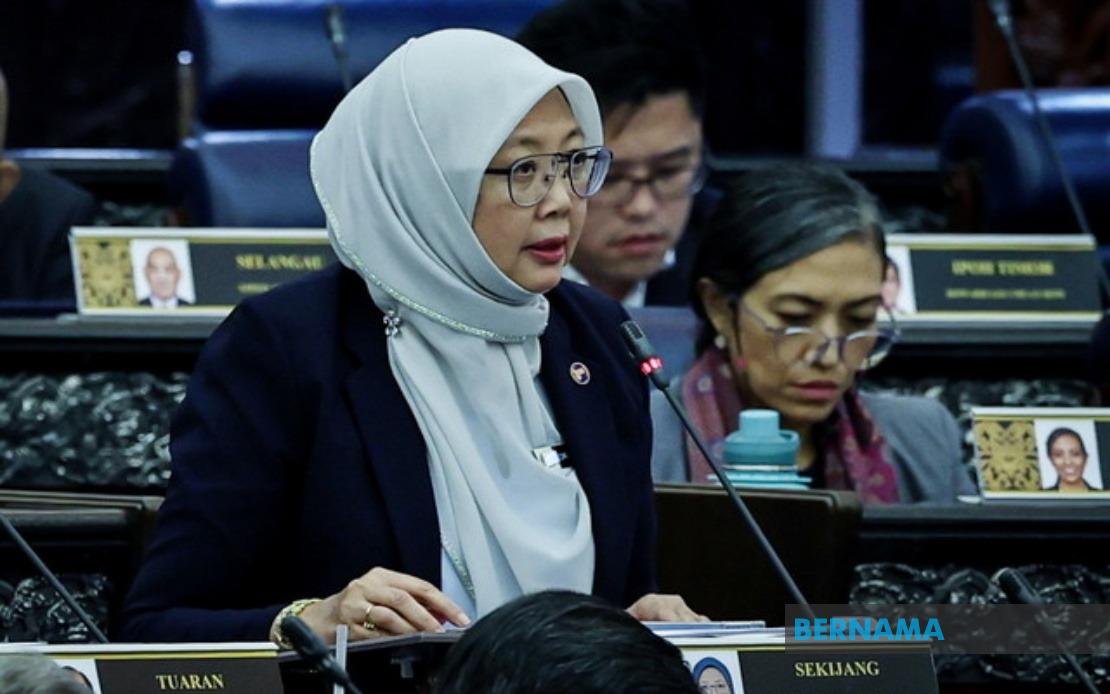
The Government Backbenchers Club chairman has called for the complete findings and implementation progress of the Royal Commission of Inquiry into Tabung Haji to be released publicly, arguing that transparency is essential to restore confidence among the millions of Muslim Malaysians who rely on the institution for their pilgrimage savings. Datuk Seri Dr Zaliha Mustafa made her plea during parliamentary debate following a ministerial update on the RCI report, emphasising that TH's role as a custodian of haj funds for the Muslim community demands the highest standards of accountability and public disclosure.
The Royal Commission, established in 2021 with members appointed in January 2022, presented its findings to the Yang di-Pertuan Agong in August 2022, but the comprehensive 211-page report remained confidential until recently. The document examined management and operational failures within TH during the 2014-2020 period and put forward 25 recommendations aimed at preventing future crises. As of late July this year, the institution had completed 75 per cent of these recommendations, though details on the remaining work and timelines for completion have not been widely disseminated.
Dr Zaliha, who represents Sekijang, contended that the August House—the Dewan Rakyat—and the Malaysian public deserve a fuller accounting of progress on each recommendation, including which have been fully implemented, which remain ongoing, and when those still pending will be completed. Her intervention signals growing pressure within government circles for greater openness regarding TH's recovery trajectory. She stressed that without concrete information on what has been accomplished, what is currently underway, and what lies ahead, ordinary Malaysians who have entrusted billions of ringgit to the institution cannot make informed assessments of whether their savings are being properly managed.
Central to Dr Zaliha's concerns is the Royal Commission's finding that political pressure connected to general election timing was instrumental in precipitating TH's financial distress. This revelation strikes at fundamental questions about institutional independence and the politicisation of what should be a strictly professional, religiously-grounded financial operation. She posed a pointed challenge to those who advocate Muslim unity, questioning whether such unity has value when the assets entrusted to community institutions are mishandled and those responsible are shielded from scrutiny. The comment reflects broader anxieties within Malaysian politics about the intersection of faith-based institutions and partisan interests.
The former chairman of Tabung Haji, Datuk Seri Abdul Azeez Abdul Rahim, has emerged as a focal point of scrutiny. Although he held the title of non-executive chairman, evidence suggests his involvement in major investment decisions extended well beyond typical non-executive responsibilities. Dr Zaliha highlighted that in addition to leading the main board, he simultaneously occupied positions within various TH subsidiaries and related corporate entities, raising questions about potential conflicts of interest and the concentration of influence. She specifically called for government clarification regarding the extent of his personal involvement in negotiating critical investments that ultimately contributed to TH's losses.
Additionally, Dr Zaliha raised questions about substantial cash reserves that reportedly accumulated in accounts connected to the former chairman, with sums allegedly reaching RM170 million at peak periods. The government has yet to provide a comprehensive public explanation of how such significant funds were justified, held, or deployed. This opacity fuels broader concerns among depositors about whether robust financial controls existed during the period under review. For Malaysian Muslims who view TH contributions as a sacred trust aligned with religious obligation, such questions strike at the heart of institutional credibility.
The three substantive areas that commanded Dr Zaliha's attention during the parliamentary session reflect the core vulnerabilities exposed by the Royal Commission. First, TH's deteriorating financial position and the mechanisms governing distribution of profits to depositors demand complete transparency, as returns directly affect ordinary Malaysians' capacity to fulfil the haj obligation. Second, the portfolio of investments that TH had accumulated—and the decision-making processes behind them—require thorough public examination to prevent recurrence of the errors that triggered the crisis. Third, and perhaps most fundamentally, governance accountability mechanisms must be visibly strengthened and consistently applied, with clear consequences for institutional leaders who deviate from fiduciary standards.
The crisis that necessitated the Royal Commission inquiry represents one of the most significant institutional failures affecting Malaysian Muslims in recent decades. Decades of accumulated losses, deteriorating asset quality, and governance lapses culminated in a situation where the institution that was meant to serve as a reliable custodian of pilgrimage savings faced potential insolvency. The government's decision to establish the RCI reflected the gravity of the situation, and the commission's work provided invaluable diagnostic insights into what went wrong across the institution's operations.
Malaysia's approach to institutional accountability in state-owned enterprises serving religious functions remains inconsistent. While the RCI process itself represents a serious investigative undertaking, the subsequent reluctance to share findings comprehensively with affected stakeholders contradicts the fundamental purpose of such inquiries. For a pilgrim savings institution whose legitimacy rests entirely on the confidence of contributors, sustained opacity becomes counterproductive. Public disclosure of specific recommendations, implementation timelines, and recovery strategies would demonstrate genuine commitment to institutional reform.
Dr Zaliha's intervention carries particular significance given her position within government backbencher circles. Backbenchers often serve as barometers of pressure building within parliamentary caucuses around governance concerns that transcend normal party-political division. Her willingness to press for transparency suggests that frustration with the TH situation extends beyond opposition benches and reaches into the government's own legislative contingent. This cross-cutting concern may ultimately create political incentive for accelerated disclosure and more aggressive implementation of remaining reforms.
Looking forward, the trajectory of TH's recovery will likely depend heavily on whether the government moves to satisfy calls for comprehensive public reporting. The institution faces a dual imperative: demonstrating tangible operational and governance improvements while simultaneously rebuilding the confidence of depositors who experienced genuine anxiety about the safety of their accumulated haj savings. These objectives are mutually reinforcing—meaningful reform requires public visibility, and public visibility demonstrates that reform is genuinely occurring. For Malaysian Muslims already juggling economic pressures with religious obligations, TH's restoration to full functionality and trustworthiness remains a matter of considerable personal consequence.

