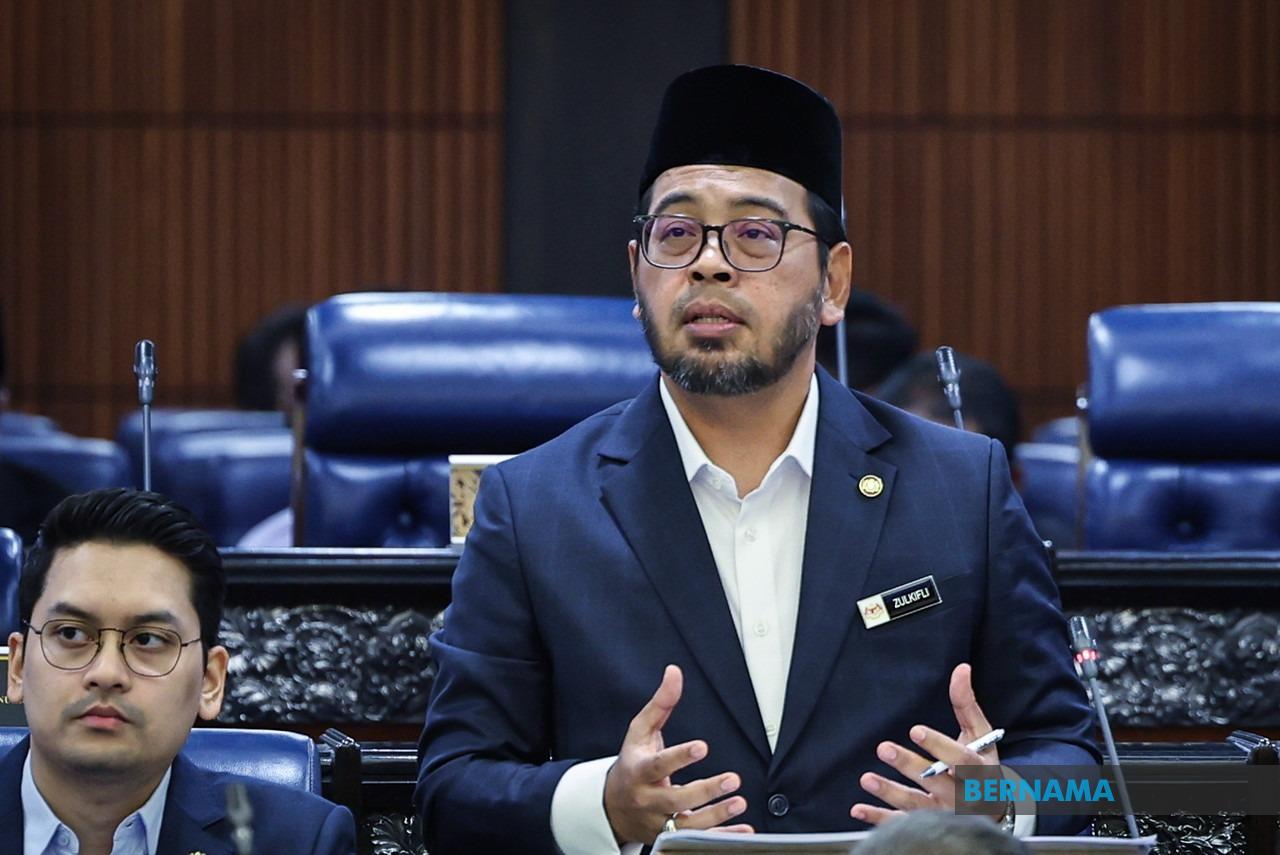
The financial turnaround of Tabung Haji represents one of Malaysia's most significant institutional recoveries in recent years. Speaking during a parliamentary briefing on the Royal Commission of Inquiry findings, Minister in the Prime Minister's Department (Religious Affairs) Dr Zulkifli Hasan outlined how the organisation has emerged from a precarious position to become a trusted custodian of Muslim pilgrimage and savings once again. The transformation, spanning from 2018 onwards, reflects a deliberate strategy to rebuild confidence in an institution that had faced considerable scrutiny over its management practices and financial health.
The recovery framework rested on nine interconnected pillars designed to address both immediate fiscal crises and long-term institutional weakness. These ranged from the fundamental task of restoring financial stability through asset and liability restructuring, to the more nuanced challenge of rebuilding public trust through superior governance standards and transparent accountability mechanisms. Equally important were objectives focused on investment quality, ensuring that the institution's remaining resources generated sustainable and predictable returns for depositors who had entrusted their savings for the sacred obligation of performing the haj.
Beyond mere financial metrics, the reform agenda addressed the practical reality facing Malaysia's Muslim community: ensuring that the haj pilgrimage remained accessible to ordinary families despite global economic pressures. The decision to maintain the haj package cost at RM33,300 across three consecutive seasons from 2024 to 2026 carries particular weight when contextualised against broader economic trends. Since 2001, when the government introduced financial assistance for haj pilgrimages, inflation has accumulated at approximately 250 per cent—a sobering reminder of purchasing power erosion that would typically force steep price increases on pilgrims.
Tabung Haji achieved this price stability through operational ingenuity rather than subsidy alone. The institution negotiated long-term contracts with airlines to moderate volatility in air transportation costs, a substantial component of any pilgrimage package. Simultaneously, management engaged directly with hotel proprietors in the Holy Land, bypassing intermediaries and securing more favourable terms for accommodation. This direct engagement model yielded access to newer, higher-quality facilities while reducing overall expenditure—a rare combination in the hospitality sector. These procurement strategies demonstrate how professional management and strategic relationship-building can offset inflationary pressures that might otherwise be passed wholesale to consumers.
The governance transformation within Tabung Haji carries implications extending beyond audit reports and compliance frameworks. Dr Zulkifli emphasised that the institution now operates under professional leadership insulated from undue political or bureaucratic interference. This structural independence proves critical for an organisation managing both financial investments and religious obligations, where conflicts of interest could easily arise if administrative decisions reflected short-term political considerations rather than long-term fiduciary responsibility. The shift towards merit-based leadership and autonomous decision-making represents a philosophical as well as organisational realignment.
International recognition has validated these internal improvements. Tabung Haji received the Labaytum Diamond Award—the highest accolade in the pilgrim services sector—for two consecutive years, extending an already remarkable streak of five consecutive Labaytum awards to the institution. These distinctions, conferred by bodies evaluating haj management globally, testify that the reforms have produced tangible improvements in service delivery and operational excellence. For Malaysian pilgrims, such recognition translates to confidence that their pilgrimage experience will meet international standards while respecting Islamic principles and local needs.
The financial restructuring itself required difficult decisions about asset composition and liability management. By reordering how Tabung Haji held its resources and structured its obligations, management created a more stable foundation for ongoing operations. This balance sheet recalibration addressed legacy vulnerabilities that had accumulated during years of inadequate oversight and misaligned incentives. The successful completion of this restructuring signals that the institution has moved beyond crisis management into sustainable operations mode.
For Malaysian policymakers and the broader Muslim population, the Tabung Haji recovery demonstrates that institutional failure, while serious, need not be permanent if accompanied by genuine structural reform. The nine-pillar approach avoided the temptation to address symptoms through cosmetic changes; instead, it tackled root causes affecting governance, professional capacity, investment philosophy, and stakeholder communication. The sustained commitment across multiple administrations to implementing these reforms—evident from their continuation and refinement over six years—suggests institutional learning has taken root.
Looking forward, the challenge for Tabung Haji involves embedding these reforms so deeply into organisational culture that they persist regardless of leadership transitions. The price stability commitment through 2026 provides a medium-term anchor, but longer-term sustainability depends on whether the professional management systems and governance disciplines can adapt to future economic conditions without reverting to the practices that precipitated the original crisis. The institution must also ensure that continued investment in service quality and haj management innovation keeps pace with rising expectations among Malaysian pilgrims competing with similarly equipped rivals from other nations.
The Tabung Haji recovery programme holds lessons for other Malaysian institutions struggling with governance challenges or financial instability. The multi-year commitment, the insistence on professional autonomy, the focus on stakeholder benefit rather than institutional empire-building, and the willingness to restructure fundamentally rather than tinker incrementally all offer a template for genuine institutional renewal. As Southeast Asia grapples with questions about how to modernise institutions managing public resources or religious obligations, the Tabung Haji experience suggests that comprehensive, principle-driven reform can succeed even in the most challenging circumstances.

