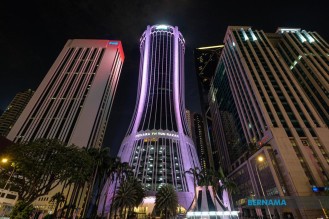
The pilgrims' fund Lembaga Tabung Haji's acquisition of a 30 per cent stake in Putrajaya Perdana Bhd occurred entirely during a period when the construction company was allegedly under the control of businessman Low Taek Jho, commonly known as Jho Low, according to sworn court testimony cited by Finance Minister II Datuk Seri Amir Hamzah Azizan. Speaking in Parliament during deliberations on a Royal Commission of Inquiry report examining Tabung Haji's management and operations, Amir Hamzah detailed how Jho Low maintained control through his investment vehicle Utama Banking Group Bhd until the company's sale was finalised in April 2015, well after all approvals for Tabung Haji's investment had been obtained.
The transaction timeline raises questions about governance and due diligence at Malaysia's largest pilgrimage fund. Every stage of the approval process—from the Investment Panel's endorsement on July 24, 2014, through the board's sign-off on August 25, ministerial approval on August 27, and the formal agreement signed on December 3—fell within the period when court testimony suggests Jho Low retained beneficial control. Amir Hamzah emphasised that while the court has made no binding finding on Jho Low's ownership, the chronology of events remains significant from a governance perspective, particularly given the parallel financial flows originating from SRC International, a former 1Malaysia Development Bhd subsidiary allegedly secretly controlled by the same businessman.
Court testimony from Putrajaya Perdana director Datuk Rosman Abdullah revealed that SRC International had channelled RM170 million into the company's construction subsidiary across three tranches between July and August 2014, precisely when Tabung Haji's investment process was advancing through regulatory approvals. This convergence of timeline and funding sources underscores concerns about the interconnectedness of these transactions during a period when Malaysian authorities were not yet focused on unravelling the 1MDB scandal and associated financial networks.
The acquisition appears problematic from a governance and risk management standpoint, even setting aside questions about Jho Low's involvement. Tabung Haji's own Research Division initially valued the 30 per cent stake at between RM124 million and RM155 million, yet the Investment Panel ultimately approved RM193.5 million without documented justification for the substantial valuation increase or the expansion from a proposed 25 per cent to a 30 per cent stake. This disconnect between internal specialist assessment and final approval suggests decision-makers either disregarded research recommendations or were not adequately appraised of the valuation gap. Due diligence, remarkably, was conducted only after all approvals were secured and the sale and purchase agreement signed—a reversal of prudent investment practice that should have triggered alarm bells among oversight bodies.
Another critical oversight involved identifying the seller's true financial standing. The Investment Panel explicitly requested identification of the ultimate shareholder of the entity selling the stake on July 24, 2014, yet management provided no recorded response, and the transaction proceeded regardless. This represents a fundamental breach of investment due diligence protocols. The seller, Cendana Destini Sdn Bhd, was an investment vehicle owned by Rosman Abdullah, who had himself acquired majority control of Putrajaya Perdana from business interests linked to Jho Low in 2012. Tabung Haji's decision-makers were not informed that the entire equity stake had been purchased for RM260 million in 2012—meaning Tabung Haji paid approximately RM193.5 million for a 30 per cent stake that had cost only RM78 million two years earlier, representing nearly a threefold inflation in valuation with no apparent justification.
The investment's subsequent performance vindicates the concerns of those who questioned its fundamentals from the outset. Tabung Haji entered the transaction on two explicit promises: that Putrajaya Perdana would be relisted on the stock exchange within twelve months and that it would generate RM86 million in profit during 2015. Neither materialised. When these expectations failed to transpire, Tabung Haji invoked a put option in March 2018, demanding that the seller repurchase the shares at RM210.7 million. The seller declined to make payment, leaving Tabung Haji holding a depreciating asset that was eventually written off entirely as a full impairment by financial year 2024. The fund's RM193.5 million initial outlay had evaporated completely.
Tabung Haji is now engaged in court proceedings to recover its losses, having filed a writ and obtained a Mareva injunction to freeze related assets. Court-directed mediation was scheduled for August 11, with trial proceedings set for June 23, 2027. This protracted legal timeline reflects the complexity of unwinding transactions that may have been embedded in broader networks of financial activity. The involvement of individuals holding simultaneous positions—particularly the former Tabung Haji chairman who also chaired Putrajaya Perdana during the investment period—adds another layer of conflict of interest that the RCI documented but which deserves deeper scrutiny.
For Malaysian depositors, many of whom are elderly pilgrims who entrust Tabung Haji with savings designated for the Islamic pilgrimage, this investment outcome represents a concerning failure of stewardship. The fund's role is to preserve and grow resources specifically designated for religious purposes, not to speculate on construction company valuations or enter transactions where fundamental due diligence steps are bypassed. The RCI's 2023 fact-finding assessment identified a broader pattern: four investments lacked required due diligence, and recommendations from the Risk Management Department were systematically disregarded, suggesting systemic governance failures rather than isolated lapses.
The revelations also bear implications for oversight of large Malaysian financial institutions handling public assets. Tabung Haji's experience demonstrates how investment decisions can proceed despite internal red flags—Research Division objections, missing shareholder identification, unsupported valuations, and absent due diligence—when governance structures lack sufficient independence and when management faces insufficient accountability. The relationship to Jho Low's alleged control adds a troubling dimension: it raises the question of whether decision-makers were influenced by undisclosed pressure or relationships, though no allegations of impropriety have been established against specific individuals.
Parliament's examination of this case during the RCI deliberations reflects growing awareness that the 1MDB scandal's tentacles extended into institutional investments that touched ordinary Malaysians' financial security. The connection between SRC International's payments to Putrajaya Perdana, the timing of Tabung Haji's acquisition, and Jho Low's alleged control through Utama Banking Group remains a matter of court record in the form of sworn testimony, even as final adjudication proceeds. For Malaysia's financial regulatory ecosystem, the case underscores the necessity for stronger independent oversight boards at state-linked institutions, mandatory due diligence protocols that cannot be circumvented by management discretion, and heightened scrutiny of transactions involving entities with complex ownership structures or links to individuals under investigation for financial crimes.

