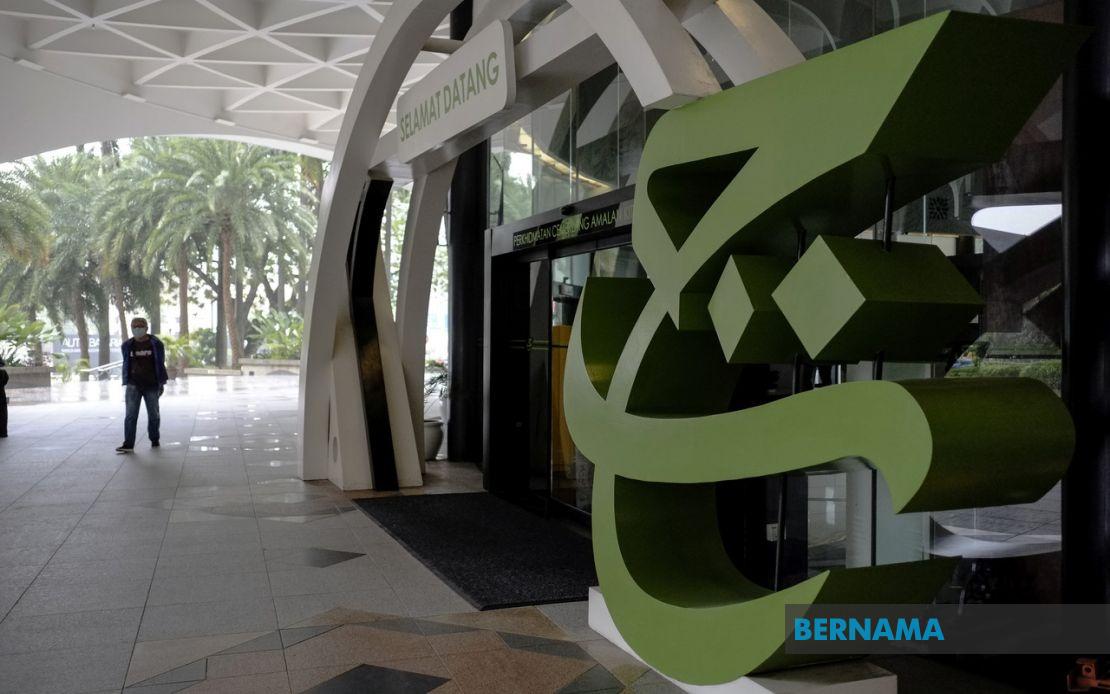
The Royal Commission of Inquiry into Tabung Haji has concluded that the pilgrimage fund's restructuring and recovery plan has successfully restored its financial footing following a major crisis that wiped out billions in investment value. In a fully declassified report released this week, the commission found that the institution's comprehensive rehabilitation strategy effectively addressed RM12.6 billion in accumulated losses, with RM10 billion resolved under the 2018 Recovery Plan and the remaining RM2.6 billion worked through progressively until the end of 2025. The findings mark a significant milestone for the fund, which manages savings for over 9 million Malaysian Muslims preparing for the pilgrimage to Mecca and has long served as an important financial institution in the Islamic banking landscape.
The recovery plan's effectiveness becomes evident when examining Tabung Haji's recent financial metrics. The institution reported investment income of RM4.64 billion in the last financial year, its strongest performance since 2018 and a dramatic turnaround from the period when the crisis first emerged. This revival reflects not only improved market conditions but also the disciplined implementation of restructuring measures designed to eliminate toxic assets from the fund's portfolio. Simultaneously, the annual profit distribution payable to depositors has climbed from just 1.25 per cent in 2018 to 3.25 per cent in 2024 and 3.5 per cent in 2025, demonstrating tangible benefits flowing back to the millions of Malaysians who entrusted their savings to the institution.
Central to the recovery strategy was an innovative asset separation mechanism through which Tabung Haji transferred its underperforming properties and investments to Urusharta Jamaah Sdn Bhd, a government-owned special purpose vehicle created specifically for this purpose. The transfer encompassed assets valued at RM19.9 billion according to the carrying value on Tabung Haji's books, although the market value of these same properties at the time of transfer stood at only RM9.7 billion, creating a structural premium of RM10.2 billion. This arrangement allowed Tabung Haji to refocus its operations on its core mandate—managing the pilgrimage operations and maintaining savings accounts—while the government, through the SPV, assumed responsibility for managing and potentially rehabilitating the problematic assets over a longer timeframe. The Royal Commission validated this approach as instrumental in preventing the fund's complete financial collapse.
Financing the asset transfer required sophisticated debt instruments tailored to Islamic banking principles. Tabung Haji and the government structured two sukuk issuances, each backed by formal letters of government support, carrying annual profit rates of 4.05 per cent and 4.10 per cent respectively. These instruments enabled the fund to inject liquidity into the recovery process while distributing the financial burden across multiple parties and time horizons. Notably, the special purpose vehicle has subsequently made several offers to sell assets back to Tabung Haji over the intervening years. However, the fund's management initially declined these opportunities because the asking prices did not align with prudent investment criteria. This disciplined approach changed following a fresh strategic review conducted this year, leading to selective repurchases at more favourable valuations. Tabung Haji repurchased prime real estate at Tun Razak Exchange for RM270 million against an original transfer price of RM400 million, while simultaneously acquiring back the UJ Estates oil palm plantation holdings for RM695 million, below the initial transfer price of RM800 million.
Despite acknowledging the recovery plan's success, the Royal Commission has issued cautious guidance about the future sustainability of these improvements. The inquiry identified several critical structural issues that, left unaddressed, could undermine the gains achieved over the past seven years. These vulnerabilities encompass governance frameworks that may not adequately protect the institution from future misadventure, outdated legislation in the form of the Tabung Haji Act 1995, inadequate cost control mechanisms, and the absence of a comprehensive regulatory framework designed specifically for an institution of Tabung Haji's unique character and function. The commission stressed that while the recovery plan successfully stabilised the ship, it cannot be regarded as a permanent solution without accompanying reforms to the vessel's fundamental design.
A particularly significant concern highlighted by the Royal Commission relates to the government's future financial capacity and commitment. The inquiry warned that the government must maintain its ability to redeem the sukuk issued by the special purpose vehicle and continue providing the annual cash allocations previously committed by Cabinet. Should either commitment falter, Tabung Haji could find itself in a precarious position where it continues distributing profits to depositors without the underlying cash reserves to support these payments. This scenario would essentially replicate the fundamental problem that created the crisis in the first place—promising returns that cannot be substantiated by actual income generation. The commission's warning underscores that recovery depends not merely on accounting adjustments but on sustained fiscal discipline and political will from the government throughout the multi-year redemption timeline.
The investment losses that triggered the need for this comprehensive overhaul stemmed from a combination of poor governance, excessive risk-taking in foreign currency and derivative markets, and a fundamental misalignment between the fund's mission as a savings vehicle for ordinary Muslims and its actual portfolio management practices. The RM12.6 billion in cumulative losses represented not only the destruction of depositor wealth but also a severe blow to public confidence in Islamic financial institutions at a crucial moment when such institutions were expanding across Malaysia's financial system. The Royal Commission's inquiry subsequently revealed systematic weaknesses in oversight, inadequate internal controls, and decision-making processes that prioritised short-term performance metrics over long-term stability. These findings prompted not only the current recovery measures but also broader conversations about the governance standards that should apply to faith-based financial institutions managing savings for vulnerable populations.
Progress on implementing the commission's recommendations has been substantial but incomplete. Approximately 75 per cent of the inquiry's recommendations have been incorporated into the fund's operations and the broader regulatory framework, while the government has committed to accelerating implementation of the remaining 25 per cent. These recommendations collectively aim to strengthen corporate governance structures, enhance investment discipline and risk management protocols, and introduce protective regulatory measures. The implementation roadmap signals that policymakers recognise the need for systemic change rather than merely treating the crisis as a historical aberration. However, the extended timeline for full implementation also reflects the genuine complexity involved in restructuring a massive financial institution with millions of stakeholders and substantial entrenched interests.
For Malaysian depositors and the broader Islamic finance sector, the Tabung Haji experience has yielded several important lessons. The case demonstrates both the possibilities and the perils of channelling savings through specialised faith-based institutions that operate under different governance frameworks than conventional banks. It illustrates that Islamic financial institutions require equally rigorous risk management, transparency, and regulatory oversight as their conventional counterparts, and that religious or social mission cannot substitute for sound financial practices. The recovery's success so far depends critically on continued vigilance and reform implementation. Malaysia's policymakers must ensure that the regulatory framework evolves to prevent similar crises in other Islamic financial institutions, particularly as the sector continues to grow in size and complexity. The depositors' trust, once severely damaged, is being gradually restored through demonstrable financial improvements and sustained commitment to better governance practices.

