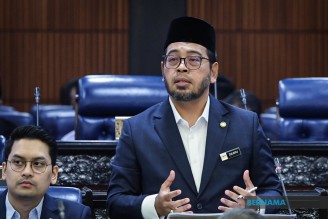
Tabung Haji's involvement with Putrajaya Perdana Bhd has exposed a troubling nexus between the nation's pilgrimage fund and the 1Malaysia Development Bhd scandal, according to findings from a comprehensive Royal Commission of Inquiry released this week. The investment decision, which placed TH's then-chairman at the helm of Putrajaya Perdana while the fund maintained a significant financial stake, ultimately cost TH RM145.3 million in losses. Minister in the Prime Minister's Department (Religious Affairs) Dr Zulkifli Hasan presented these findings during a special Dewan Rakyat sitting, emphasizing that Putrajaya Perdana represented just one of 14 problematic investments identified in the RCI report, collectively contributing to losses totalling billions of ringgit across TH's portfolio.
The RCI investigation, which examined TH's operations from 2014 to 2020, uncovered structural vulnerabilities that allowed the pilgrim fund to become entangled in questionable transactions during the height of the 1MDB controversy. Central to this entanglement was TH's simultaneous acquisition of land at the Tun Razak Exchange directly from 1MDB, a transaction that occurred when public scrutiny of the sovereign wealth fund was intensifying. The arrangement raised acute concerns about institutional independence and fiduciary responsibility, particularly given the overlapping leadership between TH and 1MDB during the critical period. Dr Zulkifli highlighted the inherent conflict of interest, noting that TH's chief executive officer simultaneously served on 1MDB's board of directors—a dual role that created ambiguity about whose interests were being prioritized in investment decisions.
The minister's pointed questioning during the parliamentary briefing underscored the systemic governance failures that enabled these transactions. He asked whether investments were genuinely made in TH's best interests or whether they served to alleviate problems facing other entities caught up in the 1MDB scandal. This query strikes at the heart of institutional accountability and raises serious questions about the decision-making processes that governed TH during this tumultuous period. The fact that TH continued purchasing assets from 1MDB when the fund's reputation was collapsing suggests either a remarkable confidence in the sovereign wealth vehicle's future prospects or a troubling willingness to overlook reputational and financial risks for reasons unrelated to TH's core mission of facilitating pilgrimage to Mecca.
Beyond the Putrajaya Perdana debacle, the RCI report documented additional catastrophic investment decisions that collectively devastated TH's financial position. The listing of FGV Holdings, initially celebrated as Malaysia's largest initial public offering with over RM10 billion raised, subsequently inflicted over RM1 billion in losses on TH as share prices collapsed. The pilgrim fund's handling of this investment revealed another troubling pattern: even as FGV's value declined by more than 80 percent, TH maintained its shareholding while simultaneously adjusting impairment accounting policies in ways designed to obscure and minimize reported losses. This accounting manipulation represented not merely poor investment judgment but an apparent attempt to conceal deteriorating financial conditions from stakeholders and beneficiaries.
TH's recovery efforts have recently involved purchasing back certain assets at significantly reduced valuations, partially offsetting previous losses and signalling a strategic repositioning of the fund's portfolio. The institution repurchased its TRX land parcel, which it had sold for RM400 million in 2018, at RM270 million based on current market assessment—a transaction reflecting both TH's improved financial standing and the depressed property market valuations in the post-1MDB era. Similarly, TH acquired back the UJ Estates oil palm plantation holdings that it had divested for RM800 million, now valued at approximately RM695 million inclusive of RM115 million in cash considerations, translating to an enterprise value of roughly RM580 million. While these repurchases represent efforts to recover lost ground, they underscore the extraordinary costs imposed by the earlier misadventures.
The Royal Commission of Inquiry, established in 2021 with formal member appointments announced in January 2022, conducted a sweeping examination of TH's institutional weaknesses spanning the 2014-2020 period. The resulting 211-page report, publicly released on July 29 following its presentation to the King on August 30, 2022, contained 25 detailed recommendations for operational and management improvements. The scope and depth of these recommendations reflect the systemic nature of TH's governance failures during the period examined. By July 30, TH had already implemented approximately 75 percent of the RCI's recommendations, suggesting institutional commitment to reform and restoration of stakeholder confidence.
For Malaysian readers and Muslim pilgrims who depend on TH's services, the RCI findings carry profound implications regarding institutional stewardship and safeguarding of religious trust funds. Tabung Haji operates as a unique institution, combining the spiritual obligation of pilgrimage with complex financial management responsibilities affecting hundreds of thousands of Malaysian families. The revelation that leadership failures allowed the fund to become entangled with 1MDB represents not merely a financial failure but a breach of the sacred trust placed in TH by Malaysian Muslims who contribute their savings toward fulfilling one of Islam's Five Pillars.
The broader context of these findings extends beyond TH's institutional boundaries, illuminating how the 1MDB scandal rippled across Malaysia's financial ecosystem. Multiple institutions and entities became entangled in transactions designed to legitimize or absorb 1MDB assets during the fund's troubled period. That TH, with its unique status as a religious institution managing collective savings for pilgrimage, could be drawn into this nexus demonstrates how pervasive and sophisticated the 1MDB influence extended across institutional Malaysia. The overlapping directorates and transaction patterns suggest coordinated effort to distribute 1MDB exposure across ostensibly independent entities.
The governance vacuum that permitted these failures reflects deeper institutional challenges within Malaysia's investment management sector during the 2014-2020 period. Board oversight mechanisms appear to have been inadequate or compromised, allowing conflicts of interest to persist openly without intervention. The parallel roles of TH's chief executive on 1MDB's board should have triggered immediate governance protocols separating decision-making authority, yet no such mechanisms apparently functioned. This absence suggests either that governance frameworks were poorly designed or that oversight bodies lacked independence to challenge executive authority.
Moving forward, TH's implementation of RCI recommendations will require sustained institutional discipline and enhanced transparency mechanisms designed to prevent recurrence of similar entanglements. The fund's improved financial position, while still bearing scars from the 1MDB era, provides opportunity to institutionalize reforms and rebuild stakeholder confidence. However, the conversion of recommendations into genuine behavioral and structural change remains uncertain, requiring continued scrutiny from parliamentary oversight and broader civil society monitoring. Malaysian pilgrims placing their savings with TH deserve assurance that institutional leaders prioritize their interests above all other considerations, and that governance structures possess sufficient independence and transparency to prevent future missteps of comparable magnitude.

