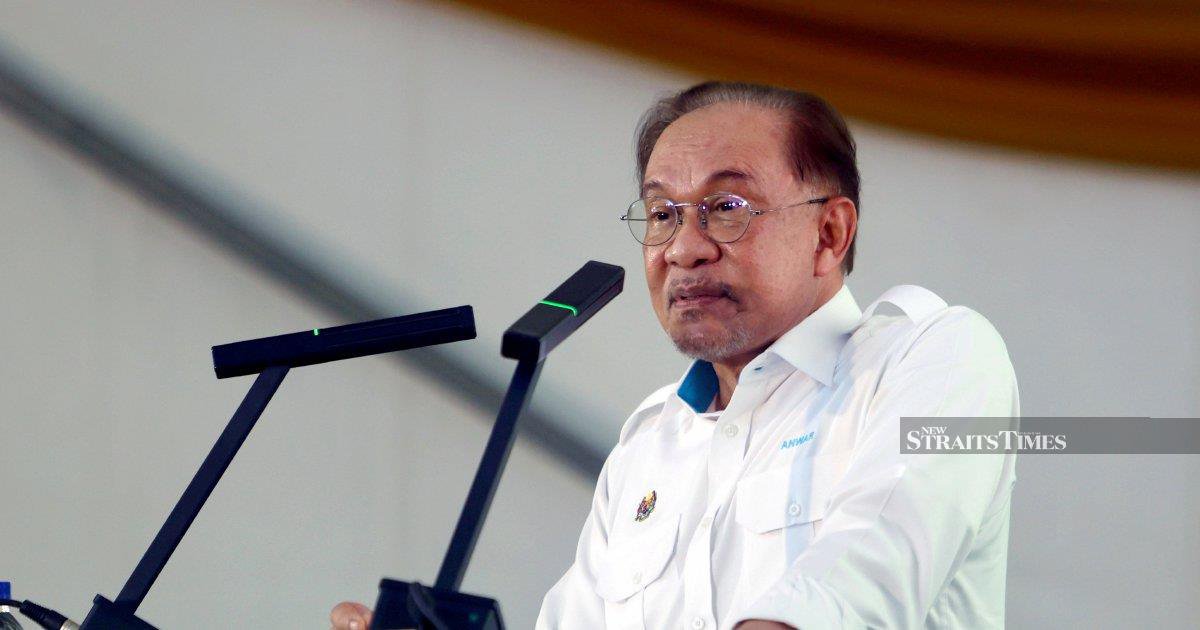
The Taiwan Chamber of Commerce & Industry in Malaysia has raised alarm over Prime Minister Datuk Seri Anwar Ibrahim's recent comments regarding Taiwan's political status, cautioning that such statements may create uncertainty for investors in the region's most critical technology sectors. The chamber expressed what it termed 'deep concern' at the premier's description of Taiwan as 'part of China', signalling that business confidence could be undermined by unclear or provocative positioning on cross-strait relations during a period of heightened geopolitical sensitivity.
This development arrives at a particularly delicate moment for Malaysia's technology ambitions. The country has positioned itself as a secondary hub for semiconductor manufacturing and advanced electronics production, seeking to attract multinational corporations diversifying supply chains away from concentration in Taiwan itself. Taiwanese firms account for significant capital inflows and employment in Malaysia's technology parks, particularly in Penang and Selangor. Any perception of political tension or instability in Malaysia's relations with Taiwan could trigger investors to reconsider their regional strategies or accelerate plans to reduce exposure in Southeast Asia.
The chamber's intervention reflects a broader pattern of Taiwanese business communities abroad voicing concerns when host governments make statements perceived as tilting toward Beijing's political narratives. Taiwan's technology sector remains globally dominant in chip design and manufacturing, controlling roughly 92 percent of the world's most advanced semiconductor production. Major firms like TSMC, MediaTek, and Acer maintain substantial operations or partnerships throughout Southeast Asia, and Malaysia has benefited from this ecosystem for decades. The chamber's response suggests that corporate stakeholders view political rhetoric as having real commercial consequences.
Anwar Ibrahim's government has generally sought to balance relations between China and Taiwan as part of a non-aligned foreign policy, though the prime minister's specific framing drew attention because of its directness. Malaysia maintains formal diplomatic ties with the People's Republic of China but has extensive economic relationships with Taiwan that operate through commercial rather than governmental channels. This pragmatic arrangement has allowed the country to benefit from both sides, but public statements by senior leaders that appear to privilege one party's political claims risk destabilising that delicate equilibrium.
The semiconductor and technology sectors are not peripheral to Malaysia's economic strategy but central to its industrialisation goals. The nation aspires to increase its share of advanced manufacturing in the global value chain, moving beyond merely assembling components imported from Taiwan and China. Foreign direct investment from Taiwanese technology companies has historically been crucial to building local expertise and supply chain networks. Any cooling of investor appetite—whether driven by political uncertainty or perceived unfavourable treatment—could set back these ambitions significantly and affect job creation in high-wage sectors.
From a competitive standpoint, Malaysia faces pressure from other Southeast Asian nations also courting similar investments. Vietnam, Thailand, and Indonesia have all expanded their technology manufacturing capacity in recent years, offering tax incentives and infrastructure improvements to entice Taiwanese firms. If Malaysia's political environment becomes perceived as less stable or welcoming to Taiwanese business interests, capital could simply migrate to neighbouring jurisdictions where such concerns do not exist. The chamber's public warning may be partly designed to signal to government decision-makers that clarity and consistency on cross-strait relations matter commercially to business leaders.
The timing of the chamber's statement also warrants consideration in light of broader regional dynamics. Cross-strait tensions have intensified in recent years following geopolitical shifts in the Indo-Pacific region and changing international attitudes toward Taiwan's security. Malaysia, as a significant maritime power and member of both ASEAN and the Belt and Road Initiative, occupies a strategically important but complicated position. Clear-eyed investors are acutely aware of these dynamics and factor them into decisions about long-term capital commitments. A government that appears to lean toward Beijing's framing of Taiwan could inadvertently signal unpredictability on matters of principle, which itself becomes a business risk.
The chamber's approach to raising these concerns—through formal channels rather than anonymous complaints—suggests that Taiwanese investors view this as a critical moment to reassert their interests and expectations regarding Malaysia's neutrality. There is likely frustration that such clarity should be necessary, reflecting an assumption that Malaysia's consistent historical position of pragmatic engagement with both sides was already understood. The fact that explicit reminders are now required suggests a perception that that understanding may have shifted or requires reinforcement at the political level.
For Malaysia's broader economic strategy, this episode underscores the stakes involved in regional geopolitical positioning. The country cannot simultaneously claim to welcome Taiwanese technology investment while appearing to adopt Beijing's political rhetoric about Taiwan's status. Investors need confidence that government positions will remain stable and that their long-term commercial interests will not become collateral damage in political manoeuvring. The chamber's intervention, though measured in tone, carries an implicit message: Malaysian officials would be wise to recalibrate their public statements to reflect the country's genuine strategic interest in remaining open to technology investment from all major sources in the region.

