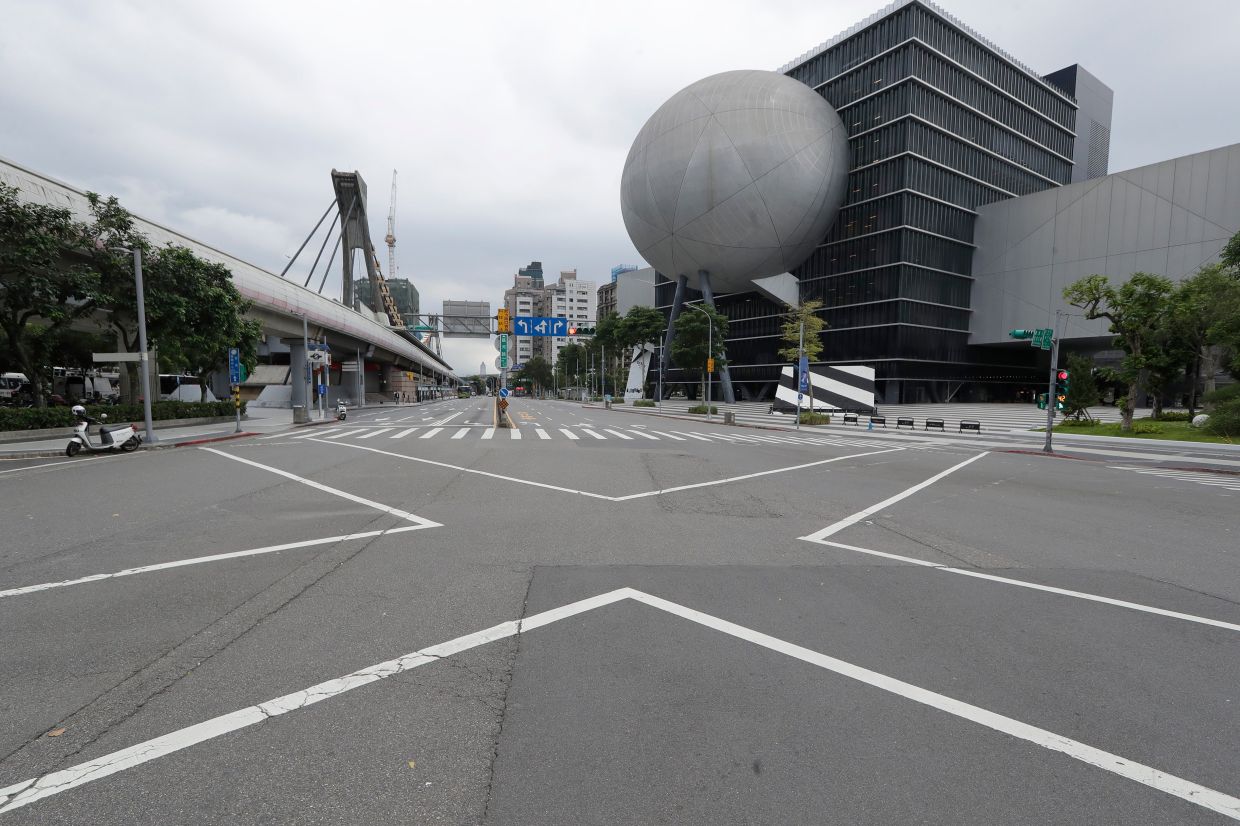
Taiwan demonstrated an escalating commitment to civilian preparedness on August 13 when telecommunications operators deliberately reduced mobile internet speeds to 256 Kbps—rendering video streaming, social media browsing, and most web-based services virtually unusable—across Taipei and six surrounding municipalities. The temporary disruption marked the culmination phase of Han Kuang, the island's annual military exercises designed to prepare the population and critical infrastructure for potential conflict. This deliberate degradation of everyday connectivity represents a significant departure from how Taiwan has historically conducted its civil defence drills, signalling a strategic pivot towards scenarios that more closely mirror real wartime conditions.
The decision to throttle broadband capacity rather than merely simulate air raid procedures reflects mounting concerns about Taiwan's vulnerability to military pressure from across the Taiwan Strait. Han Kuang, meaning "bright radiance" in Chinese, has evolved substantially in recent years to encompass far more comprehensive civilian participation than the largely symbolic metro evacuations and siren tests of previous decades. By forcing residents to experience genuine operational constraints—such as inability to access streaming services or social messaging platforms—Taiwan's military establishment aims to inoculate the public psychologically against the severe resource scarcity that would accompany any genuine conflict scenario.
President Lai Ching-te acknowledged the public frustration caused by the internet slowdown, requesting citizens' patience and understanding while framing the inconvenience as pedagogically necessary. His comments underscore an implicit recognition that Taiwan's civil society has become dependent upon seamless digital connectivity; a wartime scenario would almost certainly involve significant disruption to telecommunications infrastructure, whether through military targeting or defensive measures undertaken by Taiwan's own forces. The government's willingness to impose such a palpable demonstration of vulnerability—and of potential sacrifice required during emergency—signals confidence that the population understands the underlying security rationale.
This year's Han Kuang exercises represent a methodological transformation in Taiwan's approach to mass mobilisation and civilian defence. Rather than confining drills to military personnel and designated civil defence units, the exercises now actively coordinate with local governments and deliberately incorporate ordinary residents into immersive scenarios. The integration of civilians reflects lessons learned from previous years when urban resilience drills proceeded with minimal public awareness or disruption; metro passengers in Taipei would simply continue moving through stations even as air raid evacuation procedures supposedly unfolded around them. Such hollow exercises failed to generate genuine muscle-memory responses or public understanding of what actual wartime procedures would entail.
At Taipei's metro stations on the afternoon of August 13, the simulation took on considerably more substantive form. Station gates were physically sealed, trapping commuters inside for approximately 30 minutes as part of air raid drill procedures. The forced detention of ordinary travellers, though brief and clearly explained as exercise-related, created visceral understanding of how mobility itself becomes constrained during military emergencies. Passengers could not simply exit at their intended stop and continue with their day; they were obligated to experience the spatial confinement and temporal disruption that genuine conflict would impose.
Allen Hsieh, a tourist from Hong Kong, offered an outsider's perspective on the drills' authenticity and effectiveness. Hsieh acknowledged having anticipated that the exercise would be largely symbolic—perhaps consisting solely of text message alerts—yet found the actual implementation substantially more convincing and immersive. His observation carries particular weight given that visitors from Hong Kong possess experiential reference points regarding how political instability and security concerns reshape daily life; the drills' perceived realism by someone from a jurisdiction sensitive to cross-strait tensions suggests Taiwan's preparations are registering as substantively credible rather than mere theatre.
The internet throttling component reveals sophisticated understanding of how modern conflict would degrade civilian life. In contemporary warfare scenarios, communications infrastructure represents a prime military target; adversaries can employ electromagnetic pulse weapons, precision strikes against telecommunications hubs, or cyberattacks to cripple connectivity. Taiwan's decision to artificially recreate such degradation forces citizens to contemplate how their dependence upon instantaneous information access, social media updates, and cloud-based services would evaporate during actual emergency. The psychological adjustment required to function at 256 Kbps—a speed sufficient only for basic text messaging—offers modest but genuine inoculation against the shock residents would experience if such constraints became reality.
President Lai's visit to a hospital participating in the drills underscores that Taiwan's civil defence preparations extend far beyond public perception management. Hospitals simulated relocating critical operations to underground facilities, a procedure that would be essential if Taiwan faced sustained aerial bombardment. Medical facilities represent extraordinarily complex systems requiring continuous power, pharmaceutical supply chains, diagnostic equipment, and communication with emergency services; moving such operations underground while maintaining functionality presents formidable logistical challenges. By rehearsing these procedures during peacetime, medical administrators can identify vulnerabilities, train staff in modified operational procedures, and establish the physical infrastructure necessary for continuity of care during conflict.
The escalating intensity and comprehensiveness of Han Kuang drills reflects Taiwan's assessment that the probability of military pressure from China may be rising. Over recent years, the exercises have incorporated reservist mobilisation, civilian logistics training, and critical infrastructure hardening alongside traditional military manoeuvres. The integration of telecommunications throttling into the 2024 iteration suggests that Taiwan's defence planners believe civilian understanding of wartime realities—rather than abstract knowledge that conflict would be difficult—represents the foundation upon which genuine resilience rests. For Malaysian and Southeast Asian observers, Taiwan's approach offers instructive lessons regarding how democratic societies can prepare populations for security challenges without inducing paralysing anxiety or economic disruption.
The drills' civilian-centric orientation also reflects demographic and social realities that Taiwan cannot ignore. Unlike militaries composed entirely of full-time professionals, Taiwan depends substantially upon reservists and civilian mobilisation to generate sufficient defensive capacity against Chinese military superiority in standing forces and equipment. Civilians must understand not merely that they might be inconvenienced during emergency but that they possess specific roles and responsibilities within broader national defence strategy. By experiencing throttled internet connectivity alongside sealed metro stations and hospital relocations, ordinary Taiwanese develop embodied comprehension of collective sacrifice and interdependence that no amount of government messaging or written guidance could replicate.
Moreover, Taiwan's willingness to deliberately impose significant operational disruption—essentially halting the civilian digital economy for several hours across major population centres—demonstrates political confidence unusual in democracies accustomed to treating security measures as invisible background infrastructure. Many governments avoid such visible impositions on daily life, fearing political backlash or public resistance. Taiwan's capacity to implement Han Kuang drills with public participation rather than merely announcing them reflects both genuine civil defence imperatives and implicit acceptance by the population that security preparation sometimes requires tangible sacrifice. As regional tensions persist across the Taiwan Strait and throughout Southeast Asia, such demonstrations of collective resolve carry strategic significance beyond the immediate exercises themselves.

