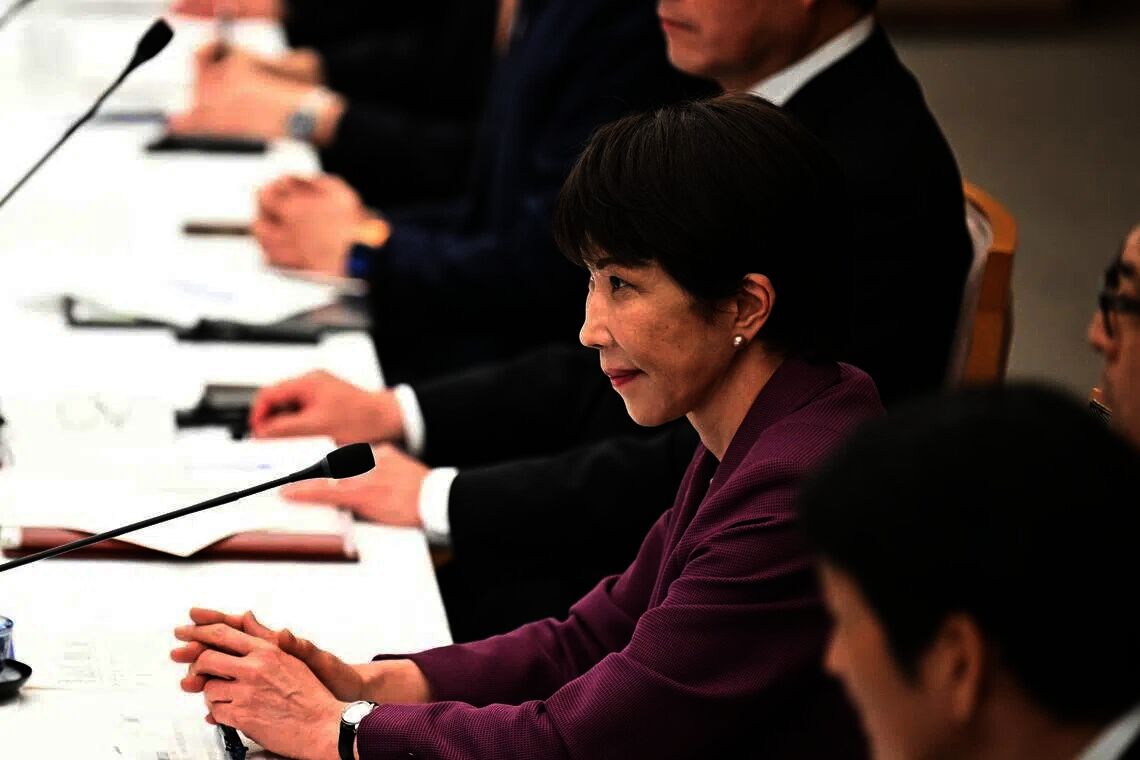
A video clip of Japanese Prime Minister Sanae Takaichi from a 2002 television debate has unleashed a wave of criticism within Japan after circulating on social media, reigniting longstanding tensions over how the nation confronts its wartime past. The footage captures Takaichi, then a junior politician, characterizing Japan's military campaign against China as fundamentally defensive rather than aggressive, while also asserting that imperial expansion across China during the 1930s reflected accepted international practice. The resurgence of these remarks has triggered significant domestic pushback, with prominent commentators, academics, and opposition figures publicly questioning her suitability for high office.
During the live debate on TV Asahi two decades ago, Takaichi's framing of Japan's military operations drew immediate rebuttal from Soichiro Tahara, a prominent political journalist and moderator, who dismissed her position as historically inaccurate and intellectually indefensible. Tahara's on-air criticism centred on what he characterized as a fundamental misunderstanding of historical reality, arguing that someone holding such views had no business serving in parliament. His intervention at the time proved prescient, given Takaichi's subsequent ascent through the political ranks and her election as prime minister.
The social media response has been overwhelmingly critical. Comments across YouTube and other platforms reflect widespread dismay among Japanese citizens, with observers variously describing Takaichi as ignorant of historical facts, incapable of rational argument, and unfit for leadership. The breadth of domestic criticism suggests that public sentiment, at least among vocal segments online, views her historical revisionism not as legitimate political debate but as a dangerous distortion with implications for regional stability and Japan's international standing.
Yusuke Yamashita, an associate professor of corporate social responsibility at Sakushin Gakuin University, articulated a more nuanced critique, suggesting that Takaichi's inability to articulate coherent theoretical justification for her "self-defence war" thesis reveals the emotional rather than intellectual foundations of her position. This observation points to a troubling gap between conviction and evidence-based reasoning—a concern that extends beyond historical semantics to questions about decision-making capacity at the highest levels of government.
The political establishment itself has begun distancing itself from Takaichi's rhetoric. Ichiro Ozawa, a veteran parliamentarian with decades of experience in the House of Representatives, called explicitly for her resignation, warning that her leadership poses risks not merely to Japan's international relationships but to the security and welfare of the Japanese people themselves. Ozawa's intervention carries particular weight given his standing and experience navigating Japan's post-war politics.
Takaichi's current controversy reflects a consistent ideological trajectory throughout her parliamentary career spanning more than three decades. Since first entering the Diet in 1993, she has maintained alignment with the Liberal Democratic Party's conservative-nationalist faction, consistently championing constitutional amendments to expand military capabilities and advocating for rebranding the Self-Defense Forces—measures that would signal deeper shifts in Japan's security posture. Her historical revisionism and security advocacy are not isolated positions but interconnected elements of a broader worldview that challenges post-war consensus.
Her stances align with a broader current within Japan's political right that seeks to reframe or minimize wartime conduct widely documented by historians and acknowledged through official apologies. This revisionist impulse extends across East Asia's regional relationships, as China and other neighbouring nations remain sensitive to interpretations that downplay historical atrocities or suggest that Japanese aggression operated within acceptable norms. From a Southeast Asian perspective, such rhetoric carries weight, as Japan's wartime occupation affected the region significantly and remain part of collective historical memory.
The timing of this controversy arrives as Takaichi's administration already faces separate political headwinds. Public opinion surveys from July indicate declining support for her government, with disapproval ratings surpassing approval in several polls—a concerning trend for any prime minister. Her management of domestic economic concerns and cost-of-living pressures appears to have failed to satisfy public expectations, even before the historical controversy surfaced to compound perceptions of out-of-touch leadership.
The intersection of Takaichi's ideological positioning on historical matters and her apparent disconnection from pressing domestic issues has created a narrative vulnerability that opposition figures and civil society observers have seized upon. Critics argue that her focus on contentious constitutional and military questions deflects from economic grievances and suggests misplaced political priorities. This combination threatens the political viability of her tenure, particularly if public dissatisfaction continues accumulating across multiple fronts.
Regionally, the episode underscores persistent tensions within Northeast Asia regarding historical memory and political leadership. Malaysia and other Southeast Asian nations maintain complex relationships with Japan that encompass both wartime legacies and contemporary strategic partnerships. Rhetoric that suggests Japanese wartime conduct was defensible or normalized creates friction in these relationships, even if formal diplomatic language remains courteous. The broader question concerns whether Japanese political leadership can manage nationalistic sentiment while maintaining the international consensus necessary for regional stability and cooperation.
The controversy also illustrates how digital media now surfaces historical statements with unprecedented speed and reach, constraining political figures' ability to distance themselves from earlier positions. Takaichi cannot simply dismiss the 2002 remarks as youthful indiscretion, given that they express convictions seemingly maintained across her career. This permanence of digital record represents a new reality for politicians operating across generational divides.
Looking forward, the political sustainability of Takaichi's administration appears increasingly uncertain. The combination of declining public support for her government's domestic performance, coupled with renewed scrutiny of her historical revisionism, suggests mounting pressure for either significant policy adjustments or leadership change. Whether Japan's political system can reconcile the revisionist impulses of its nationalist wing with the expectations of an increasingly critical domestic audience and concerned international partners remains an open question with implications extending throughout the region.

