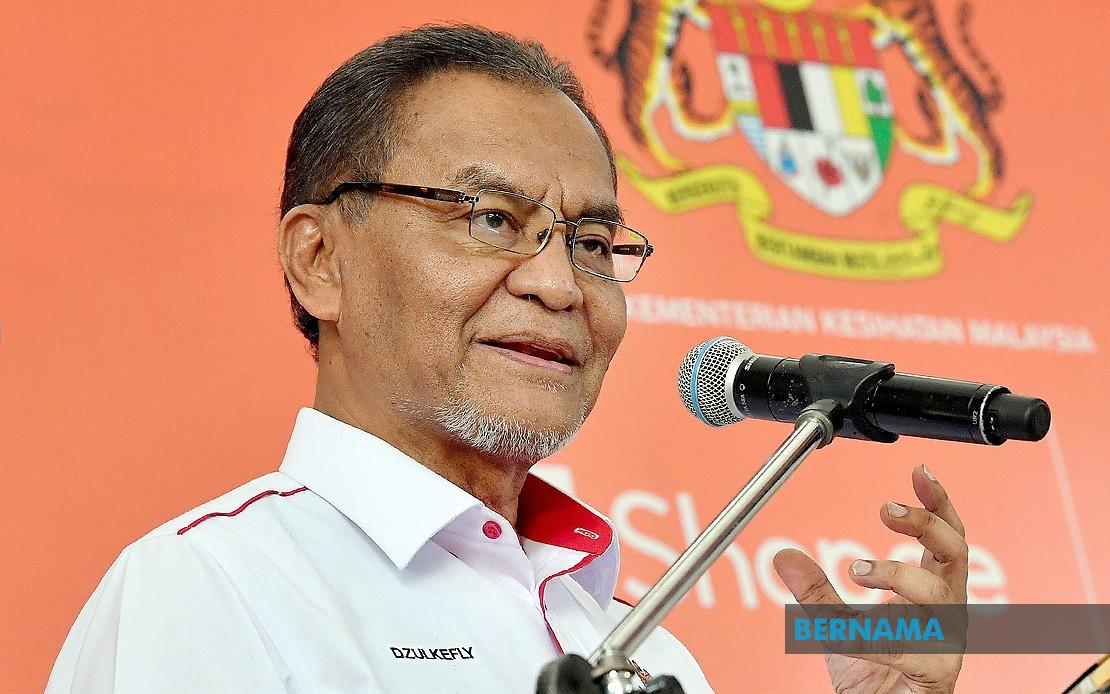
Health Minister Datuk Seri Dr Dzulkefly Ahmad has committed to resurrecting the long-abandoned Outpatient Department expansion at Tambunan Hospital, signalling a potential turning point for the rural facility that has languished without the critical infrastructure project for nearly a decade. During a working visit to the hospital in Sabah's interior, Dzulkefly witnessed firsthand the constrained conditions facing both patients and staff, describing the situation as among the most troubling he has encountered in his ministerial duties. The decision to restart the initiative represents an acknowledgement that the stalled development has become untenable for a healthcare facility serving a dispersed population across seven sub-districts.
The minister's commitment extends beyond symbolic gestures, with an immediate financial injection of RM988,000 allocated to address pressing operational shortfalls at the facility. This targeted funding reflects a pragmatic approach to tackling multiple deficiencies simultaneously rather than pursuing a single large-scale solution. The Emergency Department will absorb a substantial portion of this allocation, recognising that trauma and acute care capabilities are foundational to any rural health facility. Additionally, RM185,000 has been earmarked for reconstructing the hospital's severely deteriorated canteen building, restoring basic amenities that directly affect staff morale and working conditions in a remote posting.
Tambunan Hospital, which commenced operations on September 16, 1977, functions as a non-specialist institution within the Keningau Cluster, maintaining 49 beds and delivering round-the-clock emergency services to approximately 43,400 residents scattered across a geographically challenging region. The facility's population catchment area extends across 88 villages, making accessibility particularly challenging for patients requiring specialised care unavailable locally. The hospital's operational scope encompasses 24-hour emergency and trauma services alongside outpatient and inpatient provision, demanding considerable functionality from infrastructure that has been stretched beyond comfortable capacity.
Equipment procurement forms another component of the recovery strategy, with the minister approving the acquisition of six hydraulic beds and one ultrasound machine specifically for Tambunan Hospital. These additions build upon donations contributed by Keningau Member of Parliament and Tambunan state assemblyman Datuk Seri Dr Jeffrey Kitingan, who previously supplied a hydraulic bed and ultrasound equipment to the facility. This collaborative approach between federal and state-level representation illustrates how political coordination can translate into tangible healthcare improvements, though it also highlights that rural facilities often depend on such supplementary contributions rather than deriving all necessary equipment through standard procurement processes.
The minister's observations during his visit encompassed broader operational challenges affecting the hospital's functionality and staff effectiveness. Briefings covered staffing dynamics, the pressures created by limited physical space, and the distribution of subsidiary health facilities across Tambunan's expansive service area. Such visits by high-ranking officials can catalyse bureaucratic movement, and the immediate allocation of funds suggests that Dzulkefly's engagement was sufficiently serious to bypass conventional departmental procedures and accelerate decision-making.
Space constraints extend beyond the main hospital building, with the Tambunan Dental Clinic encountering similar accommodation difficulties. Rather than applying temporary measures, Dzulkefly has directed that an expansion funding application be expedited through the development budget planning framework for the 13th Malaysia Plan, institutionalising the resolution within national planning cycles. This approach converts an immediate crisis into a formal planning consideration, potentially securing more substantial and sustainable resources than emergency allocations can provide.
For Sabah's interior communities, the OPD project's resumption holds particular significance given the transportation barriers that rural patients face when accessing secondary care. Improved outpatient facilities at Tambunan may reduce the necessity for unnecessary hospitalisations or emergency department visits that could be managed through strengthened ambulatory services. The project thus represents not merely a facilities upgrade but a strategic intervention to rationalise healthcare delivery across a resource-constrained region.
The nine-year abandonment reflects the complexities confronting government infrastructure projects in remote areas, where funding cycles, technical difficulties, and shifting political priorities can combine to halt development indefinitely. That such projects resume appears contingent upon sustained ministerial attention, suggesting that vigilance from elected representatives and health officials remains essential to prevent similar stalls recurring.
The financing strategy combining emergency allocations with long-term planning demonstrates a multi-layered approach to rural healthcare deficiency. Immediate funds address critical shortfalls whilst formal planning mechanisms create pathways for comprehensive facility expansion. For Malaysian readers in similarly isolated communities, these developments offer a template for how sustained advocacy can eventually penetrate bureaucratic inertia and secure commitments to healthcare infrastructure.
The collaboration between federal and state representatives, evidenced through both Dzulkefly's commitment and Kitingan's contributions, underscores how effective healthcare delivery depends on political coherence across administrative tiers. In Sabah's context, where geographical challenges already complicate service provision, such alignment becomes essential for converting policy intentions into functional health infrastructure that genuinely serves dispersed populations facing chronic access difficulties.

