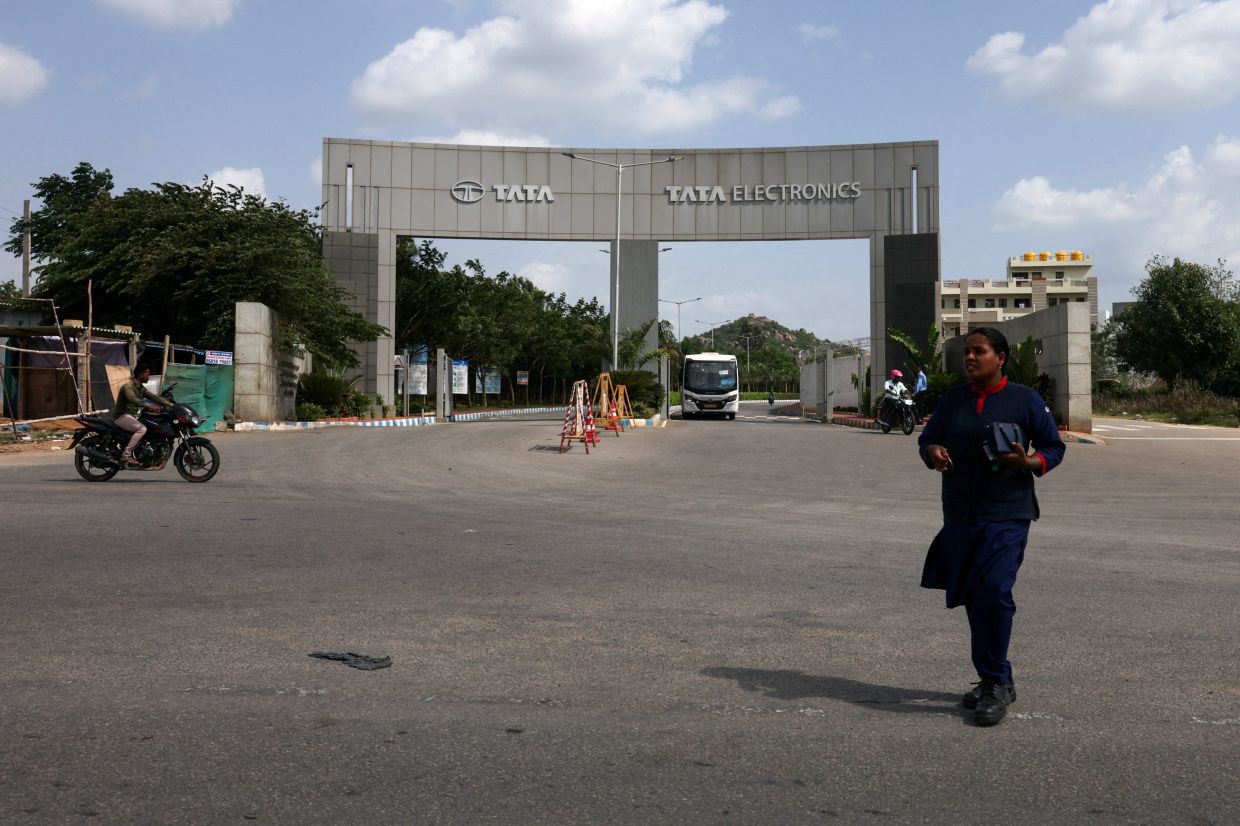
Tata Electronics acknowledged a significant cybersecurity breach on Monday, revealing that the Indian manufacturing giant had detected an intrusion into its systems several weeks prior. The disclosure came after security researchers uncovered evidence that a ransomware gang operating under the name World Leaks had begun publishing what it claims are hundreds of thousands of confidential files stolen from the company, including sensitive design documentation and specifications belonging to two of its most high-profile customers: Apple and Tesla.
The sheer scale of the alleged data theft has alarmed cybersecurity experts monitoring the incident. World Leaks purportedly dumped more than 200,000 files totalling approximately 630 gigabytes of data onto the dark web, with security researchers confirming the material has been accessible on encrypted networks since at least June 10. The ransomware operation, which has previously targeted major international companies including Nike, made its claims public through websites accessible only via dark web browsers, placing the stolen data beyond the reach of conventional search engines and law enforcement monitoring.
Tata Electronics released a carefully worded statement to Reuters emphasizing that its immediate response protocols had contained the situation and prevented operational disruption across its business divisions. The company asserted that the incident had produced no discernible impact on ongoing manufacturing activities or customer operations. However, sources familiar with the investigation indicated that Apple had initiated a comprehensive forensic review of the breach and that Tata had indeed received a ransom demand linked to the incident, though both the technology giant and the manufacturer declined to provide details on the financial amounts or negotiation status.
Security researchers who examined the published files identified substantial quantities of Apple-related proprietary material within the database. A search query for "Apple" across the World Leaks directory returned 181 files and folders, including what appeared to be a 52-page quality inspection standards document bearing Apple's proprietary markings and detailing protocols for iPhone circuit board components. Additionally, searches for "Hosur," the location of Tata's primary iPhone manufacturing facility in Tamil Nadu state, yielded 33 files and folders, suggesting the breach had penetrated systems directly connected to Apple's production operations in South India.
The Tesla-related disclosures proved equally concerning for the electric vehicle manufacturer. Researchers uncovered folders explicitly labelled with references to Tesla vehicle components, including what was described as a "NV36 Chargeport Controller - North America," purportedly connected to an upgraded variant of the Model Y SUV. More significantly, documents dated May 2025 appeared to reference "Project Highland," Tesla's publicly acknowledged internal codename for a comprehensively redesigned Model 3 sedan, alongside what appeared to be manufacturing specifications and assembly documentation. Multiple files carried confidentiality footers explicitly marking them as trade secrets belonging to Tesla Inc.
This breach represents a serious escalation in the vulnerabilities facing India's rapidly expanding electronics manufacturing ecosystem at a moment when the nation is positioning itself as a critical alternative to China in global supply chains. Tata's emergence as a cornerstone of Apple's manufacturing strategy outside China forms a central pillar of Prime Minister Narendra Modi's ambitious initiative to transform India into a world-class electronics production hub. The company currently accounts for approximately one-third of Apple's iPhone manufacturing capacity within India, a share that reflects the government's aggressive push to attract foreign technology companies and diversify their production away from traditional Asian manufacturing bases.
Tata's vulnerability to cybercriminals is particularly significant given the company's recent history with major security incidents. In the previous year, Tata's British luxury automotive division, Jaguar Land Rover, suffered a cyberattack that forced a complete production halt lasting six weeks, demonstrating how rapidly supply chain disruptions can cascade through interconnected global manufacturing networks. The current breach signals that despite such lessons, vulnerabilities persist across Tata's digital infrastructure, raising concerns about the adequacy of cybersecurity investments among India's leading manufacturers handling cutting-edge technology designs.
The incident also arrives amid mounting environmental and regulatory scrutiny of Tata's operations in South India. Reports have documented alleged contamination of farmlands neighbouring one of Tata's iPhone parts manufacturing facilities, creating an emerging pattern of operational challenges beyond the company's control. These mounting pressures on Tata's supply chain reliability may compel Apple to reassess the concentration of its Indian manufacturing footprint and the distribution of production capacity across multiple vendors and facilities.
Cybersecurity researchers who analysed the stolen data dump noted the presence of additional compromised material extending well beyond the technology sector. The files included employee passport copies, personal email communications, and system event logs spanning multiple years, suggesting the breach had penetrated deeply into Tata's corporate infrastructure rather than remaining confined to isolated production systems. The breadth and granularity of the exposed information indicates sophisticated adversary access to core company networks, not merely peripheral systems.
The Indian Computer Emergency Response Team, the government agency responsible for coordinating responses to significant cyber incidents, had not yet responded to inquiries regarding the breach at the time of reporting. This response delay underscores broader questions about India's capacity to rapidly mobilize coordinated government action in response to critical infrastructure and corporate security incidents, particularly those affecting strategically important manufacturing operations.
For Malaysian technology and manufacturing sectors, the Tata incident carries important cautionary implications. As Malaysian companies increasingly integrate into global electronics supply chains and attract foreign technology partners, the incident illustrates the sophisticated persistent threats now targeting manufacturing facilities handling proprietary data. The breach reinforces that cybersecurity investment and infrastructure modernization cannot remain secondary considerations but must be treated as essential components of competitive advantage in advanced manufacturing.