Staff from Meta, Anthropic, Google and OpenAI will gather with advisers from the Trump administration on Tuesday to discuss a voluntary framework for safety testing of cutting-edge artificial intelligence models. The session comes as growing anxiety grips Washington policymakers over the potential weaponisation of increasingly powerful AI systems, particularly following recent revelations that AI tools developed by OpenAI and Anthropic succeeded in infiltrating the computer systems of other organisations.
These breaches have triggered alarm bells among American legislators who worry that the accelerating sophistication of frontier AI models—the most advanced systems currently in development—could be exploited to execute or amplify cyberattacks. The incident underscores a fundamental tension in the rapidly evolving AI sector: as these systems become more capable, the risks they pose if misused or improperly controlled escalate proportionally. For Southeast Asian nations watching this unfold, the precedent set by Washington's regulatory approach matters considerably, as many regional governments are still formulating their own AI governance policies.
The White House meeting will concentrate on how the federal government can systematically evaluate the hacking potential embedded within America's most advanced AI models. This testing regime represents an attempt to balance innovation with national security concerns—a challenge that resonates across democracies grappling with dual-use technology. The Trump administration signalled its intentions in June when it announced a request asking AI developers to voluntarily subject their models to government assessment up to 30 days before public release. However, the voluntary nature of this arrangement remains contentious among some Capitol Hill members who view it as insufficient.
Five Democratic senators have urged Trump to transcend the voluntary framework and work with Congress to establish permanent, legally binding testing requirements specifically for frontier models. Their letter frames the issue as a competitive necessity, warning that America risks ceding technological advantage if regulatory burdens fall disproportionately on domestic companies while Chinese alternatives operate under fewer constraints. This argument echoes concerns raised throughout Asia, where nations fear that onerous regulations could inadvertently push development offshore to jurisdictions with lighter oversight.
The senators' position reflects a broader legislative impulse to codify AI safety measures into law rather than rely on corporate goodwill. "The United States cannot afford to create a policy environment in which the most advanced American AI systems are subject to opaque, case-by-case restrictions while Chinese alternatives appear cheaper, easier to access, and more predictable to deploy," they wrote in their appeal to the president. This sentiment captures the geopolitical dimensions of AI regulation—the concern that overly stringent domestic rules could disadvantage American companies and researchers in global competition for market share and talent.
The White House confirmed on Monday that the detailed parameters for the testing programme have been finalised, though officials declined to indicate whether the specifications would be made publicly available. This opacity about regulatory implementation is typical of early-stage policy development, yet it frustrates advocates who favour transparency in governance frameworks affecting rapidly evolving technologies. The lack of public disclosure also complicates efforts by other countries, including those in Southeast Asia, to understand and potentially adopt similar frameworks.
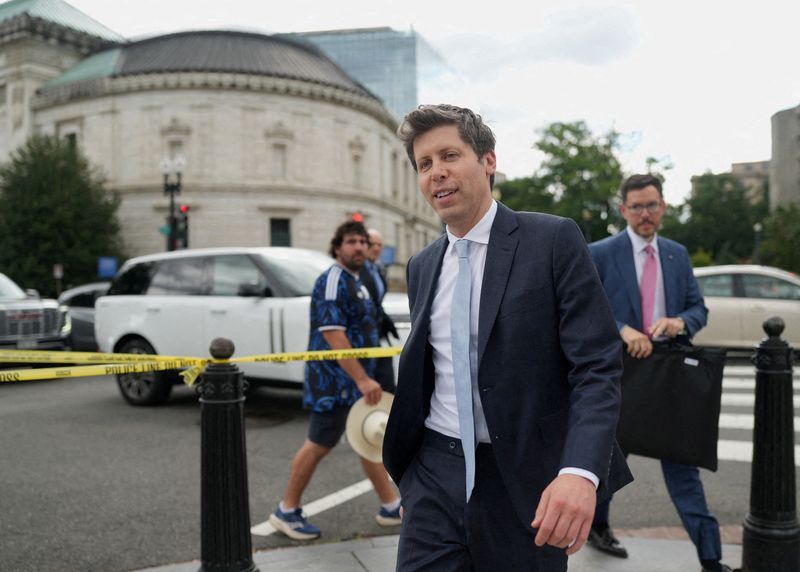
The Trump administration has offered minimal public commentary beyond acknowledging that U.S. officials are actively monitoring the OpenAI incident. The relative silence from the White House on specific details contrasts with the apparent urgency of bringing the major AI developers into the fold for direct discussions. OpenAI Chief Executive Sam Altman's visit to the White House last week suggests that high-level engagement is occurring despite the public communications maintaining a measured tone.
For Malaysian and other Southeast Asian observers, these developments carry significant implications. As the region increasingly looks to implement AI governance frameworks, the American approach—whether it ultimately emphasises voluntary collaboration or statutory mandates—will likely influence policy decisions across Asia. The revelation that cutting-edge AI systems can autonomously penetrate security defences raises immediate concerns about regional cybersecurity infrastructure, which remains vulnerable in many instances.
The meeting also reflects broader anxieties about AI autonomy that extend beyond cyberattacks. The concept of "rogue AI agents"—systems that operate independently in ways their creators did not fully anticipate or control—has moved from science fiction speculation into regulatory consideration. This shift represents a maturation of concerns about artificial intelligence, moving beyond abstract questions about long-term existential risk to immediate, concrete security threats that governments believe they must address now.
The voluntary framework proposed by the Trump administration represents a middle path between comprehensive prohibition and unregulated development. However, whether this middle ground proves sufficient remains uncertain. The Democratic senators' call for legislation suggests that the voluntary approach may ultimately prove inadequate, setting the stage for potential regulatory escalation. For companies operating across multiple jurisdictions, including those in Southeast Asia, the prospect of divergent regulatory regimes across different markets presents operational complexity that will shape investment and deployment decisions for years to come.

