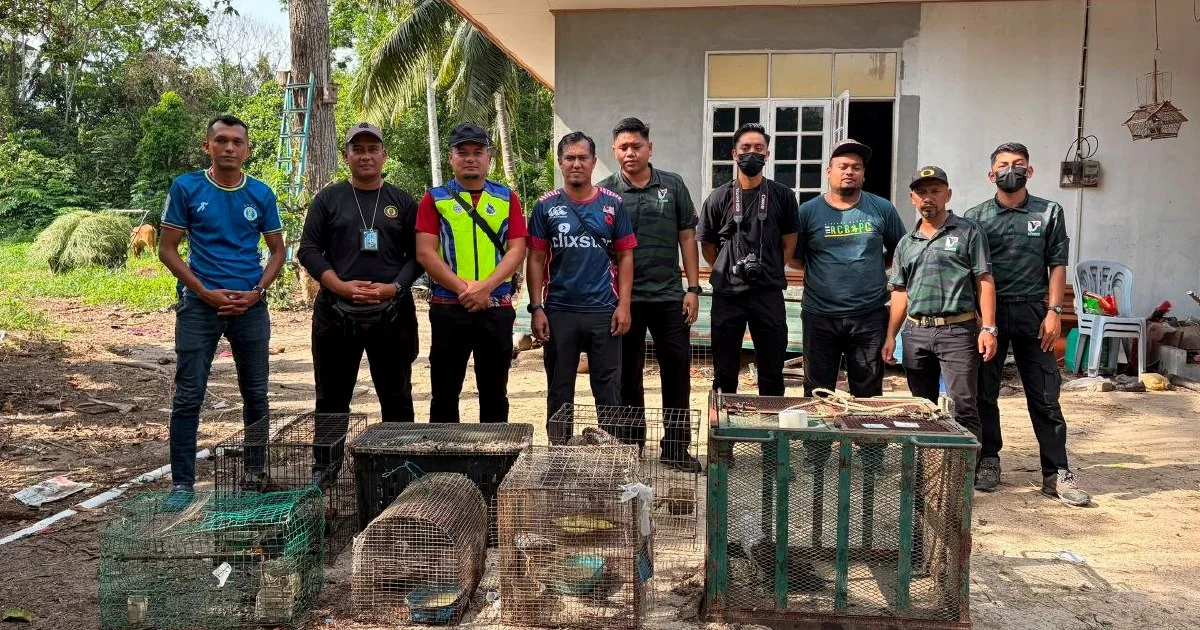
An 18-year-old resident of Tumpat in Kelantan was taken into custody following a raid operation that uncovered four separate species of protected wildlife, collectively valued at RM48,500. The arrest marks a significant enforcement action in a district historically susceptible to wildlife smuggling networks that exploit its proximity to Thailand and forested reserves teeming with endangered fauna. The seizure reflects mounting pressure from Malaysian authorities on individuals trafficking in restricted animals, a persistent problem across Peninsular Malaysia that fuels demand from overseas and domestic black markets.
The raid, conducted in Tumpat on the day of the arrest, yielded animals protected under Malaysian wildlife legislation—a regulatory framework designed to prevent extinctions and preserve biodiversity in a region where habitat loss and poaching have devastated populations of rare species. The four species involved remain unspecified in immediate reports, though Kelantan's geography suggests the haul likely included creatures naturally distributed across the state's forests, from primates and reptiles to birds sought by collectors and exporters. The substantial monetary valuation underscores how endangered fauna command premium prices in illicit trade channels, where rarity and legal restriction inflate value dramatically.
Kelantan's position as a trafficking hotspot reflects multiple risk factors unique to the state's operational environment. The region shares a porous border with Thailand, creating transit corridors for fauna moving between countries, while its terrain—characterised by patches of primary and secondary forest alongside plantation zones—provides both habitat and concealment for captured animals. Additionally, established smuggling networks utilising the state's ports and minor border crossings have historically facilitated the onward movement of wildlife to Vietnam, China, and other regional markets where demand for exotica remains intense. Local enforcement agencies acknowledge that intercepting contraband at the individual level, whilst important for disruption and deterrence, represents only one component of counter-trafficking strategy.
The teenager's detention exemplifies how the wildlife trade operates through supply chains involving young and often economically disadvantaged actors recruited into networks by established traffickers. Many individuals caught at the street level—traders, transporters, and holders—occupy low-status positions within criminal hierarchies, absorbing disproportionate legal risk while principal organisers and exporters remain insulated from direct detection. Understanding this structural reality shapes enforcement approach; authorities increasingly recognise that mass arrests of minor players yield limited impact unless coupled with investigation into upstream buyers and international receiver networks. The RM48,500 valuation suggests organised activity rather than casual collection, implying connections to distribution channels capable of liquidating such inventories rapidly.
Malaysia's protected wildlife legislation criminalises unauthorised possession, trading, and movement of specified fauna under the Wildlife Conservation Act 2010 and parallel state enactments. Penalties range from substantial fines to imprisonment, with sentences varying according to the number and protected status of animals involved. Prosecutorial outcomes depend on evidence collection, identification of specimens, and proof of possession with knowledge of protected status—elements that enforcement bodies in Kelantan have progressively refined through training and inter-agency coordination. However, conviction rates for lower-level traffickers remain inconsistent across states, a disparity that reflects resource limitations and judicial familiarity with wildlife law.
The Tumpat seizure arrives within a broader context of intensified biodiversity loss across Southeast Asia, driven by trafficking, habitat conversion, and climate pressures. Malaysia's own endangered fauna—from Malayan tigers to pangolins, the world's most trafficked mammals—face escalating poaching pressure as regional demand surges. Several species detected in Kelantan enforcement operations have become so depleted that additional losses threaten local extinction; pangolins, for instance, now appear in state seizures with regularity despite their critically endangered status. The cascade of ecological damage extends beyond individual animals, as removal of predators, seed-dispersers, and prey species disrupts forest function and regeneration capacity.
Regional cooperation represents an emerging frontier in counter-trafficking efforts, as authorities recognise that bilateral intelligence-sharing and coordinated patrols yield superior outcomes to unilateral enforcement. Kelantan's enforcement agencies engage periodically with Thai counterparts through official channels, though coordination remains inconsistent compared to maritime and narcotics enforcement. The Association of Southeast Asian Nations has produced frameworks encouraging wildlife crime cooperation, yet implementation across member states remains patchy due to competing priorities, funding constraints, and institutional capacity gaps. Malaysia's role as both origin state for trafficked fauna and transit point for contraband moving through the region positions it as a potential anchor for more robust multilateral engagement.
Prospective developments in Kelantan's enforcement approach centre on intelligence-led operations targeting organised networks rather than reactive raids on individual possessors. Authorities have experimented with asset-tracing investigations and financial follow-ups on suspected traffickers, methodologies that illuminate profit flows and international connections. Technology adoption—including DNA analysis for species confirmation, blockchain-based registry systems for legal wildlife trade, and geospatial mapping of seizure hotspots—promises to sharpen investigative capacity. Community engagement initiatives encouraging reporting of trafficking activity remain underfunded relative to demand, a gap that limits early intelligence generation.
The arrest outcome remains subject to judicial determination, with prosecution dependent on evidence assessment and interpretation of relevant legislation. If convicted, sentencing will establish precedent within Kelantan's legal context and potentially influence approach to comparable cases. Public communication around such arrests serves dual functions: deterrence messaging to potential traffickers and awareness-raising among communities dependent on forest resources or adjacent to wildlife habitat. The case illustrates how individual-level intervention, whilst limited in systemic impact, contributes to an emergent enforcement climate increasingly hostile to trafficking operations.

