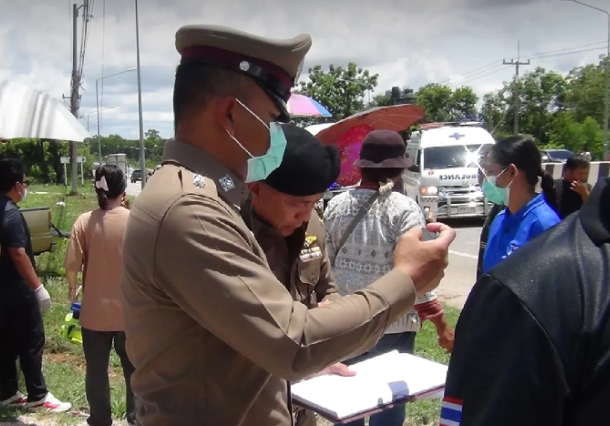
A catastrophic collision in Thailand's Mukdahan province has claimed the lives of ten Buddhist monks, marking one of the deadliest incidents involving the nation's revered religious community. The crash occurred during a pilgrimage Thursday when an 11-year-old child, driving his parents' pickup truck without permission, struck a group of monks and lay followers walking along a roadside. The death toll continued mounting through Friday as medical officials confirmed that five monks perished at the scene while another five succumbed to their injuries in hospital.
The procession comprised 35 monks and five lay devotees engaged in a religious pilgrimage when tragedy unfolded. Mukdahan Hospital reported that ten additional victims remain hospitalized as a result of the incident, with two patients listed in critical condition and eight sustaining various injuries. Hospital authorities continue monitoring the condition of the injured, though details regarding the severity and nature of individual injuries have not been fully disclosed. The scale of casualties underscores the violent force involved in the collision and its devastating impact on a peaceful religious gathering.
Authorization for the vehicle's operation presents a stark backdrop to the tragedy. The boy, identified as merely 11 years old, had taken the pickup truck from his parents without consent before the fatal crash occurred. This detail raises questions about vehicle security and supervision that will likely feature prominently in subsequent investigations. Thai law provides significant protections for children at this age, as the nation's legal system does not assign criminal liability to individuals under 12 years old, a provision that fundamentally shapes how authorities can respond to the boy's involvement in the incident.
Policeman Prayut Ruanthongkam, chief of Mukdahan City Police, stated Friday that the young driver was unable to provide a formal statement to officers. The boy has been referred to child welfare authorities rather than criminal prosecutors, accompanied by his mother throughout the assessment process. This referral reflects Thailand's legal framework prioritizing child protection and rehabilitation over prosecution for children in his age category. Authorities anticipate that welfare specialists will conduct thorough evaluations to understand the circumstances surrounding his access to the vehicle and to address any underlying issues.
Investigative efforts have shifted toward gathering testimony from surviving monks and other witnesses present at the scene. Police are systematically documenting accounts from those who survived the collision, seeking to reconstruct the sequence of events leading to the crash. These witness statements will prove crucial in understanding how the vehicle came to strike the procession and whether any preventable factors contributed to the tragedy. The investigation extends beyond identifying the driver to examining circumstances that allowed such an incident to occur.
Buddhist monks occupy an elevated position within Thai society, serving as custodians and transmitters of Buddha's teachings throughout the nation. Their spiritual authority and moral standing command profound respect from the general population, and monastic communities form the backbone of Thailand's religious and cultural identity. Public processions featuring monks represent important aspects of Buddhist practice and community devotion, with ordinary Thais frequently participating by offering alms and demonstrating their faith. The assault on a peaceful religious gathering strikes at the heart of these revered traditions.
The incident carries particular weight given the sanctity of the setting and the vulnerability of those targeted. Monks engaged in processions remain exposed to traffic hazards despite the sacred nature of their mission. The tragedy raises broader questions about road safety near religious sites and whether additional protective measures should be implemented during public religious gatherings. Many Southeast Asian nations grapple with similar challenges in balancing freedom of religious expression with ensuring public safety during street-based ceremonies.
Wat Roi Phra Phutthabat Phu Manorom, the hilltop temple in Mukdahan from which the procession originated, has assumed responsibility for caring for surviving monks and injured lay followers. The temple's response demonstrates the community support structures within Buddhist institutions, with monastic centers providing refuge and assistance to affected individuals. Several recovering monks have been taken in by the temple, alongside other procession participants requiring medical care and emotional support following the traumatic event.
For Malaysian readers, this tragedy offers sobering reflection on the precarious intersection of religious observance and modern vehicular dangers in Southeast Asia. Similar processions occur throughout Malaysia's Buddhist communities, particularly in states like Penang and Selangor, where monks regularly conduct public ceremonies. The incident underscores the necessity for enhanced awareness among drivers, better crowd control measures during religious events, and vigilant supervision of vehicle access to prevent unauthorized use by minors. Thai authorities will likely review safety protocols surrounding religious processions across the region, with implications potentially extending to neighboring nations' own religious gatherings.

