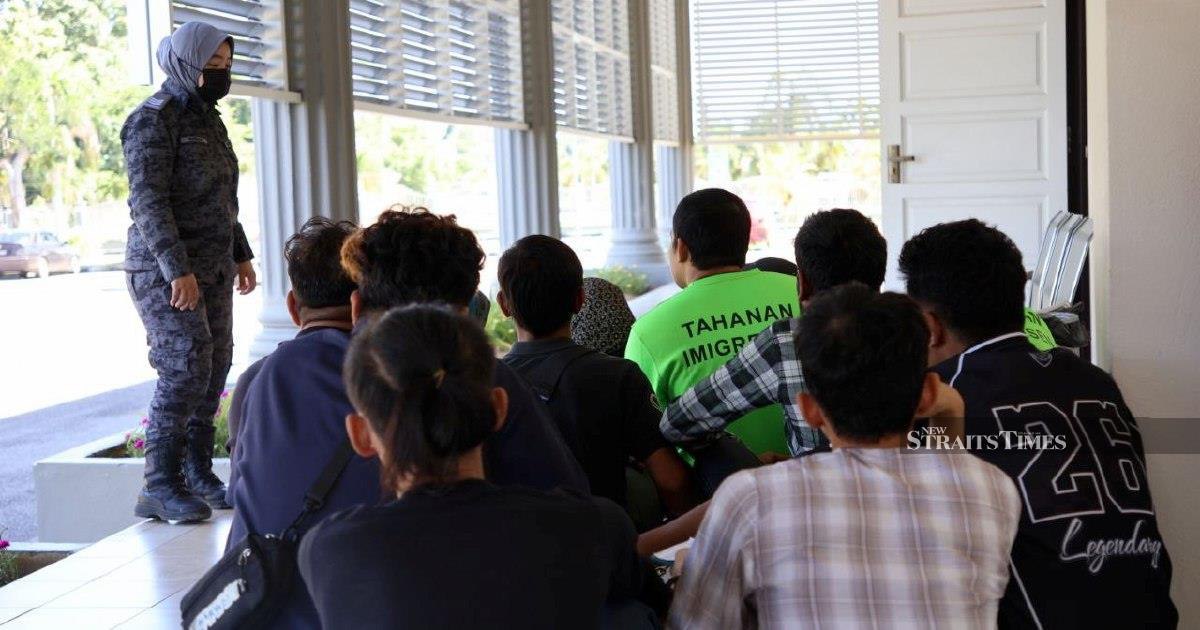
The Sessions Court in Pasir Mas brought charges against ten undocumented migrants today, marking another enforcement action against illegal entry and visa violations in Malaysia's northern border region. Among those facing the court were three foreign women, indicating a pattern of irregular migration affecting both male and female populations seeking entry into the country through unauthorized channels.
The migrants face multiple charges relating to breaches of Malaysia's immigration framework. These include overstaying beyond the permitted duration granted on their arrival documents, misusing social visit passes by engaging in unauthorized activities despite holding tourism-designated entry permits, and entering Malaysian territory through illegal means that circumvented official border checkpoints and proper immigration procedures. Such violations represent systematic attempts to circumvent the country's strictly regulated immigration system.
Pasir Mas, located in Kelantan along Malaysia's border with Thailand, has long served as a critical enforcement zone for immigration authorities. The area's geographical position makes it susceptible to irregular cross-border movement, with authorities regularly apprehending individuals who exploit porous transit routes and informal entry points. This case reflects ongoing efforts by enforcement agencies to combat the persistent challenge of undocumented migrants establishing themselves within Malaysian territory.
The prosecution of these individuals underscores the escalating concern among Malaysian authorities regarding compliance with immigration regulations. Overstaying constitutes a significant administrative violation that strains government resources devoted to immigration management and creates vulnerabilities in border security monitoring. When individuals misuse social visit passes—documents explicitly issued for tourism purposes—by remaining in the country for employment or other unauthorized activities, they fundamentally breach the conditions upon which their entry was permitted.
The cases proceeding through the Sessions Court demonstrate Malaysia's commitment to prosecuting immigration violations at a formal judicial level rather than through administrative deportation alone. This approach allows the legal system to impose sanctions that extend beyond simple removal from the country, creating a documented record that may affect future entry applications and establishing deterrent precedent for potential violators.
Economic motivations typically drive such illegal entries and overstaying behaviour. Migrant workers and irregular visitors often view Malaysia's relatively developed economy and employment opportunities as attractive compared to economic conditions in their home countries. The differential in wages, even for informal sector work, can incentivize individuals to risk illegal entry rather than pursue lengthy and expensive legal labour migration pathways. This creates a persistent tension between economic incentives driving irregular migration and enforcement capabilities attempting to prevent it.
For Malaysia's immigration authorities, each prosecution case involves substantial investigative resources, court time, and administrative processing. The removal and repatriation of undocumented migrants represent additional operational costs that accumulate across thousands of cases annually. These systemic expenses underscore why prevention through border enforcement remains a priority, even as courts process apprehended individuals through formal legal proceedings.
The implications for the broader Southeast Asian migration landscape are noteworthy. Malaysia, alongside Thailand and Singapore, functions as a primary destination for workers from lower-income neighbouring countries and beyond. Tackling illegal entry and overstaying requires coordinated regional approaches, yet individual nations maintain distinct enforcement capacities and legal frameworks. Cases like this one in Pasir Mas reflect Malaysia's consistent application of its immigration laws, establishing a predictable legal environment that theoretically discourages would-be violators.
For Malaysian employers and businesses relying on foreign labour, the enforcement actions serve as reminders of their responsibilities regarding worker documentation and status verification. Penalties for knowingly employing undocumented migrants remain substantial, yet enforcement against employers remains inconsistent compared to prosecution of the migrants themselves. This asymmetry sometimes undermines deterrent effects intended to eliminate demand-side incentives for hiring irregular workers.
The three women among the accused highlight gender dimensions often underexamined in migration discourse. Female migrants face heightened vulnerabilities to exploitation and trafficking, making their irregular status particularly concerning from a humanitarian perspective. Distinguishing between those seeking economic opportunity and those coerced into irregular arrangements requires nuanced investigative approaches that formal charge sheets rarely capture.
Looking forward, such cases will likely continue as long as substantial economic differentials exist between Malaysia and source countries, and as enforcement capacity remains constrained relative to migration pressure. Authorities acknowledge the ongoing challenge while maintaining operational momentum through regular apprehensions and prosecutions. The Sessions Court charges represent Malaysia's assertion of legal sovereignty over its borders, even as the underlying migration pressures persist across the region.

