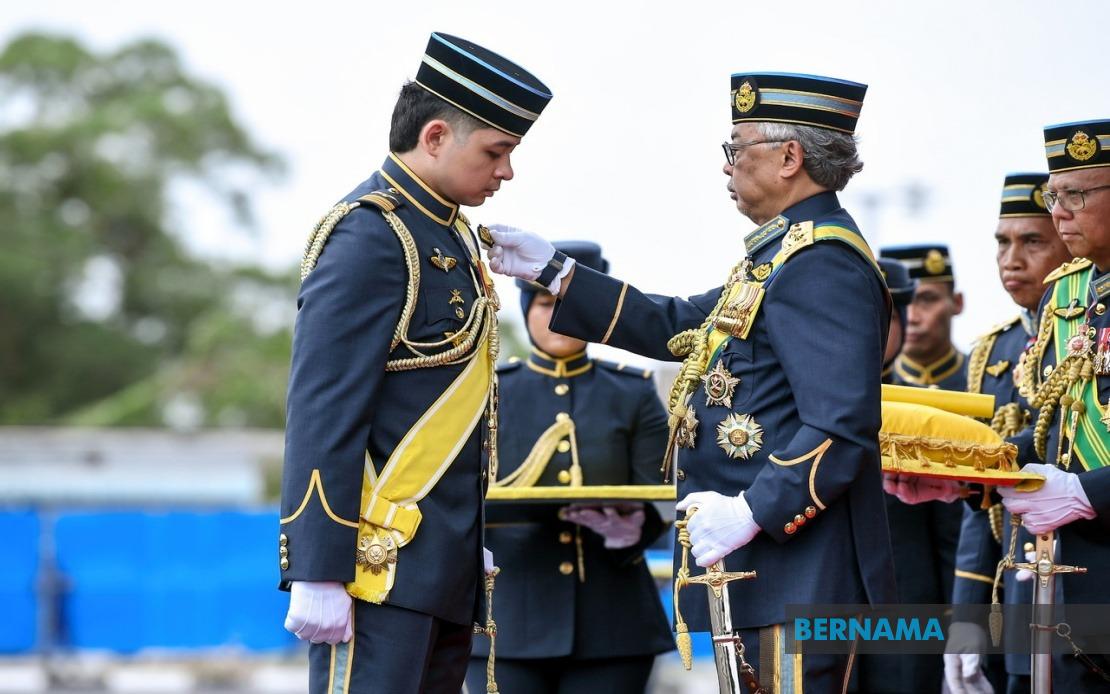
In a significant milestone for Malaysia's royal establishment, Tengku Hassanal Ibrahim Alam Shah Ibni Al-Sultan Abdullah Ri'ayatuddin Al-Mustafa Billah Shah, the Tengku Mahkota of Pahang, has become the first member of the royal family to undertake and successfully complete the Royal Malaysian Air Force's Basic Helicopter Flying Course. The historic achievement was marked during the 2026 Flying Wings Presentation Parade held at the Air College in Alor Setar, where he received his RMAF Flying Wings from his father, Al-Sultan Abdullah Ri'ayatuddin Al-Mustafa Billah Shah, who serves as Colonel-in-Chief of the air force.
The ceremony represented a notable convergence of military tradition and royal involvement, reflecting the deep-rooted connection between Malaysia's monarchy and its armed forces. Forty graduates in total received their wings at the parade ground event, including the Tengku Mahkota alongside 39 personnel from the Malaysian Armed Forces. This cohort included 37 newly qualified pilots and two weapons systems officers drawn from the three service branches, demonstrating the breadth of the air force's training pipeline and its commitment to developing diverse skill sets across the aviation domain.
The Tengku Mahkota undertook the 67(A)/26 Basic Helicopter Flying Course, which ran from early June through the end of July and utilized the EC120B Colibri helicopter for practical instruction. During his time at the Air College, he demonstrated proficiency across a series of rigorous assessments designed to ensure pilot competency. These evaluations encompassed the Basic Handling Test, which assesses fundamental aircraft control skills, the Instrument Flying Test evaluating performance under limited visibility conditions, and both the Final Navigation Test and Final Handling Test that validate operational readiness.
The achievement represents more than a symbolic gesture; it underscores the royal family's active engagement with national institutions and defence infrastructure. The decision by the Tengku Mahkota to complete formal military aviation training sends a powerful message about commitment to understanding and appreciating the capabilities and challenges faced by Malaysia's armed forces personnel. This hands-on approach to royal engagement with military matters contrasts with purely ceremonial roles and suggests a more substantive involvement in defence matters going forward.
The presentation parade also distributed six awards to distinguish the highest achievers among the graduating cohort. These accolades recognized excellence across multiple dimensions including operational flying performance, academic knowledge, personal discipline, and leadership capability. The multi-faceted assessment approach reflects modern military training philosophy, which recognizes that effective military aviation demands not only technical flying skill but also intellectual engagement, reliability, and the capacity to lead and manage complex operational environments.
Air Force Chief Gen Tan Sri Muhamad Norazlan Aris emphasized during the ceremony that the successful completion of training by all graduates, including the Tengku Mahkota, stemmed from sustained determination and the psychological resilience cultivated throughout their instruction. He acknowledged the crucial role played by family members in sustaining morale and providing emotional support during the demanding training regimen, recognizing that military aviation training places considerable pressure on candidates beyond the physical and technical demands of flying.
The Air Force Chief's remarks offered a broader perspective on the significance of earning flying wings within the Malaysian military context. He stressed that the presentation ceremony did not represent an endpoint but rather the commencement of an extended professional responsibility. The symbolic significance of the wings pinned to a pilot's uniform carries implications far beyond personal achievement, encompassing the trust vested in them by their service, their colleagues who depend on their competence, and the nation they serve. This ceremonial language underscores how military aviation remains among the most technologically demanding and consequential specializations within armed forces globally.
The four distinct flying courses represented at the ceremony demonstrated the air force's commitment to developing different specialist capabilities. Beyond the helicopter courses that trained the Tengku Mahkota and other candidates, the basic fixed-wing course and the weapons systems officer qualification reflected the diverse operational requirements of modern military aviation. Weapons systems officers, in particular, represent an increasingly critical specialization as modern military aircraft operate with sophisticated sensor suites and targeting systems that extend far beyond the pilot's individual capability to manage.
For Malaysian readers, this event carries implications regarding civil-military relations and the monarchy's role in national defence matters. The active participation of the Sultan of Pahang in the ceremony, not merely as a figurehead but as Colonel-in-Chief directly involved in conferring the wings, emphasizes the institutional role of the monarchy in defence structures. This reflects Malaysia's constitutional framework, where the Yang di-Pertuan Agong and state sultans maintain formal military titles and responsibilities that extend beyond ceremonial function.
The achievement also has potential implications for the future direction of the Tengku Mahkota's engagement with defence and military modernization issues. In many monarchies globally, members of the royal family with military training backgrounds become particularly influential in defence policymaking and strategic planning. The practical understanding gained from completing a formal military course positions him to engage more substantively with defence establishment leaders on technical and operational matters affecting capability development and strategic direction.
From a regional perspective, this milestone reflects broader trends within Southeast Asian militaries toward raising professional standards and ensuring that military aviation training meets international benchmarks. The EC120B Colibri helicopter utilized in training is a globally recognized platform chosen by many air forces, and the structured progression through multiple assessments mirrors international best practice in military pilot development. This commitment to standardized, rigorous training helps ensure that Malaysian military aviators remain operationally competitive within the region.
The participation of the Tengku Mahkota in the formal military training system also carries symbolic value regarding meritocratic principles within Malaysia's armed forces. While his royal status certainly provided access to the training program, his completion of the same assessments and attainment of the same qualifications as his fellow graduates emphasizes that the air force maintains consistent standards regardless of candidate background. This approach reinforces institutional integrity and the principle that military competence must be demonstrated through objective performance rather than conferred through status alone.

