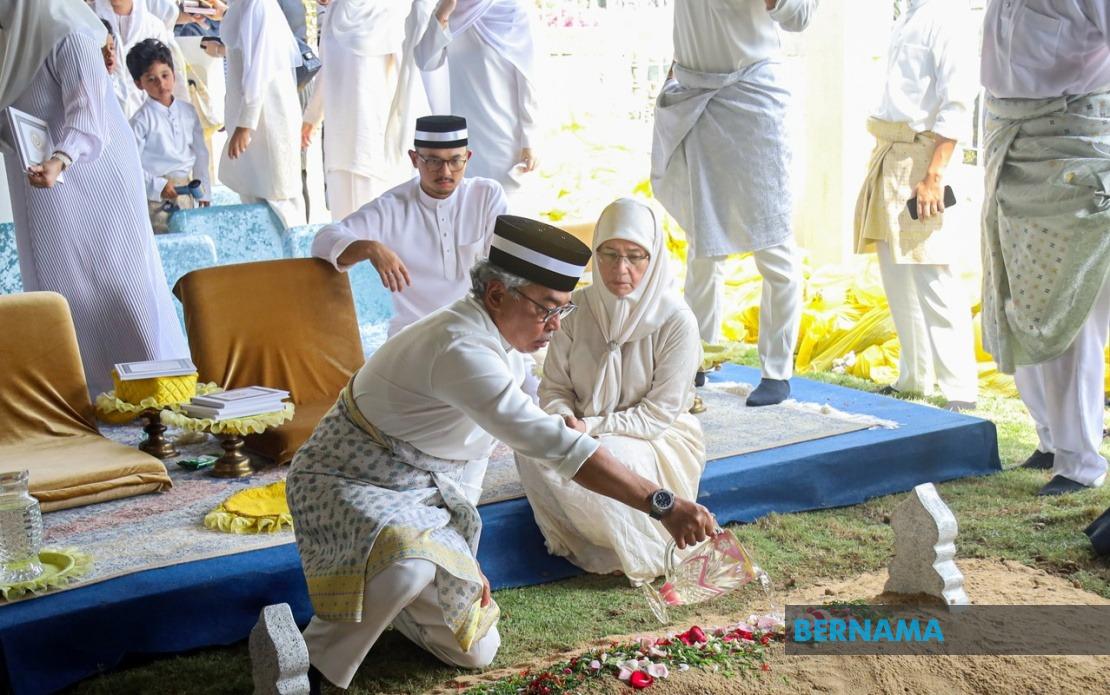
The burial of Tengku Puteri Seri Kemala Tengku Datuk Seri Aishah, the elder sister of Pahang's reigning monarch Al-Sultan Abdullah Ri'ayatuddin Al-Mustafa Billah Shah, took place on Wednesday in her home state, concluding funeral rites that began in the capital the previous day. The 69-year-old princess passed away on Tuesday evening at a Kuala Lumpur hospital, with her interment occurring at the Royal Mausoleum adjacent to the Sultan Ahmad 1 Mosque in Pekan, the administrative heartland of Pahang.
The funeral proceedings reflected the royal status of the deceased, drawing attendance from the highest levels of the Pahang state hierarchy and senior government figures. Al-Sultan Abdullah himself presided over the committal, accompanied by his consort Tunku Azizah Aminah Maimunah Iskandariah and their eldest son Tengku Mahkota Tengku Hassanal Ibrahim Alam Shah, ensuring the occasion honoured the princess's position within the sultanate's royal family structure. The presence of these key figures underscored the significance of the moment within Pahang's institutional life.
Among state dignitaries present were Melaka's Yang Dipertua Negeri Tun Mohd Ali Rustam and Pahang's chief minister Datuk Seri Wan Rosdy Wan Ismail, reflecting the broader political establishment's recognition of Tengku Puteri Seri Kemala's standing as a senior member of the Pahang royal household. Such attendance patterns at royal funerals typically signal the importance accorded to the deceased within Malaysia's constitutional monarchy framework and the interconnected networks of Malaysia's state rulers.
The funeral observances commenced in Kuala Lumpur, where Islamic prayers were recited at the Khalid bin Al-Walid Mosque located on Jalan Padang Tembak. Following these initial rites, the princess's remains were transported to Subang Air Base before being airlifted to Pahang, a journey that acknowledged both her long-standing connection to her home state and the ceremonial requirements associated with royal funerals in Malaysia's federal system.
Upon arrival in Pekan at 1.25 pm, the cortège proceeded directly to the Sultan Ahmad 1 Mosque, where additional prayers were conducted following the zuhur prayer time. This sequential arrangement of prayer services across multiple locations and times demonstrates the structured approach that characterises Islamic funeral practices within Malaysia's royal establishments, ensuring spiritual observances are accorded at each significant stage of the journey.
The burial ceremony itself adhered to full royal protocol, with the interment conducted at the Royal Mausoleum with appropriate honours befitting the princess's rank. Pahang's Mufti Datuk Dr Asmadi Mohamed Naim presided over the spiritual aspects of the committal, leading the recitation of Yasin followed by tahlil and prayers for the deceased. These traditional Islamic observances formed the core of the ceremonial proceedings, providing the spiritual framework through which the family and state mourned their loss.
In a personal gesture of remembrance, Al-Sultan Abdullah and Tunku Azizah participated in the final rites by sprinkling rose water upon the grave and scattering flowers, a practice that adds an intimate dimension to formal state funerals. Such acts, often photographed and documented as part of public record-keeping, serve to humanise the ceremonial aspects of royal mourning whilst maintaining the formal requirements expected at events of this magnitude.
The death of Tengku Puteri Seri Kemala represents a significant transition within Pahang's royal circle, particularly given the current reign of Al-Sultan Abdullah, who assumed the throne in 2019. As an elder sibling, the princess had witnessed the evolution of Pahang's constitutional role through decades of Malaysian political development and had maintained her position within the sultanate's family hierarchy across multiple generations of political and social change.
The circumstances of her passing and the swift arrangement of funeral proceedings within a 24-hour timeframe reflect the institutional mechanisms through which Malaysia's royal establishments manage such transitions, balancing religious observance with ceremonial protocols. The involvement of cross-state dignitaries, particularly from Melaka, also hints at the networks of relationships that bind together Malaysia's various sultans and their families in contexts both celebratory and sorrowful.
Tengku Puteri Seri Kemala's burial at the Royal Mausoleum in Pekan ensures her final resting place remains within Pahang's sacred landscape, alongside other members of the sultanate's extended family. This location carries symbolic weight, as the mausoleum serves as a repository for generations of Pahang's royal history, making her interment a continuation of dynastic tradition rather than a departure from it.
The funeral's conclusion marks the end of a formal mourning period for the royal household, though the implications of her passing may extend into questions of succession planning and family dynamics within the Pahang sultanate. As Malaysia's royal institutions continue to navigate contemporary governance challenges, the passing of long-lived senior family members like Tengku Puteri Seri Kemala often prompts broader reflections within these institutions about continuity, legacy, and the evolving roles of collateral royal lines in twenty-first-century Malaysia.

