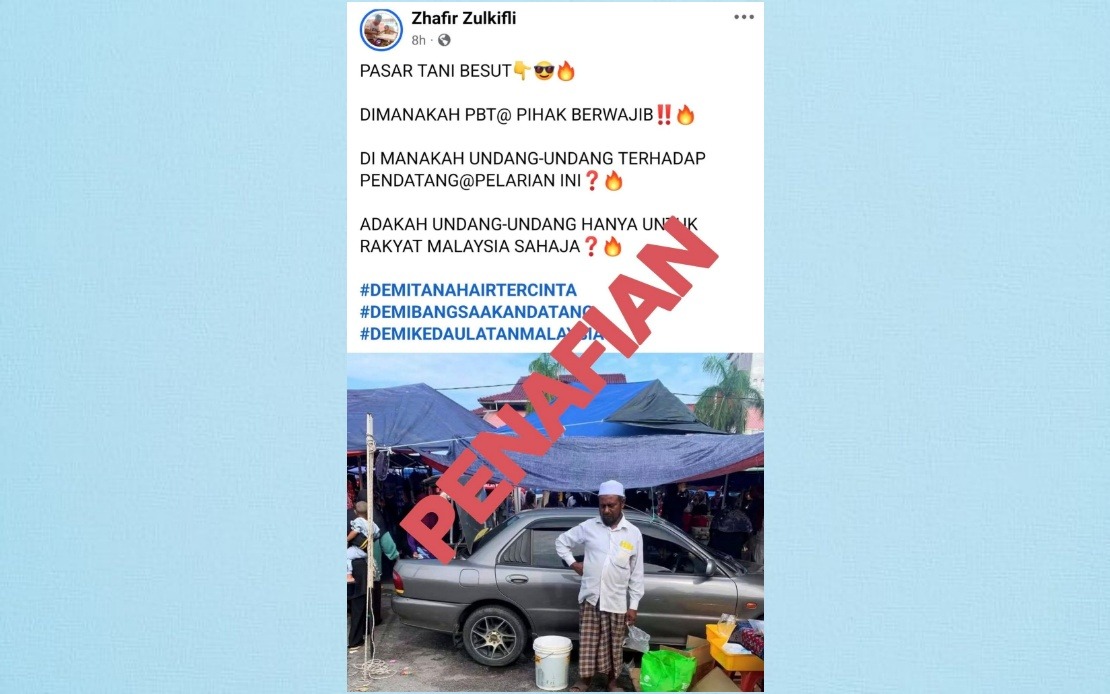
The Terengganu Federal Agricultural Marketing Authority (FAMA) has moved to counter misinformation circulating on social media regarding the participation of non-Malaysian citizens in its farmers' market operations. The agency released a statement on August 30 to distance itself from allegations that surfaced following a viral Facebook post showing what appeared to be a foreign national selling vegetables at a market in Besut.
The confusion appears to have arisen from a conflation of two distinct market operations in the Besut area. FAMA's statement clarified that the incident referenced in the social media post did not occur at any farmers' market under the authority's direct supervision. Instead, the transaction captured in the post took place at Kuala Besut Morning Market, which operates independently and falls outside FAMA's operational purview. This distinction is crucial for understanding the regulatory oversight and vendor vetting processes at different types of market facilities in Terengganu.
For clarity on its actual sphere of responsibility, FAMA outlined its current farmers' market portfolio in the district. The authority manages just two such facilities in Besut: the Jerteh Farmers' Market, which operates every Thursday between 7 am and 1 pm, and Alor Lintang Farmers' Market, which runs on Saturdays during the same hours. These operational schedules and locations form the extent of FAMA's direct management and regulatory authority in the area, establishing a clear boundary between what the agency controls and what falls to other municipal or private entities.
The incident highlights the broader challenge of agricultural market regulation across Malaysia, where overlapping jurisdictions and varying standards can create confusion among consumers and vendors alike. The rapid spread of the viral post underscores how quickly social media can amplify concerns about market practices without verifying the specific regulatory context. For Malaysian consumers concerned about fair trading practices and the employment of citizens in agricultural commerce, such distinctions between regulated FAMA markets and independent morning markets become increasingly important as they navigate food purchasing decisions.
The timing of FAMA's denial carries particular significance for Terengganu's broader economic and social priorities. As state authorities and federal agencies continue efforts to support local farmer livelihoods and protect domestic agricultural employment, clarity around vendor eligibility becomes a matter of public interest. FAMA's intervention to separate its reputation from the alleged incident suggests awareness that perception of lenient foreign participation policies could undermine public confidence in the authority's commitment to prioritizing Malaysian traders and farmers.
This incident also reflects wider regional tensions around foreign participation in Southeast Asian retail and agricultural markets. Countries across the region have grappled with managing the presence of migrant workers and foreign traders in informal commerce sectors, balancing economic integration with protectionist pressures favoring local citizens. Malaysia's approach through bodies like FAMA attempts to maintain standards and employment protection, but coordination challenges emerge when responsibility is shared across multiple market operators and regulatory authorities.
The social media dynamics evident in this case reveal how quickly unverified claims can damage institutional credibility, even when they concern separate operations entirely. FAMA's need to issue a public clarification demonstrates the reputational stakes involved in modern agricultural administration, where online perception can rapidly shape public opinion regardless of factual accuracy. The authority's swift response, while necessary, also indicates the organizational burden that managing digital rumors now places on government agencies.
For traders operating legitimately at FAMA-supervised markets, such confusion can create collateral concerns about the broader market environment and regulatory reliability. Legitimate Malaysian vendors at the Jerteh and Alor Lintang facilities may worry about association with any market operating without equivalent standards, potentially affecting foot traffic and sales if consumer confidence becomes shaken by broader perceptions of mixed regulatory standards across market types.
Moving forward, the incident suggests value in enhanced communication between FAMA and the public regarding vendor eligibility requirements and regulatory oversight mechanisms. Greater transparency about how FAMA verifies trader credentials and maintains compliance standards could build confidence in the authority's operations and preempt future misunderstandings. For consumers in Terengganu and elsewhere across Malaysia, understanding which markets fall under FAMA supervision becomes practically important when seeking assurance about vendor legitimacy and fair pricing practices.
The broader policy implication concerns how Malaysia manages its informal agricultural commerce sector amid demographic and economic changes. As regional migration patterns continue and urbanization accelerates, questions about foreign participation in informal markets will likely intensify. FAMA's approach of maintaining distinct operational standards at supervised facilities offers one model, but coordinating this with independent market operators and municipal authorities remains an ongoing challenge requiring sustained administrative effort and inter-agency collaboration.

