Terengganu's state government has committed RM3.78 million towards developing Kenyir Geopark in Hulu Terengganu, with funds allocated across 2024 and the current fiscal year to strengthen the sprawling protected area's international standing. The investment strategy reflects state-level confidence in the geopark's potential as a major tourism and conservation asset, targeting both the preservation of its existing National Geopark designation and an eventual upgrade to UNESCO Global Geopark status — a distinction that would elevate Terengganu's profile within the global geotourism landscape.
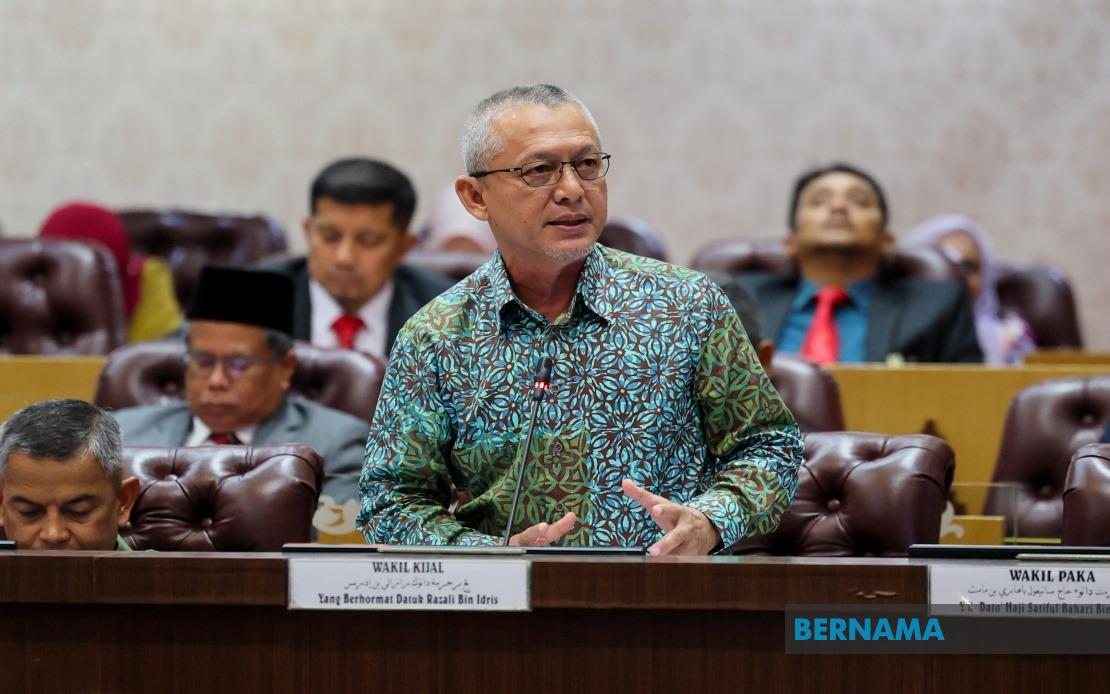
Datuk Razali Idris, chairman of the Terengganu State Tourism, Culture, Environment and Climate Change Committee, outlined the comprehensive scope of the funding when addressing the State Legislative Assembly. The allocation operates through the Hulu Terengganu District Office and encompasses multiple pillars essential to geopark advancement: physical infrastructure development, scientific heritage preservation, visitor experience enhancement, and community empowerment. By structuring investment across these interconnected areas, the state government aims to create a self-reinforcing system where improved facilities attract visitors, education programmes build local stakeholder investment, and conservation efforts maintain the scientific and ecological integrity that underpins the geopark's international credentials.
The conservation component of the funding targets several significant geological and archaeological sites that anchor Kenyir Geopark's scientific importance. Among these are Gua Bewah and Gua Taat, limestone cave systems rich with geological history, alongside Batu Bersurat, an inscribed rock formation of cultural and historical significance. These geosites represent non-renewable heritage assets whose degradation would be irreversible; thus, the state government's explicit commitment to their preservation through dedicated funding acknowledges both their intrinsic value and their role in attracting researchers and educated tourists seeking authentic geological and cultural experiences. This conservation-first approach distinguishes Terengganu's geopark model from purely commercial tourism development.
Kenyir Geopark sprawls across approximately 244,900 hectares in the Hulu Terengganu district, making it a landscape-scale conservation initiative rather than a single attraction. Within this vast territory, the geopark currently incorporates 15 geosites — locations of particular geological significance — alongside 10 biosites reflecting the area's biodiversity value, 11 cultural heritage sites representing human settlement and activity across centuries, and one geo-archaeological site bridging geological and human history. This diverse inventory positions Kenyir as a natural laboratory for understanding Southeast Asian geological evolution, tropical ecosystem dynamics, and the deep history of human occupation in Peninsular Malaysia's east coast region, all considerations that strengthen its case for UNESCO recognition.
Geotourism product development represents a distinct strategic focus, acknowledging that sustainable funding and local buy-in depend on demonstrating tangible economic benefits from geopark status. By investing in visitor amenities, interpretive signage, guided experience design, and accommodation infrastructure, Terengganu creates the conditions for tourism spending to circulate within the Hulu Terengganu economy. This approach contrasts with extractive resource models; instead of removing value from the landscape through logging or mining, geotourism commodifies knowledge and experience, converting geological and cultural heritage into sustainable income streams for local communities and the state.
The dramatic surge in visitor numbers provides quantitative evidence of growing regional and international interest in the geopark concept. Arrivals climbed to 454,765 visitors in 2024 from 218,157 in 2023, representing an astonishing 108.5 percent year-on-year increase. For context, this trajectory suggests that Kenyir Geopark is transitioning from a nascent initiative with limited awareness into an increasingly significant tourism destination, likely benefiting from word-of-mouth promotion, improved digital marketing, better road access, and growing global appetite for experiential and educational tourism. The growth rate indicates that the geopark has achieved sufficient visibility and accessibility to attract domestic tourists from across Peninsular Malaysia and international visitors seeking alternatives to conventional sun-and-beach destinations.
Capacity building initiatives targeting local communities represent an often-overlooked but crucial component of sustainable geopark development. Without training programmes that equip Hulu Terengganu residents with hospitality skills, geological knowledge, and business acumen, the economic benefits of tourism can leak away to external operators and imported workers. By investing in community education, the state government creates conditions for locals to capture a larger share of tourism revenue, develop entrepreneurial initiatives around geopark activities, and exercise stewardship over their own heritage. This inclusive approach typically generates stronger political support for conservation measures and reduces perceptions that geopark designation serves external interests at local expense.
Public awareness and education programmes serve multiple constituencies. School-group visits and classroom curricula highlighting Kenyir's geological formations contribute to environmental literacy across Malaysia's education system, while public campaigns build broader understanding of geopark concepts and their importance. For the international audience, robust education programming signals to UNESCO evaluation teams that the geopark represents more than a branding exercise; it demonstrates institutional commitment to using geological heritage as a platform for deepening public scientific understanding. This educational dimension distinguishes Global Geopark designation from simple tourism certification.
The state government's strategic emphasis on maintaining and then elevating Kenyir Geopark's international standing reflects evolving priorities across Southeast Asia. As regional economies mature and competition for tourism markets intensifies, destinations increasingly differentiate themselves through cultural, ecological, and scientific authenticity rather than price competition. UNESCO Global Geopark status opens access to international funding networks, knowledge-sharing platforms, and certification that appeals to high-value tourist segments interested in geology, heritage, and sustainable tourism. For Terengganu, which has traditionally relied on beach and maritime tourism, Kenyir Geopark offers geographic diversification that reduces economic dependence on coastal areas while monetizing the interior highlands' substantial natural capital.
The RM3.78 million allocation, while substantial in context of state budgeting, remains modest relative to the geopark's geographic scale and developmental ambitions. This suggests that the state government views the allocation as seed funding catalysing additional investment through tourism operator participation, federal grants potentially available to sites pursuing UNESCO designation, and philanthropic support from conservation organizations. The structured approach — channelling funds through district offices and targeting specific conservation and development categories — indicates professional management and creates accountability mechanisms for expenditure tracking.
Looking ahead, the trajectory toward UNESCO Global Geopark status will require sustained political commitment beyond the current allocation cycle. The competitive international designation process attracts applications from geoparks across Asia, Africa, and Latin America with varying institutional capacities and funding levels. Terengganu's success will depend on demonstrating not merely visitor numbers or infrastructure quality, but an integrated governance model in which geological conservation, scientific research, community development, and sustainable tourism operate as mutually reinforcing systems. The current investment signals serious intent; subsequent years will test whether that intent translates into institutional staying power.

