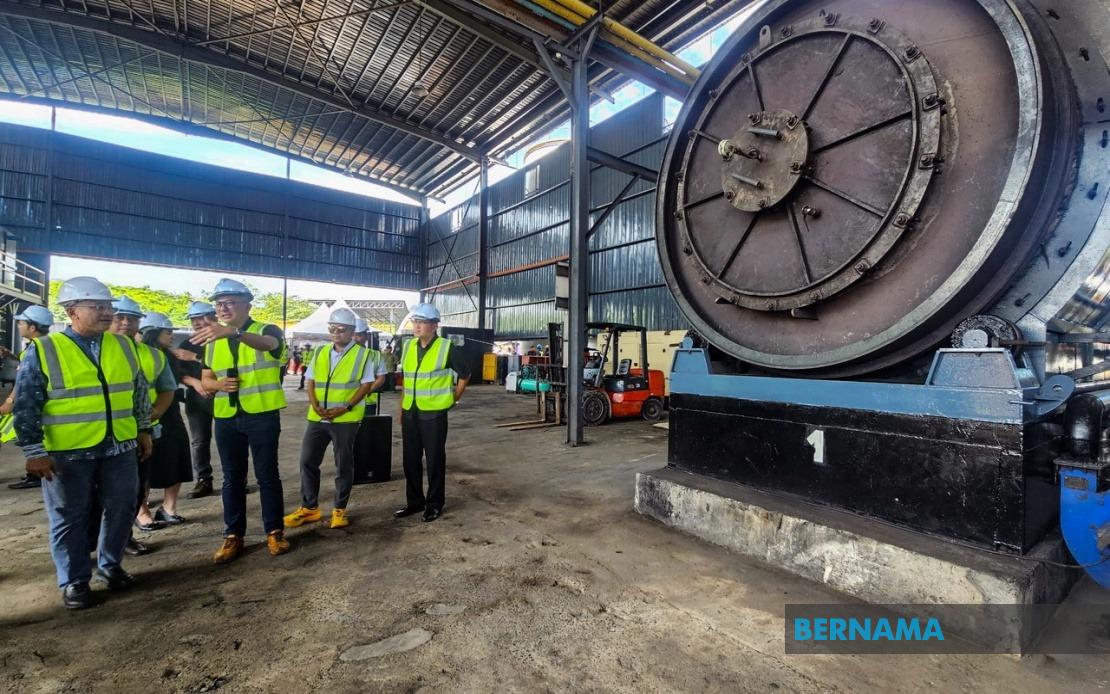
The Terengganu State Government is moving swiftly to implement transit-oriented development (TOD) initiatives across six stations along the East Coast Rail Link, seizing the opportunity created by an accelerated operational timeline. Menteri Besar Datuk Seri Dr Ahmad Samsuri Mokhtar announced the strategy following confirmation that Phase 1 services from Kota Bharu to Gombak are now targeted to commence in December, substantially earlier than the previously scheduled January 2027 launch date. This compressed timeline has prompted state planners to prioritise infrastructure and commercial development around these critical hubs to ensure they deliver maximum economic benefit to local communities from day one of operations.
The acceleration of TOD plans reflects a broader recognition that merely operating a rail service falls short of its transformative potential. Dr Ahmad Samsuri emphasised that the ECRL represents far more than passenger connectivity—it is fundamentally a tool for unlocking regional economic capacity. By developing facilities and commercial spaces around each station, Terengganu aims to catalyse business activity, create employment opportunities, and position the state as a more attractive investment destination. The state has already engaged with multiple stakeholders, including the contractor China Communications Construction Company Ltd (CCCC) and concessionaire Malaysia Rail Link Sdn Bhd (MRL), to map out viable TOD opportunities at each of the six stations within its jurisdiction.
Critically, the Terengganu government has clarified its financial role in this development equation. Rather than shouldering the entire capital burden, the state intends to focus its investment on foundational infrastructure—roads, electricity connections, and water supply systems—that enable private sector participation. This targeted approach reflects pragmatic governance, acknowledging that sustainable commercial development depends on private investor confidence and operational involvement. The state has prepared design frameworks and master plans for station-area development; however, realising these plans hinges on securing private sector commitments, a process currently being managed by MRL in partnership with Terengganu Incorporated, the state investment promotion agency.
A cornerstone of the state's strategy is ensuring that Terengganu's own business community captures the economic upside. Dr Ahmad Samsuri made a direct appeal to local entrepreneurs to establish complementary services and retail operations in the vicinity of ECRL stations. Hotels, restaurants, logistics hubs, and consumer goods retailers are among the obvious candidates for profitable expansion near high-traffic railway nodes. By encouraging indigenous business development rather than importing external commercial operators, Terengganu seeks to retain value within the state economy and foster a sense of community ownership in the project.
The cargo dimension of the ECRL strategy carries particular significance for Terengganu's economic outlook. Dr Ahmad Samsuri stressed that corporate engagement with the rail link's freight capacity is essential to maximising its macroeconomic impact. The corridor will ultimately connect to Kemaman Port, creating an integrated transport chain that can move goods efficiently from production sites to export terminals. This multimodal logistics capability stands to energise industrial clusters and port-dependent enterprises throughout the state. Companies currently operating near Kemaman Port, including the state-owned Eastern Pacific Industrial Corporation (EPIC) Berhad, are positioned to benefit substantially from improved cargo connectivity.
The Kemaman Port connection itself represents a pivotal multiplier for Terengganu's development agenda. Once the ECRL alignment to the port is operational, manufacturing and processing firms in the region will gain reliable access to both domestic and international markets via rail rather than relying solely on road transport. This infrastructure improvement can alter investment calculus for industries considering Terengganu as a location, particularly resource-processing sectors that depend on bulk cargo movement. The state government views the ECRL corridor as a mechanism to attract high-value industrial investment that was previously economically infeasible without superior logistics infrastructure.
The December 2024 operational target, while ambitious, depends on successful completion of rigorous testing protocols. Transport Minister Anthony Loke has indicated that the launch date is contingent on smooth progression through System Integration Testing (SIT) and Fault-Free Run (FFR) procedures—comprehensive validation exercises designed to ensure the rail system operates reliably and safely under real-world conditions. No shortcuts on safety standards will be tolerated, meaning the December date remains provisional pending satisfactory test outcomes. This cautious approach, while potentially disappointing those eager for immediate operations, reflects responsible infrastructure stewardship.
For Malaysia's broader development narrative, Terengganu's TOD acceleration carries implications extending beyond state borders. The East Coast region has historically operated somewhat peripherally to Malaysia's primary economic zones, which cluster around the Klang Valley and northern Selangor. The ECRL represents a strategic attempt to rebalance regional economic geography by improving connectivity and investment accessibility along the east coast corridor. Should Terengganu successfully translate enhanced rail access into genuine economic dynamism, other east coast states will face pressure to undertake comparable development initiatives around their respective ECRL stations.
The financial architecture supporting this development also merits examination. By positioning the state as infrastructure provider rather than primary developer, Terengganu reduces its fiscal exposure while creating a framework that attracts private capital. This model—public provision of essential backbone infrastructure coupled with private sector-led commercial development—has proven effective in other comparable contexts globally. However, success requires disciplined project governance, transparent tender processes for private concessions, and robust land use planning to prevent speculative or suboptimal development.
Regional competitiveness considerations underscore why Terengganu is moving decisively on TOD implementation. Neighbouring states and competing port facilities across Southeast Asia are simultaneously undertaking rail and infrastructure modernisation initiatives. Terengganu's acceleration of development around ECRL stations positions it to capture market share in logistics-dependent industries before competing regions complete their own infrastructure upgrades. The window for first-mover advantage in east coast regional development may be relatively narrow, justifying the state's urgency in moving from planning to execution.
Looking forward, the success of Terengganu's TOD strategy will hinge on several interdependent factors: timely completion of the ECRL itself, effective coordination between public and private stakeholders, genuine local entrepreneurial engagement, and corporate adoption of ECRL freight services. If these elements align, December 2024 operations could indeed catalyse sustained economic expansion. Conversely, if TOD development lags, cargo adoption remains low, or the rail service experiences operational difficulties, the ECRL's transformative potential for the state could remain substantially unfulfilled. The coming eighteen months will prove decisive in determining whether Terengganu's accelerated development strategy yields the anticipated regional economic revitalisation.

