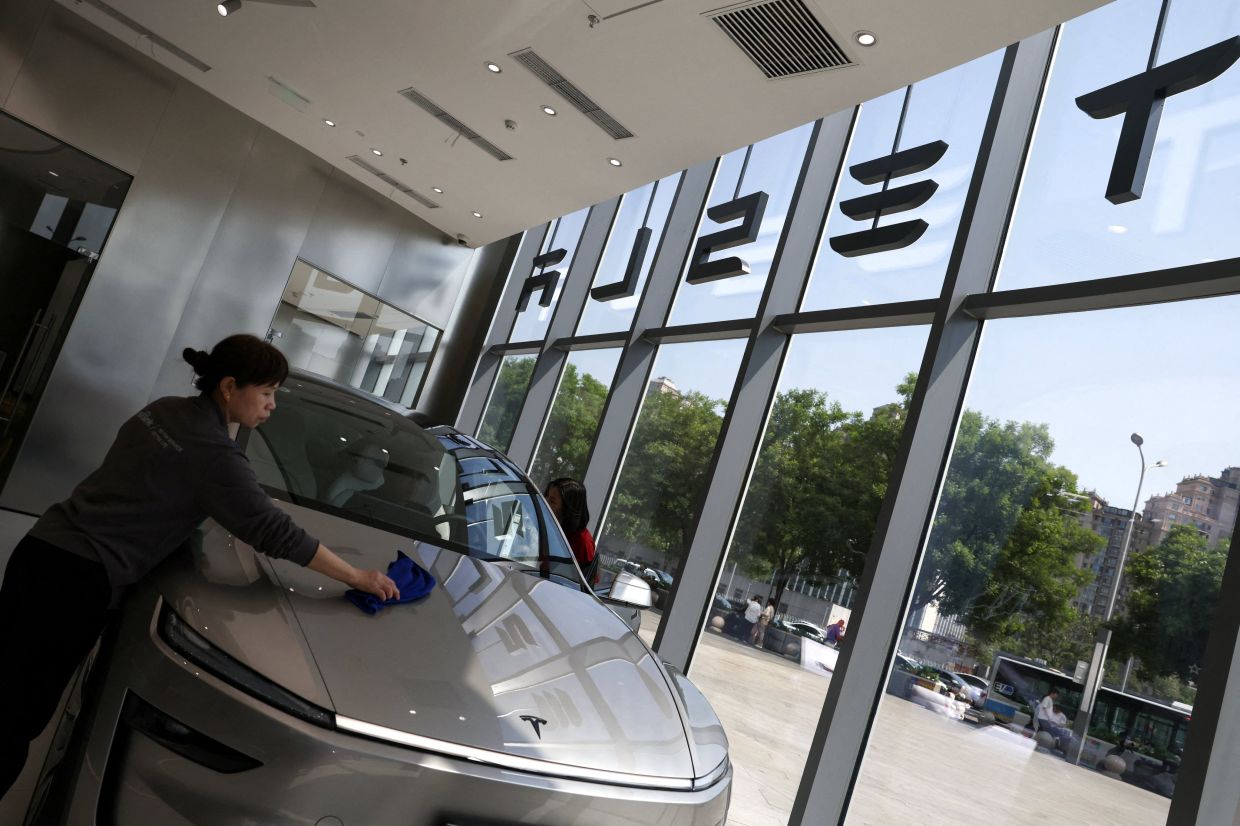
Tesla has announced a record-breaking product recall in mainland China's electric vehicle market, pulling back nearly 3 million vehicles to address a critical door-handle malfunction. The unprecedented scale of the recall underscores mounting safety concerns within China's booming EV sector and reflects intensifying regulatory scrutiny over automotive design standards in the world's largest electric vehicle market. Though Tesla is not the sole manufacturer affected by China's new safety measures, it faces by far the largest remediation obligation announced to date.
The decision to recall 2.98 million vehicles represents a watershed moment for product safety in China's auto industry. The recall encompasses multiple Tesla models and reflects the company's effort to comply with stricter regulatory requirements that have emerged following high-profile incidents highlighting vulnerabilities in modern vehicle designs. The sheer volume of vehicles involved—equivalent to roughly two years of output for a major automaker—demonstrates both the ubiquity of Tesla's presence in China and the pervasiveness of the underlying defect across its fleet.
China's pivot toward stricter door-handle regulations stems directly from a tragic accident in October in Sichuan province, where a Xiaomi SU7 Ultra electric vehicle caught fire and the occupant became trapped inside. Eyewitnesses attempting to rescue the 31-year-old driver found themselves unable to open the doors from either inside or outside the vehicle, preventing escape as the fire spread. The incident catalysed widespread public outcry and prompted soul-searching within both the regulatory apparatus and the automotive industry about the adequacy of existing safety protocols for electrically-operated components.
Responding to public pressure and safety advocates' concerns, China's Ministry of Industry and Information Technology announced in February an imminent regulatory overhaul targeting retractable door handles. Beginning in 2026, all new vehicles sold in China must feature both internal and external door handles capable of mechanical operation at all times, irrespective of power loss or collision damage. This requirement represents a fundamental departure from the design philosophy prevalent in recent years, where manufacturers prioritised sleek aesthetics and aerodynamic efficiency over mechanical redundancy.
Tesla's remediation strategy involves two distinct interventions. Beginning September 25, the company will append warning labels to internal door handles on recalled vehicles and deploy an over-the-air software update to its window-control systems. The software modification will automatically lower vehicle windows following a collision, theoretically providing occupants an alternative escape route should conventional door mechanisms fail. This approach reflects the practical constraints facing manufacturers retrofitting millions of already-delivered vehicles without recalling them to service centres.
Beyond the door-handle recall, Tesla is simultaneously recalling 2.74 million Model 3 and Model Y vehicles assembled at its Shanghai manufacturing complex. This secondary recall addresses autonomous driving system performance during emergencies, ensuring that assisted steering and driver-assistance functions properly engage when operators fail to respond rapidly to collision scenarios. The dual recall initiative reveals the breadth of safety concerns regulators have identified across Tesla's Chinese fleet and suggests the company faces multifaceted compliance challenges.
Shanghai-based automotive maintenance professional Zhang Wenjie characterised the recall environment as a turning point for industry standards. According to his assessment, the door-handle issue crystallised throughout late 2024 as both regulators and consumers elevated their safety expectations, creating momentum for industry-wide improvements. He anticipated that Tesla's massive recall, coupled with similar actions by domestic Chinese manufacturers, would catalyse broader quality consciousness throughout the sector. This perspective suggests the current regulatory crackdown may yield systemic benefits extending beyond Tesla's immediate compliance obligations.
The timing of China's door-handle restrictions carries particular significance given Tesla's manufacturing footprint in the country. Shanghai's Gigafactory produced approximately 851,000 vehicles during 2025, representing just over half of Tesla's global output for that year. Despite this dominant contribution, Tesla's worldwide production declined 8.6 per cent year-over-year to 1.63 million units, reflecting intensifying competition within the EV market and softening demand in key markets. The recall's impact on production capacity and supply-chain logistics could further strain Tesla's manufacturing efficiency during a period of already-declining output.
China's regulatory assertiveness regarding vehicle safety reflects the country's maturation as an automotive market and its determination to establish indigenous safety standards. Rather than simply adopting foreign regulatory frameworks, Beijing is proactively setting the terms for next-generation vehicle design, essentially dictating the future architecture of electric vehicles sold within its massive market. This regulatory leadership positions China's automotive standards as potentially influential benchmarks for other Asian markets, including Southeast Asia, where Tesla and Chinese EV manufacturers increasingly compete.
For regional automotive markets in Southeast Asia, China's regulatory developments carry strategic implications. Malaysian automotive stakeholders, along with counterparts across ASEAN, face mounting pressure to harmonise safety standards with Chinese requirements. As Chinese EV manufacturers expand aggressively throughout Southeast Asia, the standards they must meet at home will shape their product offerings abroad. Similarly, Tesla's compliance with Chinese regulations establishes precedent for the company's engineering priorities across Asia-Pacific markets.
The recall episode also illuminates broader competitive dynamics within China's EV ecosystem. Alongside Tesla, numerous domestic manufacturers including NIO, XPeng, and Li Auto have encountered safety-related recalls and regulatory scrutiny. The differentiation between companies increasingly hinges on how swiftly and comprehensively manufacturers address identified defects and adapt to evolving regulatory landscapes. Tesla's record recall, whilst imposing short-term costs, may paradoxically enhance long-term market credibility by demonstrating responsiveness to safety concerns.
Looking ahead, the door-handle episode will likely influence engineering decisions throughout the global automotive industry. Manufacturers designing next-generation vehicles for Chinese and other Asian markets must incorporate mechanical redundancy into electrically-operated systems, adding engineering complexity and production costs. This regulatory shift challenges the industry's decades-long trajectory toward eliminating mechanical backup systems, forcing designers to balance efficiency against safety resilience.

