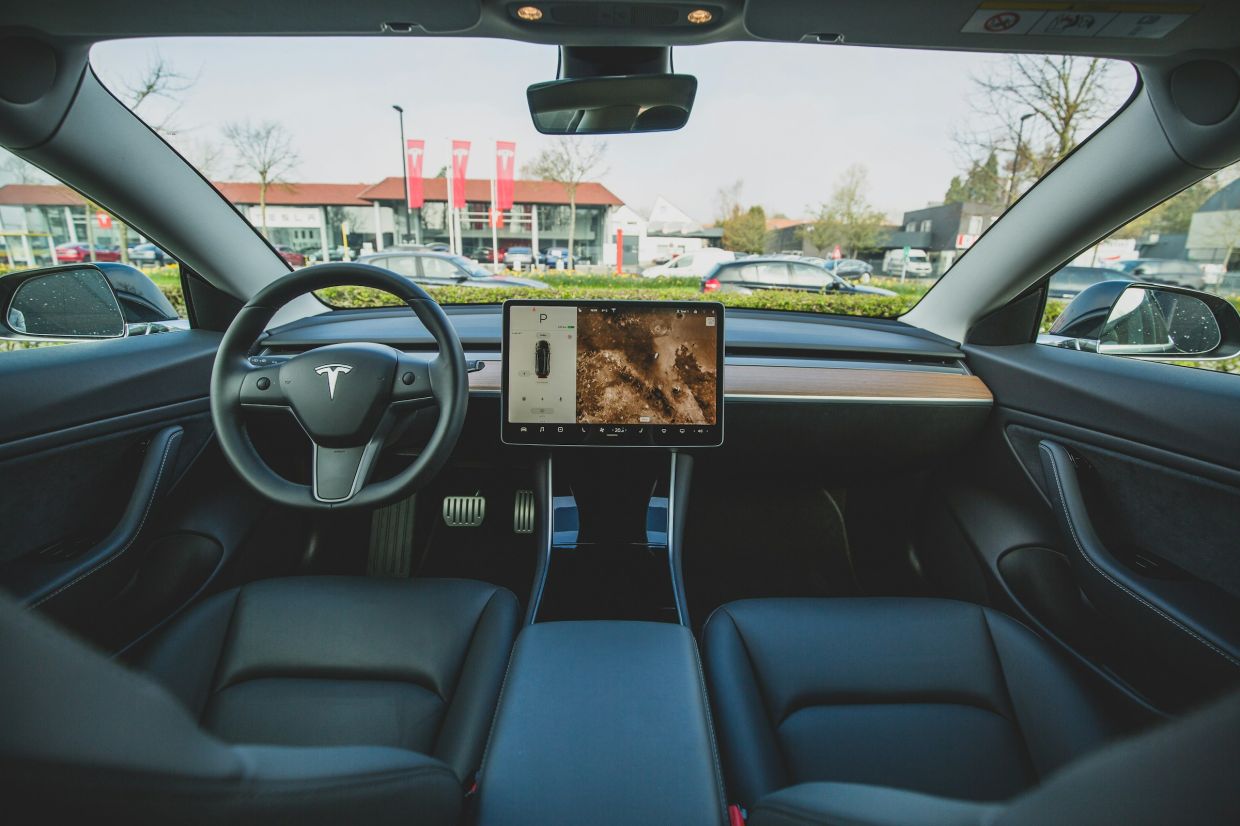
Tesla Inc has quietly resolved legal claims arising from a deadly 2023 collision on an Arizona highway that triggered a federal safety investigation into the carmaker's automated-driving capabilities. The settlement brings closure to a case that exposed troubling gaps in how the company's Full Self-Driving system detects common hazards, particularly when visibility is compromised. While financial terms remain undisclosed, the resolution marks an important milestone in a growing body of litigation surrounding Tesla's self-driving ambitions.
The incident involved 71-year-old Johna Story, who had exited her vehicle on a highway to assist in managing traffic flow around vehicles already involved in a collision caused by intense sun glare. Tragedy struck moments later when a Tesla Model Y SUV operating under Full Self-Driving commands struck her at high speed. Her death represented a watershed moment in the autonomous vehicle debate, becoming the first confirmed pedestrian fatality attributed directly to Tesla's automation technology, occurring amid thousands of road deaths across the United States that year.
Attorney Dustin Birch, representing Story's daughter, confirmed in recent remarks that the matter had reached settlement. He noted that his client had achieved her objective of resolving the case, though both parties have maintained confidentiality regarding the agreement's financial dimensions. Tesla's legal representatives declined to provide commentary on the resolution. The decision to settle without public disclosure of terms reflects broader litigation strategies employed by major technology companies facing public safety allegations.
The crash catalysed significant regulatory attention to Tesla's automation capabilities. The National Highway Traffic Safety Administration launched a formal investigation in 2024, subsequently escalating the inquiry this year to what regulators classify as an engineering analysis—a more intensive level of scrutiny. Federal officials have grown particularly concerned that Tesla's system may systematically fail to detect hazardous conditions or appropriately alert drivers when visibility deteriorates due to sun glare, dust, fog, or comparable environmental factors.
Federal investigators have documented a troubling pattern in their examination of crashes involving the Full Self-Driving system. According to NHTSA's findings, Tesla's technology repeatedly failed to recognize routine road conditions that degraded camera functionality until moments before collisions occurred. This narrow reaction window left drivers insufficient time to intervene and prevent accidents. In multiple incidents reviewed by the agency, the system either entirely missed that visibility had become compromised, or failed to issue driver warnings with adequate advance notice. Compounding these concerns, the automation lost track of or never initially detected vehicles directly ahead on the roadway.
These technical deficiencies carry particular significance for Malaysian and Southeast Asian contexts, where monsoon seasons regularly create precisely the degraded visibility conditions that regulators have identified as problematic. The region's tropical climate, characterized by sudden heavy rainfall, dust storms, and intense sun glare reflecting off wet roads, represents an environment where camera-dependent systems face severe operational challenges. Should such technology eventually be deployed in Malaysian markets, these safety gaps would demand resolution before widespread adoption.
Chief Executive Officer Elon Musk has positioned driverless vehicle technology as fundamental to Tesla's long-term strategy, viewing Full Self-Driving as an essential foundation for future robotaxi operations. The company has actively pursued regulatory approvals across multiple jurisdictions for varying implementations of the system, demonstrating determination to commercialize the technology globally. However, this aggressive expansion strategy has encountered growing skepticism from auto-safety advocates who contend that significant technical deficiencies remain unresolved.
Tesla responded to federal safety concerns by disclosing in April earnings communications that the company had upgraded camera systems on vehicles using earlier-generation hardware. The company maintains ongoing collaboration with NHTSA regarding the investigation, signalling willingness to engage with regulators. However, the existence of systemic detection failures across multiple vehicles and driving scenarios suggests that incremental hardware modifications may prove insufficient to address fundamental challenges in the system's operational design.
The broader implications extend beyond individual incidents or specific litigation outcomes. The case demonstrates how autonomous vehicle technology, despite rapid advancement, still contains significant safety gaps that regulatory frameworks are only beginning to comprehensively understand and address. For regional automakers and governments considering whether to adopt Tesla's technology or develop comparable systems domestically, the Arizona incident and ongoing federal investigation provide cautionary lessons about the necessity of rigorous, independent validation before deployment.
The settlement's quiet resolution contrasts sharply with the public intensity of the safety investigation, highlighting tensions between corporate interests in moving forward with technology commercialization and legitimate regulatory concerns about pedestrian protection. As Tesla continues pursuing approval for expanded Full Self-Driving capabilities globally, including potential Southeast Asian markets, this case exemplifies the unresolved technical questions that persist despite the company's confident public messaging about automation safety.
Regional policymakers should carefully monitor how federal safety regulators address these systemic detection failures, as their conclusions will likely establish precedents influencing how autonomous vehicle technology receives evaluated and approved in other jurisdictions. The distinction between marketing maturity and actual technical readiness remains sharp, and the Arizona incident underscores why independent verification of safety claims remains essential before allowing autonomous systems to operate among vulnerable road users in any market.

