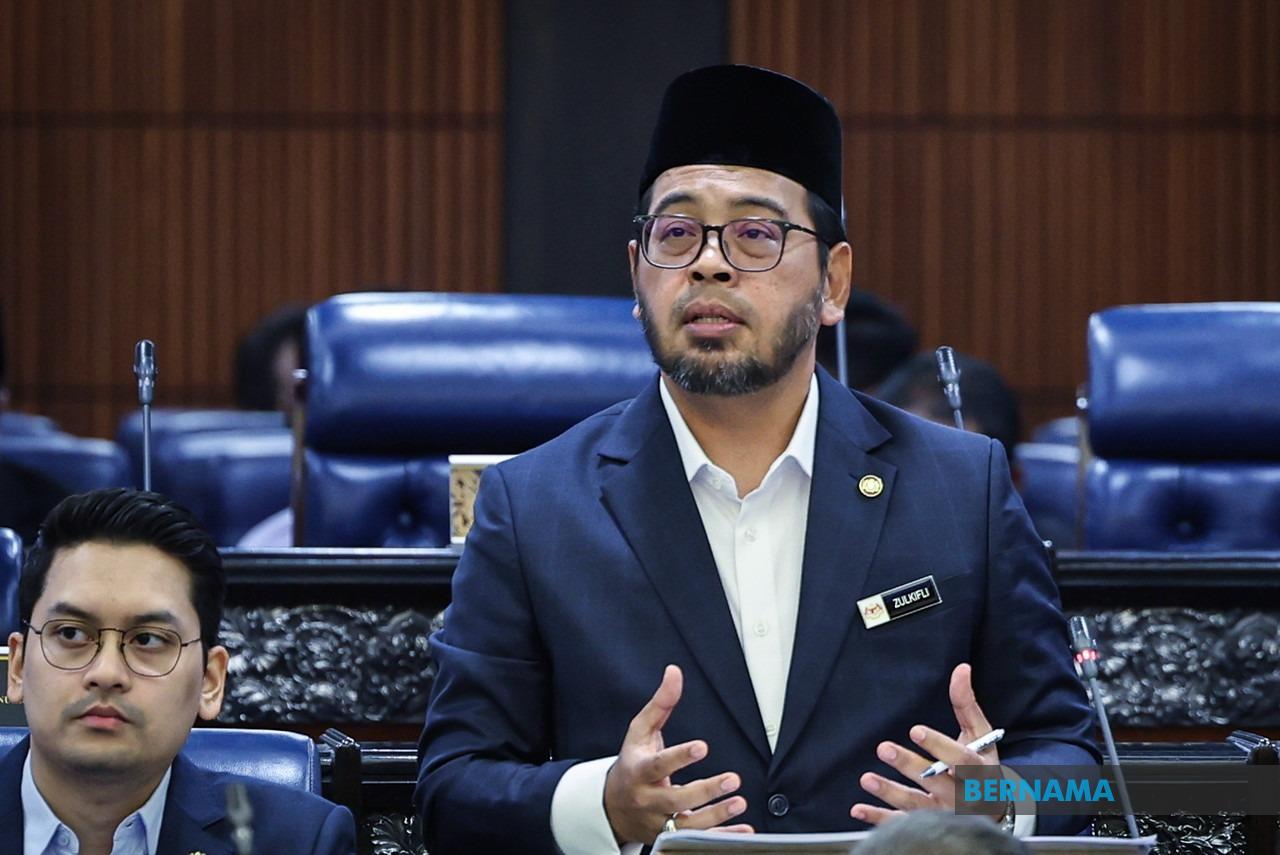
The government has committed to comprehensive legislative amendments targeting the Tabung Haji Act 1995 designed to reinforce financial reporting discipline and prevent a repeat of governance failures documented during the religious fund's management between 2014 and 2020. Minister in the Prime Minister's Department (Religious Affairs) Dr Zulkifli Hasan outlined the reforms during Parliament's special sitting this week, positioning the changes as a direct response to the Royal Commission of Inquiry's findings released publicly in late July.
The proposed amendments will introduce legally binding accounting standards and establish concrete penalties for financial misreporting, addressing a central concern raised by the RCI regarding TH's historical practices. The legislation will require profit distribution rates to be declared only after audited annual statements are completed, a safeguard now operational since 2022 but previously lacking statutory force. These measures reflect Malaysia's broader push toward institutional accountability in managing funds entrusted to over 9 million contributors nationwide.
A significant structural realignment underpins the reforms: a government task force comprising the TH chairman, Bank Negara Malaysia governor, and Securities Commission chief has recommended bifurcating TH's regulatory oversight. Fund management and investment activities will transition to Securities Commission regulation, bringing them within a framework designed for capital market supervision, while hajj administration remains under the Religious Affairs Ministry. TH will continue operating as a unified entity, preserving its institutional coherence while subjecting its financial operations to market-standard governance.
The bonus structure that generated public controversy has already been reformed. TH abandoned its previous practice of awarding discretionary bonuses and replaced it with a performance-based system tied to organisational outcomes and individual key performance indicators. This revised compensation framework requires explicit approval from both Religious Affairs and Finance Ministers, introducing institutional checks absent from earlier decision-making. The shift reflects growing recognition across Malaysian governance that excessive remuneration arrangements undermine public trust in institutions managing communal resources.
Board composition and leadership recruitment represent another layer of reform. The RCI recommended specific eligibility criteria and expertise-driven selection procedures for board members, alongside a prohibition barring active politicians from serving as chairman or board directors. TH has begun implementing appointments grounded in integrity, capability, and experience standards aligned with Bank Negara's "fit and proper" framework, signalling a deliberate professionalisation of governance structures. Dr Zulkifli emphasised the availability of competent technocrats and individuals of proven integrity who can steer the institution without political encumbrance.
Financial statement compliance represents progress on technical governance. TH's accounts have fully aligned with relevant accounting standards since 2018, establishing objective benchmarks against which stakeholder claims can be verified. The requirement that profit distributions be announced exclusively following audited financial statements completion removes the temporal flexibility that previously allowed management discretion in announcement timing. These procedural rigidities, while administratively demanding, provide transparency advantages for contributors seeking to understand income allocation decisions.
The Securities Commission's expanded oversight marks a philosophical shift in how Malaysia regulates TH's investment portfolio. Rather than maintaining compartmentalised supervision, the amendment positions TH's fund management within the established regulatory architecture governing collective investment schemes and institutional asset management. This approach subjects TH to ongoing compliance monitoring, periodic examinations, and enforcement powers comparable to those exercised over unit trust funds and pension funds. The SC's regulatory toolkit includes sanctions for breaches, providing statutory deterrence against future misconduct.
The RCI's 211-page report, deliberately made public by government decision, documented specific governance deficiencies over the seven-year period studied. Parliamentary disclosure of findings signals commitment to democratic scrutiny and accountability mechanisms. Both Dr Zulkifli and Finance Minister II Datuk Seri Amir Hamzah Azizan are scheduled to address Parliament during debate, permitting legislators to examine implementation timelines and resource requirements for enforcement infrastructure.
For Malaysian contributors and Southeast Asian observers, these reforms carry significance beyond institutional housekeeping. TH functions as both a financial intermediary and religious institution, commanding the savings of millions of predominantly Muslim Malaysians. Governance failures erode confidence in institutions managing personal wealth, particularly among communities for whom the hajj fund represents both spiritual aspiration and financial prudence. Strengthening oversight mechanisms helps restore legitimacy and demonstrates that institutional failure prompts substantive corrective action rather than administrative reshuffling.
The amendments also reflect Malaysia's evolving regulatory philosophy regarding state-linked institutions. Rather than relying on ministerial supervision alone, the government increasingly incorporates specialist regulators with technical expertise and enforcement capacity. This approach mimics international best practices where institutional funds operate within established market supervision frameworks. For TH specifically, SC oversight introduces standardised reporting requirements, periodic audits, and compliance obligations familiar to professional investors, potentially enhancing the fund's standing among sophisticated stakeholders.
Implementation timelines remain fluid, though Dr Zulkifli's ministerial briefing suggests active legislative drafting. The government must balance comprehensive reform with operational stability, ensuring TH can fulfil its dual mandate of managing hajj logistics and investment returns throughout the amendment process. Parliamentary debate this week will provide insight into how comprehensive the statutory changes will prove and whether opposition parties view the proposed reforms as adequate responses to documented governance failures.
The RCI's recommendations extend beyond financial reporting to institutional culture and decision-making processes. TH's positioning of itself as "very strong" across hajj management, investments, finances, and operations reflects confidence that implementation capability exists within existing institutional capacity. Whether this self-assessment aligns with independent analysis will become clearer as amendments progress through legislative scrutiny and implementation mechanisms take tangible form.

