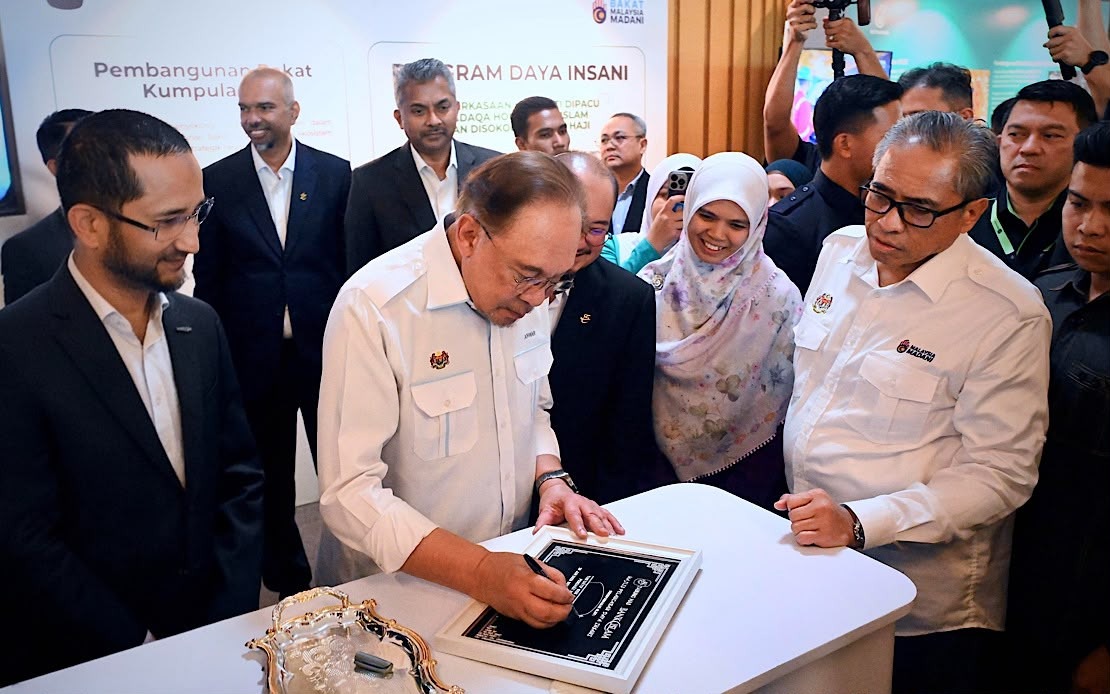
Lembaga Tabung Haji (TH) and Bank Islam Malaysia Berhad have jointly unveiled the Asnaf Youth Development Programme for Inclusive and Sustainable Empowerment, known as DAYA INSANI, backed by an initial RM1 million fund designed to equip disadvantaged young people with market-ready skills and secure employment pathways. The initiative was unveiled in Sendayan, Negeri Sembilan, during Prime Minister Datuk Seri Anwar Ibrahim's launch of the broader MADANI Talent framework, signalling government alignment with inclusive human capital development strategies.
The programme represents a significant intervention in Malaysia's ongoing efforts to address socioeconomic mobility among vulnerable populations, particularly asnaf youth—those classified under Islamic welfare systems as deserving of charitable support—and orphans who typically face substantial barriers to quality education and employment. By integrating technical skills development, hands-on industry exposure, and direct job placement mechanisms, DAYA INSANI seeks to bridge the gap between training completion and sustainable employment, a challenge that has historically plagued many youth development initiatives across Southeast Asia.
A strategic architecture underpins the programme's implementation, with multiple educational and corporate partners providing specialist training across distinct sectors. Kulim Hi-Tech Park Skills Centre will deliver technical vocational training to produce skilled workers for manufacturing and technology industries, while Kolej Universiti Bestari and Kumpulan Medic Iman Sdn Bhd will collaborate on nursing diploma programmes designed to address the healthcare sector's persistent talent shortages. The Malaysian Professional Accountancy Centre will develop certified accountants through its recognised curriculum, and Showme Education will train professional therapists, ensuring diversity in career pathways and sectoral coverage.
The nursing initiative exemplifies how DAYA INSANI builds upon established successful models. Since launching in 2024, the diploma programme has enrolled 19 students with one graduate already successfully entering the workforce, demonstrating the viability of the approach and providing concrete evidence of employability outcomes. This foundation allows the programme to scale with confidence rather than operating as an untested experiment, a distinction that enhances credibility among potential corporate donors and industry partners whose participation is critical to the initiative's expansion.
Technical training cohorts similarly show measurable momentum. The first batch through Kulim Hi-Tech Park commenced in June with 13 participants, with ambitious plans to expand to 100 places in the near term. This trajectory reflects confidence in market demand for technically trained personnel, particularly in high-value manufacturing and industrial sectors where Malaysia continues to position itself competitively within global value chains. The focus on technical skills responds directly to labour market gaps identified by employers rather than imposing predetermined training paths disconnected from actual job opportunities.
Financial services and Islamic banking constitutes another critical dimension of the programme's scope. Partnerships with the Malaysian Professional Accountancy Centre and INCEIF University will develop certified accountants and professionals specifically trained in Islamic finance and banking. This specialisation aligns with Malaysia's positioning as a global Islamic finance hub and creates career pathways within a sector experiencing continued growth. For asnaf youth, access to Islamic finance training opens doors to employment within the rapidly expanding Islamic banking and takaful sectors, industries increasingly prominent across Southeast Asia and the broader Muslim-majority world.
The openness of the DAYA INSANI fund to contributions from corporate companies, institutions, and individuals signals a broader partnership model extending beyond government provision. Corporate social responsibility engagement, particularly among financial institutions and blue-chip companies seeking meaningful impact investments, could substantially expand the fund beyond its initial RM1 million allocation. This crowdfunding approach distributes responsibility for disadvantaged youth development across stakeholders while providing corporations with transparent mechanisms to demonstrate societal commitment.
For Malaysia specifically, DAYA INSANI addresses a demographic imperative. With asnaf populations concentrated in lower-income urban and rural areas, the programme's emphasis on transport accessibility, industry-standard training environments, and guaranteed job placement pathways directly tackles geographical and informational barriers that traditionally isolate vulnerable youth from economic opportunities. Enhanced earnings capacity among asnaf beneficiaries cascades into family-level poverty reduction and increased consumption patterns that stimulate broader economic activity.
TH Group Managing Director Mustakim Mohamad's framing of the initiative as an investment in human capital reflects theological and economic reasoning that resonates within Islamic institutional contexts. The emphasis on ummah welfare and future-oriented development positions skills training as consistent with foundational Islamic principles regarding mutual social responsibility, potentially encouraging additional contributions from faith-based institutions and individual donors motivated by religious imperatives alongside secular poverty-reduction objectives.
Bank Islam Group Chief Executive Officer Raja Datin Paduka Teh Maimunah Raja Abdul Aziz's articulation of the programme as a social finance approach rather than traditional charity distinguishes DAYA INSANI from conventional welfare provision. Social finance mechanisms emphasise sustainability, accountability, and outcomes measurement—beneficiaries become economically productive contributors rather than perpetual assistance recipients, creating virtuous cycles of employment and tax contribution that ultimately reduce long-term government welfare expenditure.
The programme's alignment with the MADANI Talent aspiration provides policy-level endorsement and suggests potential for scaling principles beyond TH's direct implementation. As other institutions adopt similar integrated skills-employment models for disadvantaged populations, multiplier effects could emerge across Malaysia's talent development infrastructure. Regional Southeast Asian actors increasingly recognise that talent shortages in skilled trades and professional services persist even as graduate unemployment affects university completers, positioning vocational and technical development as critical economic priorities.
Immediate targets specify benefits for more than 100 asnaf youth and orphans, yet the programme's true significance lies in establishing replicable institutional frameworks and demonstrating compelling return-on-investment cases that encourage expansion. Success metrics should encompass not merely training completion but sustained employment, earnings progression, and advancement into supervisory or professional roles, measures that would validate the integrated approach's effectiveness compared to conventional skills training delivered without employment guarantees.
Moving forward, programme effectiveness hinges upon maintaining employer engagement and ensuring training curricula remain responsive to evolving labour market demands. Regular feedback mechanisms between education partners and industry employers, coupled with graduate tracking to monitor career trajectories and salary outcomes, will generate evidence essential for securing ongoing corporate donations and institutional support. For Malaysia's broader development aspirations, DAYA INSANI represents a practical implementation of inclusive growth principles that translate policy rhetoric into tangible pathways for economically marginalised populations.

