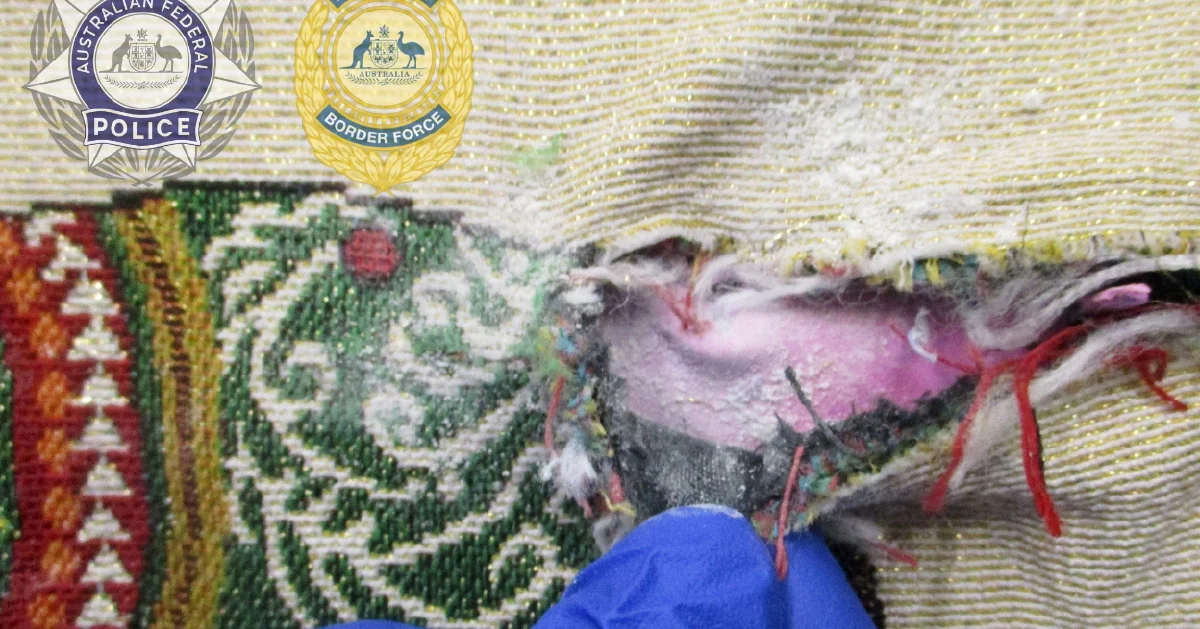
A Thai Airways staff member has been arrested in Sydney following the discovery of more than one kilogram of heroin concealed within tote bags, according to charges filed by the Australian Federal Police. The seizure represents another substantial drug interception at Australia's international borders, where customs and law enforcement agencies continue to intercept large quantities of narcotics destined for local markets.
The discovery occurred during routine customs inspections at Sydney airport, where officials systematically screen arriving passengers and cargo. The heroin was found carefully hidden inside carry bags, a concealment method that reflects the increasingly sophisticated techniques employed by drug trafficking networks attempting to circumvent Australia's border security protocols. The specific timing of the arrest and the flight details suggest the material was detected during standard passenger clearance procedures.
This incident highlights the persistent challenge facing Australian authorities tasked with preventing drug smuggling through commercial aviation routes. Thailand remains a significant transit point for narcotics trafficking across the Asia-Pacific region, with criminal networks leveraging the country's geographical position and transportation infrastructure. Airlines operating on regional routes between Southeast Asia and Australia have become prime targets for organised drug trafficking syndicates seeking to move contraband across borders.
The arrest comes amid broader regional concern about drug trafficking networks that exploit crew members and airport workers. Personnel working for airlines are sometimes targeted by criminal organisations who exploit their access to airport facilities and reduced security scrutiny. The use of airline staff represents a calculated approach by trafficking networks to move drugs past security checkpoints that focus primarily on passenger baggage screening.
Australia's drug enforcement agencies have prioritised interdiction at ports of entry as a critical component of domestic drug policy. The country's geographic isolation and reliance on air travel for international trade make airports essential chokepoints for law enforcement efforts. Australian Federal Police and Customs work in integrated teams at major airports to identify suspicious travel patterns, unusual baggage configurations, and known associates of trafficking networks.
For Malaysian and Southeast Asian readers, this case underscores the regional dimensions of drug trafficking. Malaysia sits centrally within trafficking routes that funnel narcotics from production zones in the Golden Triangle toward Pacific markets. Criminals regularly attempt to transit contraband through Malaysia's own airports and sea ports, creating shared enforcement challenges across the region. The detection in Sydney reflects the effectiveness of Australian security measures, but equally suggests the volume of attempted smuggling occurring throughout Southeast Asian gateways.
The heroin seizure adds to a lengthening record of major drug captures at Australian airports. Authorities report consistently intercepting kilogram-quantities of heroin, methamphetamine, and other substances at international terminals. The pattern indicates either increasing trafficking attempts or improved detection capabilities—likely a combination of both. Each successful seizure represents not only criminal prosecution but also potential supply disruptions for Australian drug markets dependent on Asian sources.
Thailand's involvement in international drug trafficking extends beyond its role as a transit country. Local production of methamphetamine, particularly in the northern regions, supplies markets throughout Asia and beyond. Criminal syndicates based in Thailand maintain extensive distribution networks reaching Australia, making Thai nationals and flight routes frequent targets for enforcement action. The Thai Airways incident exemplifies how commercial aviation becomes entangled in these trafficking operations.
The prosecution of airline crew members carries particular significance for labour relations and employment practices within regional carriers. Airlines face reputational damage when employees are implicated in smuggling, potentially attracting increased regulatory scrutiny of recruitment processes and employee vetting. Major carriers operating regionally have strengthened internal security protocols and employee screening in recent years, but incidents like this suggest vulnerabilities persist.
For Australia, heroin remains a critical law enforcement priority despite decades of enforcement activity. Supply-side interdiction attempts to disrupt trafficking before narcotics reach users, complementing demand-reduction and treatment-focused approaches. The Australian Federal Police have steadily expanded international cooperation with regional partners, including Thai authorities, to dismantle trafficking networks at their source rather than simply intercepting shipments at borders.
The case also reflects evolving smuggling methodologies. As border security technology improves and detection techniques become more sophisticated, traffickers continuously adapt their approaches. The use of seemingly innocent items like tote bags, the selection of crew members with legitimate access to secure areas, and the exploitation of staff fatigue during long flights all represent tactical adjustments by criminal networks responding to enforcement pressure.

