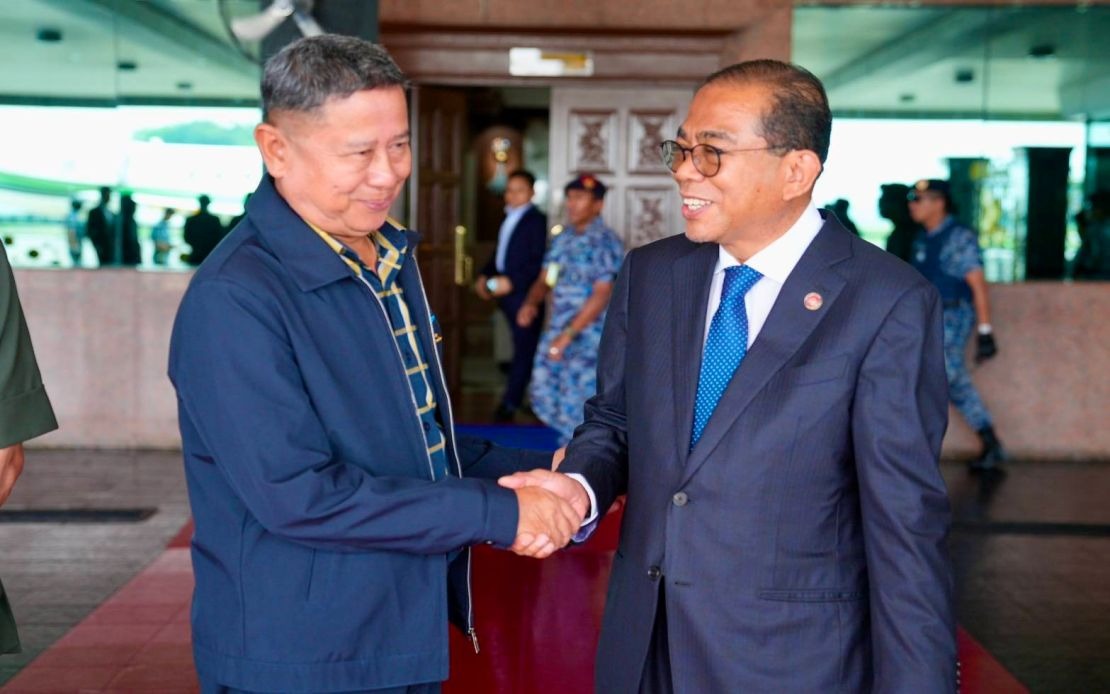
Thailand's top defence official travelled to Kuala Lumpur on Wednesday for an urgent briefing with his Malaysian counterpart, underscoring the deepening security concerns emanating from Thailand's volatile southern border region. Lt Gen Adul Boonthamcharoen's visit to meet Datuk Seri Mohamed Khaled Nordin came at a particularly sensitive moment, arriving just hours after Bangkok announced a temporary halt to peace negotiations scheduled for September with the insurgent groups operating across the southernmost provinces.
The timing of the meeting reflects the escalating tensions in Thailand's Yala, Pattani and Narathiwat provinces, where a spike in militant violence last week triggered the government's decision to impose martial law across 13 districts in Narathiwat alone. This latest wave of attacks has reignited long-standing concerns about cross-border security implications for Malaysia, a nation that shares both a land and maritime boundary with southern Thailand and has consistently been drawn into regional security deliberations despite its own domestic challenges in managing extremist networks.
Thailand's Defence Ministry released a carefully worded statement outlining the substance of the Kuala Lumpur discussions, emphasising Bangkok's determination to balance security operations with peace-building initiatives. The Thai side presented updates on ongoing counterinsurgency efforts whilst simultaneously reaffirming its commitment to advancing dialogue with opposition groups, a dual approach that reflects the complexities of managing a conflict where military solutions alone have proven insufficient over decades of intermittent violence.
The bilateral engagement focused heavily on strengthening institutional mechanisms for regional stability. Both ministers committed to deepening strategic security cooperation through enhanced intelligence sharing arrangements and improved border security protocols, recognising that the fluid security landscape requires more nimble coordination mechanisms than those previously established. This emphasis on intelligence cooperation carries particular weight for Malaysia, which must balance its role as a neutral mediator in Thai peace processes with its own security interests in preventing weapons smuggling and cross-border militant movements.
Adul's remarks underscored Thailand's strategic valuation of Malaysia within its broader security architecture. By characterising Malaysia as both a neighbouring country and a key security partner, Thailand signalled its expectation that Malaysia would remain engaged despite the suspension of formal peace talks. This positioning matters considerably, as Malaysia has hosted previous rounds of dialogue between the Thai government and insurgent representatives, and Bangkok clearly intends to preserve Malaysia's role as a facilitator once conditions allow resumption of negotiations.
The defence minister articulated a vision of peace contingent upon what he termed cooperation, sincerity and collective action, language that implicitly critiques the insurgent groups' commitment to dialogue whilst reassuring Malaysia of Thailand's seriousness. Thailand's stated readiness to work alongside Malaysia suggests recognition that unilateral military approaches have not resolved the decades-old insurgency, which has claimed thousands of lives and displaced numerous communities across the southern provinces since its modern resurgence in 2004.
Context for this meeting extends beyond immediate tactical concerns to encompass broader regional stability architecture. Malaysia has invested considerable diplomatic capital in maintaining neutrality whilst hosting peace talks, a delicate balance complicated by historical claims of external actor involvement in Thai insurgent movements and longstanding suspicions about financing networks operating across borders. The Malaysian government must therefore assess whether the suspension of talks represents a temporary tactical pause or signals more fundamental shifts in Bangkok's willingness to pursue negotiated settlement.
Thailand's National Intelligence Agency Director Thanat Suwannanont, who also leads the government's peace dialogue panel, announced the suspension following the Narathiwat attack that prompted martial law declarations. This administrative decision effectively pauses structured engagement with insurgent groups, though it does not necessarily preclude back-channel communications or informal mediation efforts. The timing suggests that Thailand prioritised security operations and demonstrating resolve to affected communities over maintaining diplomatic momentum, a choice that carries implications for the negotiation timeline and potentially for regional confidence-building measures.
For Malaysia, the implications of Thailand's security escalation and peace talks suspension warrant careful assessment. Increased military operations in southern Thailand could generate refugee flows, weapons proliferation, and recruitment activities that spill across the porous international boundary. Conversely, prolonged suspension of formal peace negotiations raises risks of radicalisation and potential retaliatory attacks, creating a security paradox where both escalation and pause present distinct challenges for Malaysian interests.
The bilateral meeting represents an effort to preserve institutional relationships and strategic dialogue even as tactical conditions deteriorate. By maintaining high-level engagement and reaffirming commitment to cooperation frameworks, both nations signal that suspension of peace talks need not entail wholesale disengagement or deterioration of bilateral relations. This distinction carries significance for regional actors monitoring Thai-Malaysian relations as indicators of broader Southeast Asian stability.
Moving forward, the success of this diplomatic approach depends substantially on how quickly conditions allow resumption of structured peace negotiations and whether both Thailand and insurgent groups can identify pathways toward renewed dialogue. Malaysia's continued availability as a neutral host venue and facilitator remains crucial, though the country must balance its mediatory role against its own counterterrorism imperatives and the practical security challenges arising from Thailand's internal conflict.

