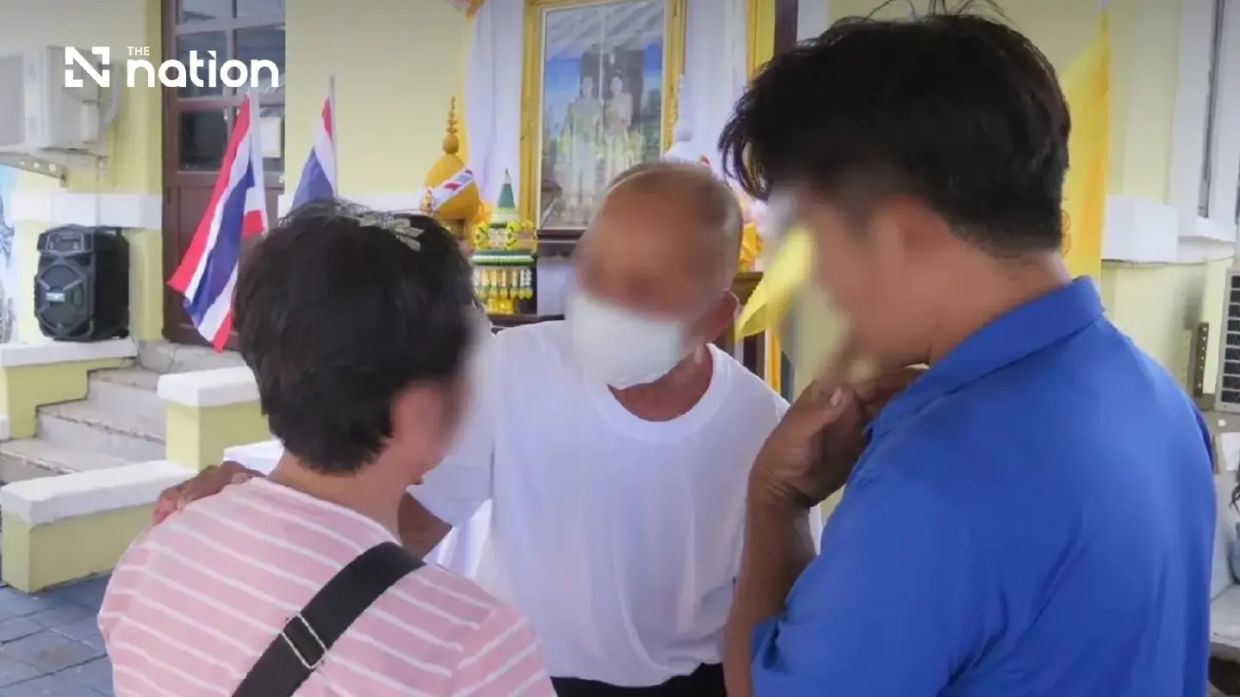
An 86-year-old convicted drug trafficker has walked free from one of Thailand's most notorious prisons after receiving a royal pardon. Lao Ta Saenlee, who spent years incarcerated at Bang Kwang Central Prison in Bangkok, was released in a formal ceremony held on August 14, 2026, marking his discharge under a special decree issued to commemorate Her Majesty the Queen's 48th birthday on June 3. The release represents one of numerous pardons granted under Thailand's 2026 amnesty provisions, a measure that underscores the Thai monarchy's traditional role in exercising clemency during significant national occasions.
The ceremony, documented by the prison's official Facebook page and overseen by Achara Sricham, Nonthaburi provincial public prosecutor, took place in Control Zone 14 and was conducted under the framework of the Royal Pardon Decree BE 2569. Prison authorities framed the release within a broader institutional narrative emphasizing compassionate management, moral rehabilitation, and successful reintegration into civilian life. The event reflected Thailand's Department of Corrections approach to prisoner management, which increasingly focuses on preparing detainees for productive return to society rather than maintaining purely custodial arrangements.
Lao Ta's criminal history is deeply rooted in Thailand's complex narcotics landscape and the country's historical struggles with transnational drug networks. Originally a village headman in Tha Ton subdistrict, Mae Ai district in Chiang Mai province, he had been associated with Khun Sa, an infamous figure whose influence permeated the Golden Triangle region straddling Thailand, Laos, and Myanmar. This connection places Lao Ta within a network that once dominated regional heroin production and trafficking before the focus shifted toward methamphetamine in recent decades. His background illustrates how local authority figures in border regions became entangled in narcotics operations, blending legitimate administrative positions with illicit commerce.
The charges against Lao Ta encompassed conspiracy and unauthorized sale of crystal methamphetamine, a Category 1 narcotic under Thai law representing the most serious classification. His case also included firearms and ammunition offenses, suggesting involvement in the armed infrastructure that protects drug distribution networks. These compound offenses underscore the integrated nature of organized trafficking operations in Thailand, where drug movement depends on parallel weapons smuggling and enforcement of internal discipline. The severity of charges against an individual now in his ninth decade reflects the seriousness of his historical involvement in these operations.
The prosecution's case originated from a major narcotics suppression operation conducted on October 11, 2016, representing nearly a decade of incarceration for Lao Ta before his release. Authorities executed a controlled purchase operation that led to his arrest and the simultaneous apprehension of multiple network associates at his petrol station in Mae Ai district. The seizure netted approximately 20 kilograms of crystal methamphetamine, alongside assets valued at more than 1 billion baht linked to the operation. These figures demonstrate the scale of trafficking infrastructure that Lao Ta had assembled, with the asset seizures suggesting diversified criminal enterprises extending beyond drug sales into legitimate business fronts.
Thailand's 2026 royal pardon represents a continuation of the monarchy's periodic exercises in clemency, a constitutional prerogative exercised to mark significant occasions and demonstrate merciful governance. Such pardons have grown increasingly complex, involving careful vetting by prosecutors and corrections officials to ensure releases comply with established criteria regarding prisoner conduct, age, health status, and reformation potential. The involvement of Achara Sricham in personally overseeing Lao Ta's release ceremony indicates that this case received appropriate official scrutiny, suggesting authorities deemed him suitable for reintegration despite historical involvement in serious crimes.
The broader context of Lao Ta's release involves Thailand's evolving approach to drug policy and prisoner management. While Thailand maintains some of the region's most stringent narcotics laws and continues aggressive enforcement operations, the corrections system increasingly emphasizes rehabilitation and vocational training. The Department of Corrections' "Khok Nong Na of Kindness and Hope" initiative, under which other prisoners at the same ceremony received certificates, reflects this philosophy. The program focuses on agricultural self-sufficiency, vocational skill development, and moral reformation, enabling long-term inmates to acquire sustainable livelihoods for post-release life.
For regional observers, Lao Ta's release illustrates broader questions about aging criminal populations in Southeast Asia's prisons and how authorities manage the intersection of humanitarian concerns and public safety. At 86, Lao Ta presents minimal flight risk and likely poses reduced capacity for criminal enterprise, factors that typically weigh heavily in pardon deliberations. His advanced age also raises practical considerations about healthcare costs and prison overcrowding, persistent challenges for the Thai prison system. Releasing elderly inmates who have served substantial sentences aligns with international trends toward more rational incarceration policies focused on genuine public protection rather than indefinite custodial arrangements.
The release ceremony's emphasis on rehabilitation and moral reformation reflects the Thai corrections system's aspiration toward humanistic values. Inmates from the training program's third group received certificates before a royal portrait, symbolically reaffirming the connection between moral development and the monarchy's benevolent oversight. This ritualistic dimension of prisoner release, while sometimes dismissed as ceremonial, holds genuine significance within Thai institutional culture, where the monarchy's role as moral exemplar shapes official practice across multiple domains. The ceremony thus serves both practical and symbolic functions in marking Lao Ta's transition from incarceration to civilian status.
Lao Ta's release raises enduring questions about accountability and rehabilitation in drug trafficking cases. Over the nearly decade-long incarceration since his 2016 arrest, the international drug landscape has shifted significantly, with synthetic narcotics increasingly dominating regional smuggling networks and enforcement priorities. Whether Lao Ta will attempt reentry into these networks or pursue legitimate livelihood remains uncertain, though his advanced age suggests substantially reduced capacity for major criminal enterprise. His case exemplifies how Thailand balances competing imperatives: maintaining strict drug laws while exercising selective clemency through royal pardons that acknowledge both individual reformation and humanitarian considerations. For Malaysia and other Southeast Asian nations, the case demonstrates how neighboring countries manage the complex legacy of individuals once embedded in major transnational criminal enterprises.

