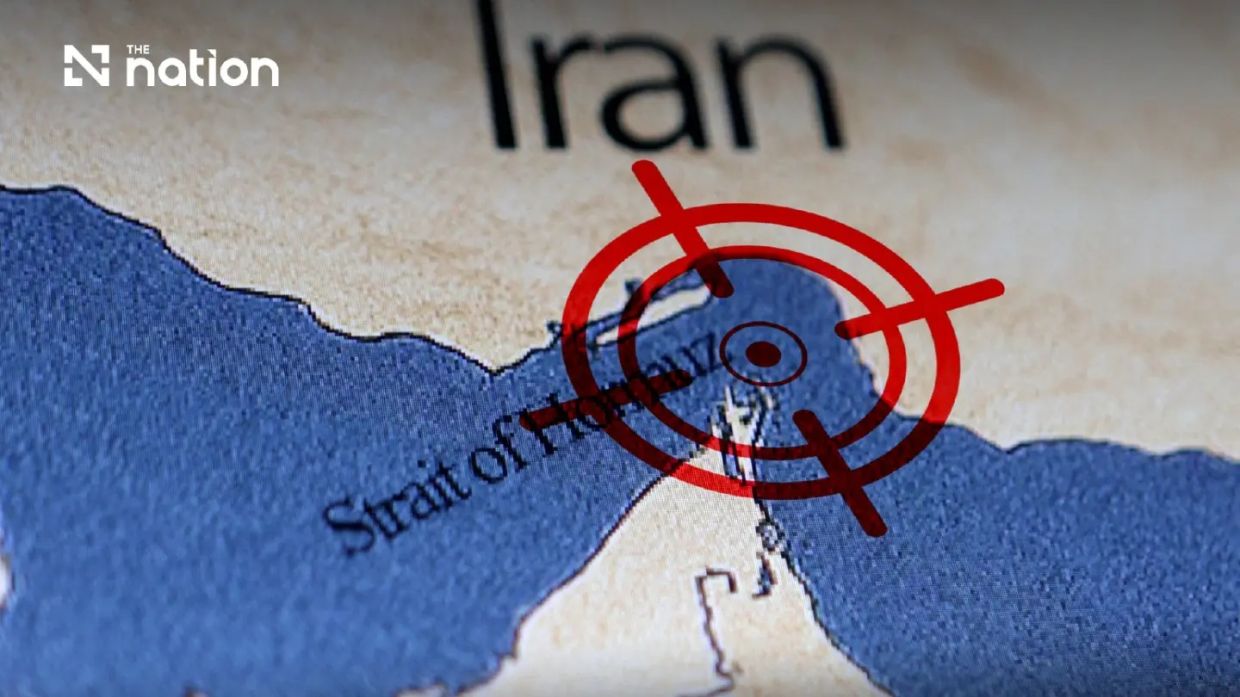
A vessel operating under the Thai flag has reportedly come under attack from Iranian military forces while navigating through the Strait of Hormuz, the world's most critical energy shipping corridor. The incident marks another alarming escalation in the tense military standoff between Tehran and Washington, which is now directly threatening the safety of civilian and commercial shipping in one of the globe's most strategically vital waterways. The reported assault highlights the precarious position facing mariners and shipping companies as the region's geopolitical crisis deepens.
According to Iran's semi-official Tasnim news agency, which first reported the incident, the vessel came under fire from Iranian forces. However, the report contained no details about the ship's identity, its owner, the nature of its cargo, its intended destination, or the nationalities of crew members aboard. This lack of transparency has made verification difficult, with neither Thai authorities, international maritime monitoring organisations, nor the vessel's operating company providing immediate confirmation of the attack or its specifics.
The attack represents part of a broader pattern of dangerous incidents unfolding in the Strait of Hormuz, a passage through which approximately one-third of the world's traded oil travels daily. Tasnim simultaneously reported that two oil tankers experienced fires following explosions while attempting to transit through waters that Iranian media characterised as a minefield in the southern section of the strait. The Islamic Revolutionary Guard Corps Navy claimed responsibility for establishing these hazardous conditions, warning that the waterway had become "extremely unsafe" and declared it completely closed due to what it described as American military aggression.
Beyond the Thai-flagged vessel incident, Iran's military claimed to have intercepted four additional oil tankers attempting passage through the strait with alleged American military backing. According to statements from the Islamic Revolutionary Guard Corps Navy, these vessels were ordered to halt their movement while a coordinated missile and drone operation was conducted in the area. The military body issued a stern warning to shipping companies, instructing them to acknowledge Iranian military directives rather than depend on protective measures offered by American forces. The identities of these four tankers, their current positions, registration information, and operational status remain undisclosed.
These maritime incidents carry profound implications for global commerce and energy security. Any significant interruption to shipping through the Strait of Hormuz would immediately drive up freight charges and insurance premiums for vessels transiting the region. More critically, such disruptions could constrain global oil and liquefied natural gas supplies, creating upward pressure on energy prices worldwide and destabilising commodity markets already vulnerable to geopolitical shocks. For Malaysia and other ASEAN nations heavily dependent on Middle Eastern energy imports and global trade networks, the consequences could be substantial.
The maritime dangers have intensified alongside escalating military operations in the broader region. The United States military, through its Central Command, announced that it conducted its seventh consecutive night of air strikes against Iranian targets, with the latest operation commencing at 7pm GMT on Friday. American military officials stated that these strikes aimed to "continue degrading Iran's military capabilities," though they provided limited disclosure regarding specific targets or the full scope of resulting damage.
Iranian authorities have contested the American characterisation of these strikes, asserting that civilian infrastructure in Iran's southern regions has sustained significant damage. Foreign Minister Abbas Araghchi reported that three people were killed in an attack on a bridge in Bandar Khamir and were among eight fatalities resulting from overnight American strikes. State media also cited a provincial official claiming that the United States struck an Iranian oil tanker positioned at Kharg Island. These casualty figures and damage assessments, however, remain based exclusively on Iranian government and state-aligned media accounts and have not undergone independent international verification.
In response to American military operations, Iran's military apparatus claimed to have conducted retaliatory attacks targeting American military assets and personnel stationed across the Gulf region. Iranian forces reportedly struck US installations in Bahrain, Jordan, Kuwait, and Qatar. Qatari authorities confirmed that their armed forces intercepted an incoming Iranian attack, though a child was injured by debris generated during the interception. Iran further asserted responsibility for additional assaults on American military-linked facilities throughout the broader region, though the precise extent of any damage from these strikes remains unclear and contested.
The Iranian military also claimed a significant tactical success, asserting that it successfully destroyed an American MQ-9 unmanned aerial vehicle over Bushehr, Iran's principal port city. The Islamic Revolutionary Guard Corps stated that the drone was intercepted and destroyed using a newly developed air-defence system operating within Iran's integrated air-defence network. The United States Central Command has not yet confirmed any loss of an MQ-9 drone in the Bushehr region, leaving this claim unverified by independent sources.
The pattern of reported incidents—the assault on the Thai-flagged vessel, the tanker fires and interceptions, and the competing military claims—collectively demonstrates the mounting jeopardy confronting commercial shipping as American-Iranian tensions accelerate. Shipping companies face a dilemma: navigating the Strait of Hormuz remains economically necessary due to the lack of practical alternative routes for oil and gas exports from Gulf producers, yet doing so increasingly exposes vessels, crews, and cargo to military action. For Malaysia and the broader Southeast Asian region, which relies on stable energy supplies and unimpeded maritime trade routes, the situation presents genuine economic and strategic concerns.
The escalating confrontation also carries potential for further geographic expansion. Several nations throughout the Persian Gulf region host American military personnel and facilities, creating multiple potential flashpoints for direct military engagement. Should the conflict spread beyond air strikes and naval incidents to involve broader regional participants, the consequences for global energy markets and international shipping could prove severe and prolonged. The coming weeks will likely determine whether diplomatic channels can de-escalate the situation or whether military tensions continue their dangerous upward trajectory.

