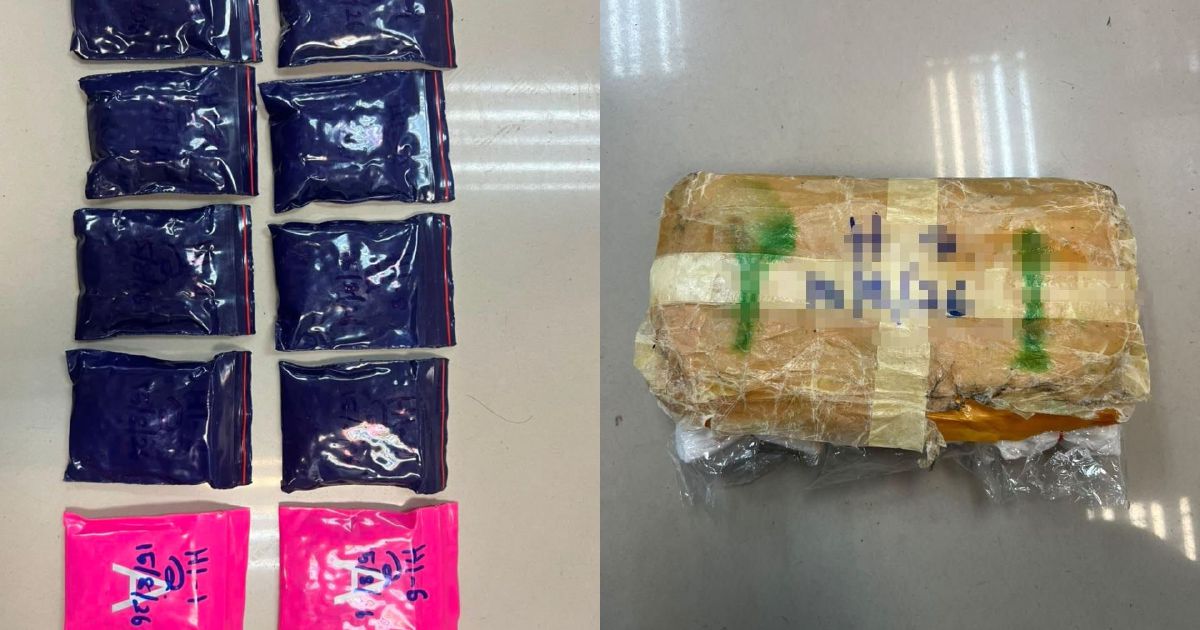
Police in Kelantan's Pasir Mas district have arrested a 45-year-old Thai national carrying 6,000 yaba pills with a street value of approximately RM60,000. The operation, conducted in Kampung Rahmat near the Rantau Panjang area, marks another significant seizure in the enforcement of drug laws along Malaysia's northern border region.
The arrest underscores the persistent challenge of synthetic drug trafficking through the Thailand-Malaysia border, a trafficking corridor that remains one of Southeast Asia's most active illicit drug routes. Yaba, a methamphetamine tablet that combines methamphetamine hydrochloride with caffeine, remains highly sought by users across the region due to its stimulant effects and relatively low cost compared to other amphetamine-based drugs. The captured consignment would represent a substantial haul for street-level distribution networks operating in Kelantan and surrounding states.
Pasir Mas, strategically positioned near Rantau Panjang's border crossing into Thailand, has become a focal point for drug enforcement operations. The district's geography creates natural vulnerabilities for smuggling operations, with numerous checkpoints and border control points attempting to intercept trafficking activity. The seizure reflects increased vigilance by local police units and customs authorities working to disrupt supply chains moving across the 648-kilometre Malaysia-Thailand land border.
The value assigned to the seized tablets demonstrates the substantial profit margins that drive international drug trafficking networks. At approximately RM10 per tablet wholesale value, yaba represents a relatively high-margin commodity that motivates criminal networks to take significant risks transporting supplies across international boundaries. Such economic incentives explain why border enforcement remains perpetually challenged despite substantial resource allocation and coordination between Malaysian and Thai authorities.
Yaba's prevalence in Malaysia reflects broader regional amphetamine epidemiology patterns. The drug has become particularly entrenched among younger demographic groups and in urban entertainment venues across the country. The stimulant properties make it especially popular among drivers, laborers working extended hours, and individuals seeking enhanced alertness during social activities. Public health authorities have expressed concern about yaba's addictive potential and associated health consequences including elevated blood pressure, cardiac complications, and psychological dependence.
The arrest occurred within the broader context of intensified drug enforcement operations conducted by Royal Malaysia Police, particularly across high-risk border regions. Kelantan, alongside Kedah and Perlis, continues experiencing elevated drug trafficking pressure due to proximity to Thailand's drug manufacturing centers. Criminal syndicates exploit cross-border family connections, established smuggling networks, and corrupt officials to facilitate narcotics movement into Malaysia for domestic consumption and onwards trafficking to Singapore and beyond.
Thailand remains a significant source country for methamphetamine production, with clandestine laboratories throughout the northern and northeastern regions supplying amphetamine-type stimulants to markets throughout Asia. Yaba production specifically occurs at smaller-scale facilities that can be readily relocated or dismantled when discovered by Thai law enforcement. The tablets' portability and high street value relative to weight make them ideally suited for smuggling across land borders through small-scale courier operations rather than large commercial shipments.
The Thailand-Malaysia border region's effectiveness as a trafficking corridor relates partly to its porous nature, with hundreds of informal crossing points supplementing official boundary checkpoints. While authorities maintain checkpoints at major towns like Rantau Panjang, sophisticated smuggling networks employ alternative routes through forested areas and utilize local knowledge to evade detection. Corruption remains a persistent obstacle, with reports of officials at various levels accepting bribes to facilitate contraband passage, though definitive quantification remains elusive.
Cooperative enforcement efforts between Malaysian and Thai authorities have expanded in recent years through bilateral agreements and regular intelligence sharing mechanisms. The two nations conduct joint operations targeting major trafficking networks, though political considerations and resource constraints sometimes limit coordination effectiveness. Malaysian authorities have simultaneously strengthened domestic enforcement through community intelligence networks and increased surveillance of known trafficking hotspots across northern states.
The seizure also reflects evolving synthetic drug markets within Malaysia, where traditional heroin trafficking has partially yielded ground to more profitable amphetamine-based products. Yaba and similar methamphetamine tablets now represent the predominant drug category in many enforcement statistics, particularly among younger users and in urban centers. This shift has required Malaysian law enforcement to adapt intelligence gathering and investigative techniques to address this different class of criminal organization.
The captured consignment would have supplied street-level distribution networks extending across Kelantan and potentially neighboring states for several weeks depending on local consumption patterns and retail distribution intensity. The operation therefore represents meaningful disruption to criminal supply networks, though authorities acknowledge that substantial volumes continue evading detection. Larger organized crime syndicates typically operate with redundancy built into their logistics, accepting periodic seizures as operational costs within broader trafficking enterprises.
Investigations into the arrested Thai national will likely focus on determining whether he represents an independent courier or functions within larger trafficking organization structures. Thai nationals appearing in such operations sometimes occupy mid-level roles within international smuggling networks, receiving payment per successful delivery while remaining somewhat insulated from direct involvement in downstream distribution. Malaysian authorities will coordinate with Thai counterparts to establish whether the suspect possesses existing criminal records or connections to known trafficking organizations.

