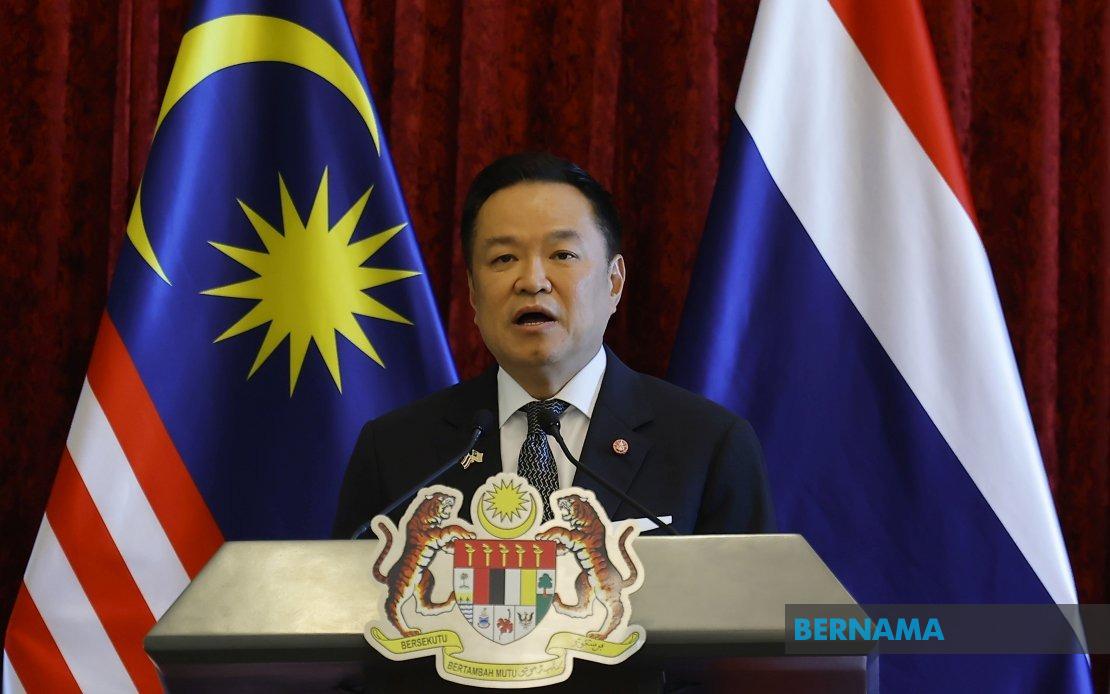
Thailand's Prime Minister Anutin Charnvirakul extended warm wishes to Malaysian Premier Datuk Seri Anwar Ibrahim on July 9 as the nation prepares for its Johor state election, underlining the cordial relationship between the two Southeast Asian neighbours. Speaking at a joint press conference in Putrajaya during an official two-day visit, Anutin offered his best wishes for the upcoming electoral contest, a gesture that reflects the friendly diplomatic ties maintained between Bangkok and Kuala Lumpur at the highest political levels.
The timing of Anutin's visit carries particular significance given Malaysia's political calendar. The 16th Johor state election, scheduled for Saturday, represents a crucial test for Anwar's coalition government and the ruling Pakatan Harapan alliance. With 172 candidates contesting 56 state assembly seats, the ballot will determine the composition of Johor's legislature and carry broader implications for national political dynamics. The peninsula's most developed state remains a bellwether for federal politics, and its outcome could shape perceptions of government performance heading into the next general election cycle.
Packettan Harapan has mobilised comprehensively for the contest, fielding candidates across all 56 constituencies. The coalition has assembled a slate combining experienced campaigners with fresh political entrants drawn from its three component parties—PKR, DAP, and Amanah. This strategy reflects an attempt to balance continuity of leadership with generational renewal, a recurring challenge for governing coalitions seeking to maintain momentum while addressing voter demands for change and new perspectives in representation.
Anwar characterised his engagement with the Thai premier in terms that went beyond conventional diplomatic language. He described the meeting as resembling a gathering between old friends, a characterisation that speaks to the personal rapport and trust developed between the two leaders. Such relationships matter significantly in regional affairs, as they facilitate cooperation on practical matters ranging from trade and investment to security and cross-border challenges. The Malaysian Prime Minister extended an invitation for Anutin to return soon, signalling Malaysia's interest in deepening the bilateral relationship through repeated high-level contact.
Anutin's visit marks his first journey to Malaysia since his reappointment to the Thai premiership in March 2026. The timing and nature of official visits often convey diplomatic priorities and signal areas of mutual interest between countries. Thailand and Malaysia share numerous interconnected concerns, including trade flows, tourism patterns, regional security, and management of the Andaman Sea and surrounding maritime zones. Both nations also participate in multilateral forums such as ASEAN, where coordinated positions enhance their regional influence and facilitate broader Southeast Asian cooperation on shared challenges.
The bilateral agenda extends across multiple dimensions. Both governments have identified opportunities for deepened cooperation in areas of mutual interest, though the precise scope of such collaboration often emerges through subsequent dialogue and working-group discussions. Economic linkages between Thailand and Malaysia remain substantial, with significant Thai investment in Malaysian manufacturing and services sectors, while Malaysian businesses operate extensively throughout Thailand. Educational and people-to-people exchanges further strengthen the social foundations of bilateral relations.
For Anwar's government, the convergence of domestic electoral activity and diplomatic engagement with neighbouring states illustrates the multitasking demands of leading a coalition administration. While managing the mechanics of an important state election, the Prime Minister must simultaneously attend to international relations and position Malaysia advantageously within the broader Southeast Asian context. The ability to maintain these parallel tracks—domestic politics and regional diplomacy—tests the organisational capacity of any government, particularly one managing a complex coalition of multiple parties with sometimes divergent interests.
The Johor election itself reflects Malaysia's constitutional architecture, whereby individual states retain considerable autonomy over their internal governance, taxation, and resource management. State elections therefore function as distinct electoral events with their own local dynamics, yet they inevitably acquire national significance given the interlocking nature of federal and state politics in Malaysia's system. The composition of the Johor legislature influences who leads the state administration and shapes the partisan balance within the Council of Rulers, which selects the national Yang di-Pertuan Agong on a rotational basis.
Thailand's engagement with Malaysian electoral processes, albeit expressed through courteous wishes rather than substantive involvement, reflects the stable interstate relations that characterise ASEAN member interactions. Unlike periods of regional tension, contemporary Southeast Asian diplomacy operates on a foundation of mutual respect for national sovereignty and non-interference in each other's internal affairs. Anutin's comment therefore fits within established norms of respectful interstate communication while conveying genuine goodwill from Bangkok toward Malaysia's democratic processes.
The broader context encompasses Malaysia's position within Southeast Asia as an anchor nation with significant economic heft, substantial diplomatic experience, and historical importance. Thailand, similarly positioned as a major regional player, maintains strong interests in Malaysia's stability and effective governance. Strong Malaysia-Thailand relations contribute to regional predictability and facilitate cooperation on transnational issues including human trafficking, drug interdiction, and maritime security. The visit and expressions of support thus serve both symbolic and practical purposes in maintaining the partnership that benefits both nations and the broader region.

