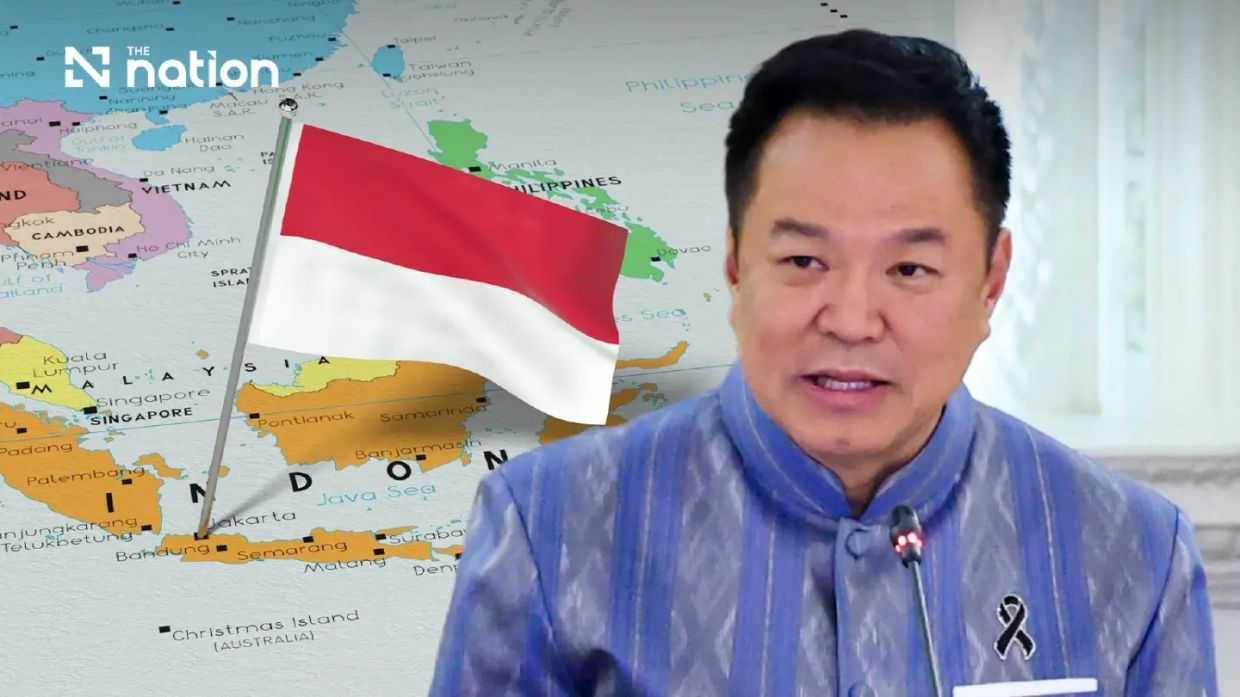
Thailand's Prime Minister Anutin Charnvirakul will undertake a landmark official visit to Indonesia on August 3–4, marking the first trip by a Thai premier to Jakarta in 15 years. The two-day engagement represents a significant diplomatic milestone in Southeast Asia and underscores Bangkok's determination to deepen ties with its Asean neighbour at a time of regional realignment and global economic uncertainty.
During his stay, Anutin will hold substantive discussions with Indonesian President Prabowo Subianto to chart a course for expanded bilateral cooperation across multiple sectors. The agenda spans trade and investment, tourism promotion, security matters, food security initiatives, energy collaboration, educational exchanges and business partnership frameworks. This comprehensive scope reflects the breadth of shared interests between two of Southeast Asia's largest economies, and signals both nations' commitment to translating diplomatic goodwill into tangible economic gains for their peoples.
A central feature of the visit will be Anutin's address at the Asean Secretariat in Jakarta, where he will unveil Thailand's strategic priorities for regional cooperation and elaborate on Bangkok's preparations to assume the Asean chair in 2028. This platform provides Thailand an opportunity to articulate its vision for the bloc's future direction at a moment when Asean faces mounting pressures from geopolitical competition, transnational challenges and economic headwinds. The speech will also serve as a soft launch of Thailand's agenda for its stewardship, allowing other member states early insight into Bangkok's priorities.
Government Spokesperson Rachada Dhnadirek has characterised Indonesia as an indispensable partner, emphasising its status as Asean's largest economy with a population exceeding 280 million. For Thai policymakers, Indonesia represents both a substantial market opportunity and a strategic partner whose size and influence shape regional outcomes. The visit is designed to position Thai businesses, from multinational corporations to small and medium enterprises, to capture opportunities within Indonesian supply chains, infrastructure projects and consumer markets that remain largely underexploited by Thai operators.
Thailand's government sees the visit as an opportunity to broaden market access for Thai agricultural produce, processed foods and services sectors where Thailand maintains competitive advantages. Indonesian demand for quality Thai rice, processed seafood, textiles and manufacturing inputs continues to expand, yet trade volumes remain below potential given the two countries' proximity and complementary economic structures. By elevating the relationship at leadership level, Bangkok aims to remove regulatory bottlenecks and create preferential frameworks that would benefit Thai exporters and investors seeking to diversify away from traditional markets.
The delegation-level meetings scheduled for August 3 at the Indonesian Presidential Palace will address how both nations can strengthen regional security architecture and respond collectively to transnational threats including human trafficking, drug smuggling and maritime crime. As founding Asean members that border multiple countries, Thailand and Indonesia share overlapping security challenges and operational intelligence needs. Enhanced coordination on these fronts could yield practical dividends for border management, law enforcement cooperation and maritime domain awareness in the region.
Rachada has framed the visit not merely as diplomatic ceremony but as a mechanism to align economic policy with broader development goals. The Thai government's philosophy, as articulated by the spokesperson, seeks to harness foreign relations as tools for generating employment, improving quality of life and creating sustainable income opportunities for Thai workers and entrepreneurs. The business forum organised jointly with Indonesia's Chamber of Commerce and Industry on August 4 exemplifies this approach, bringing together Thai and Indonesian private sector representatives to identify concrete investment and trade partnerships.
Thailand's preparatory work for the 2028 Asean chairmanship adds strategic weight to the Indonesia visit. As chair, Thailand will shape the regional grouping's agenda on critical issues including digital transformation, climate adaptation, pandemic preparedness and economic integration. By consulting early with Indonesia—a country whose size and influence allow it to make or break regional consensus—Anutin signals respect for Jakarta's role while building coalition support for Thai priorities. The talks will likely probe Indonesian perspectives on balancing Asean unity with members' individual strategic interests, a perennial tension within the bloc.
Rachada has explicitly tied the visit to Thailand's broader foreign-policy repositioning during an era of intensifying great-power competition and economic volatility. Bangkok seeks to cultivate multiple partnerships while avoiding alignment pressure, and deepening Indonesia relations serves this balancing act. Indonesia, similarly, has indicated interest in pragmatic partnerships that advance national interests without constraining strategic flexibility. The two countries' alignment on maintaining Southeast Asia as a zone of peace and inclusive economic development, rather than a sphere of influence competition, provides solid common ground.
The logistical details—with Anutin and his delegation departing Bangkok's Military Air Terminal 2 on August 3 and returning the same evening on August 4 after meetings with Indonesian private-sector leaders—reflect the compressed but intensive nature of the engagement. The schedule prioritises substantive meetings over ceremonial events, suggesting both governments regard this as a working visit designed to produce agreements and joint understandings rather than merely symbolic gestures.
For Malaysian observers, the Thailand-Indonesia rapprochement carries implications for regional balance. Malaysia, as a fellow Asean member with its own interests in deeper intra-regional trade and investment flows, benefits from a cohesive Southeast Asian bloc capable of navigating external pressures collectively. When major regional players engage actively with one another, the entire grouping's negotiating capacity in dealings with dialogue partners and major powers improves. Conversely, weakness in relations between Asean heavyweights can fragment the bloc and undermine common positions on issues ranging from maritime rights to trade negotiation.
The visit also reflects evolving dynamics within Asean leadership. With Indonesia under President Prabowo's recent administration and Thailand navigating its own political transition, both nations are reassessing regional roles and seeking to demonstrate dynamic leadership. The Thailand-Indonesia engagement signals to other member states that major players remain committed to multilateralism and regional cooperation, even as they pursue individual strategic interests. For Malaysian policymakers and business leaders, this strengthened bilateral relationship sets the tone for the broader regional architecture within which Malaysia itself operates.
Longer term, the visit may catalyse practical integration initiatives that extend beyond bilateral frameworks. Enhanced business-to-business connectivity, joint infrastructure investments, and coordinated positions on regional challenges could create spillover benefits that elevate overall Asean competitiveness. Thailand's explicit commitment to leveraging foreign policy for economic gain—as Rachada emphasised—suggests that subsequent bilateral engagements with other Asean members may follow similar templates focused on tangible commercial outcomes rather than purely diplomatic niceties.

