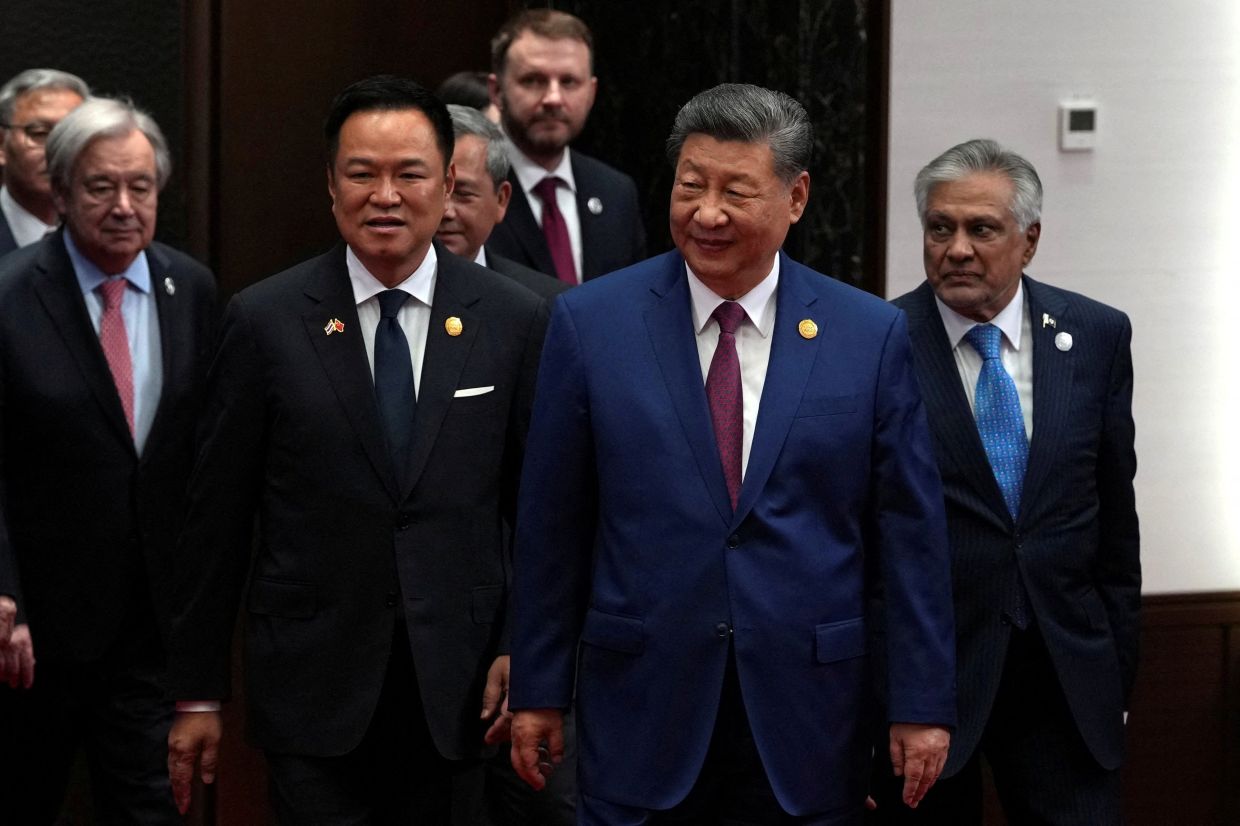
Thai Prime Minister Anutin Charnvirakul deployed an unusual diplomatic tool during his visit to Beijing this week, serenading Chinese Premier Li Qiang with a rendition of a Teresa Teng classic at an official lunch gathering. Video footage released by the Thai leader's office captured the moment Anutin, holding a microphone while seated beside Li at a formal dining table flanked by Thai and Chinese flags, performed the nostalgic song as a pianist accompanied him in the background. The Chinese premier and other dignitaries responded with enthusiastic applause, marking yet another instance of Anutin's distinctive brand of personal diplomacy.
This musical overture to Beijing follows a pattern of cross-border cultural engagement that has become increasingly characteristic of Anutin's tenure at the helm of Thailand's government. Earlier in July, the Thai leader demonstrated his musical versatility by performing Frank Sinatra's "My Way" alongside Malaysian Prime Minister Anwar Ibrahim, with Anutin contributing saxophone accompaniment while Ibrahim handled the vocals. The duet represented a moment of informal bonding between two Southeast Asian leaders, suggesting that Anutin views musical collaboration as a mechanism for building rapport beyond traditional state ceremonies.
The pattern extends further back into Anutin's recent diplomatic calendar. During a visit to Hanoi last month, he performed on a traditional Vietnamese instrument alongside local musicians in front of Prime Minister Le Minh Hung, demonstrating both respect for host nation cultural traditions and a willingness to step outside conventional diplomatic protocols. These performances suggest a calculated approach to soft power that emphasizes personal connection and cultural exchange rather than the formal, distance-maintaining style often associated with international relations.
Anutin's background provides considerable context for understanding his unconventional approach to leadership and diplomacy. A member of Thailand's prominent construction industry family, he assumed office in September 2024 and subsequently secured his political position by winning national elections in February 2026, consolidating his authority within Thailand's complex political landscape. Beyond his governmental responsibilities, Anutin maintains an array of personal interests that define his public persona: he is an accomplished hobbyist jet pilot, skilled pianist, and proficient Thai flute player, making his musical performances not mere gimmicks but expressions of genuine personal capability.
The Thai premier's musical diplomacy also reflects a deliberate attempt to project an image as a man of the people—a necessary positioning given Thailand's historical social hierarchies and conservative political traditions. Despite this populist persona, Anutin is simultaneously viewed as a custodian of Thailand's traditional social order, a stance that paradoxically appeals to many within a society that remains substantially conservative in its values and institutional structures. This careful balance between accessibility and tradition may explain why his musical performances, rather than appearing frivolous, have been received as authentic expressions of his character.
The strategic dimension of Anutin's musical engagement should not be overlooked, particularly regarding Thailand's relationship with its major neighbors. China remains a critical economic and strategic partner for Thailand, and the Beijing performance signals continued commitment to strengthening bilateral ties through informal channels. Similarly, the musical collaboration with Malaysian Prime Minister Anwar Ibrahim reflects Thailand's broader interest in deepening ASEAN cohesion and intra-regional relationships at a time when Southeast Asian cooperation faces various pressures and challenges.
Anutin's recent performances with Thai teenager who achieved viral success on the American television program America's Got Talent demonstrates another dimension to his musical engagement strategy: the deliberate elevation of contemporary entertainment culture and younger voices within Thailand's public discourse. By performing alongside viral sensation performers, he positions himself as culturally relevant and in touch with generational trends, while simultaneously lending state legitimacy to popular entertainment figures.
From a regional perspective, Anutin's musical diplomacy represents an interesting departure from conventional Southeast Asian leadership styles. While some observers might dismiss these performances as theatrical or superficial, they may in fact serve substantive diplomatic functions—humanizing international relations, creating memorable moments that soften formal negotiations, and projecting Thailand as a nation comfortable with cultural expression and cross-border creative engagement. In an era when Southeast Asian governments increasingly compete for influence and favorable partnerships with major powers, these informal cultural gestures may accumulate into meaningful advantages.
The Teresa Teng song selection itself carries symbolic weight for both Thai and Chinese audiences, as the legendary Taiwanese singer remains beloved across the Chinese-speaking world and holds nostalgic significance for multiple generations. Anutin's choice to perform this particular classic suggests awareness of cultural touchstones that resonate across political boundaries, demonstrating diplomatic sophistication beneath the apparent spontaneity of his performances. For Malaysian readers and Southeast Asian observers, these moments illustrate how regional leaders are increasingly experimenting with alternative diplomatic vocabularies that prioritize personal connection and cultural affinity over purely formal state interactions.

