Thailand's Prime Minister Anutin Charnvirakul and his wife Thananon have arrived in Malaysia for a significant two-day state visit, underscoring the deepening diplomatic ties between the two nations. The visit marks Anutin's first official tour since his reappointment as Thailand's prime minister in March 2026, and comes as an invitation from Malaysian Prime Minister Datuk Seri Anwar Ibrahim, signalling both countries' commitment to strengthening their established relationship and exploring fresh avenues for cooperation.
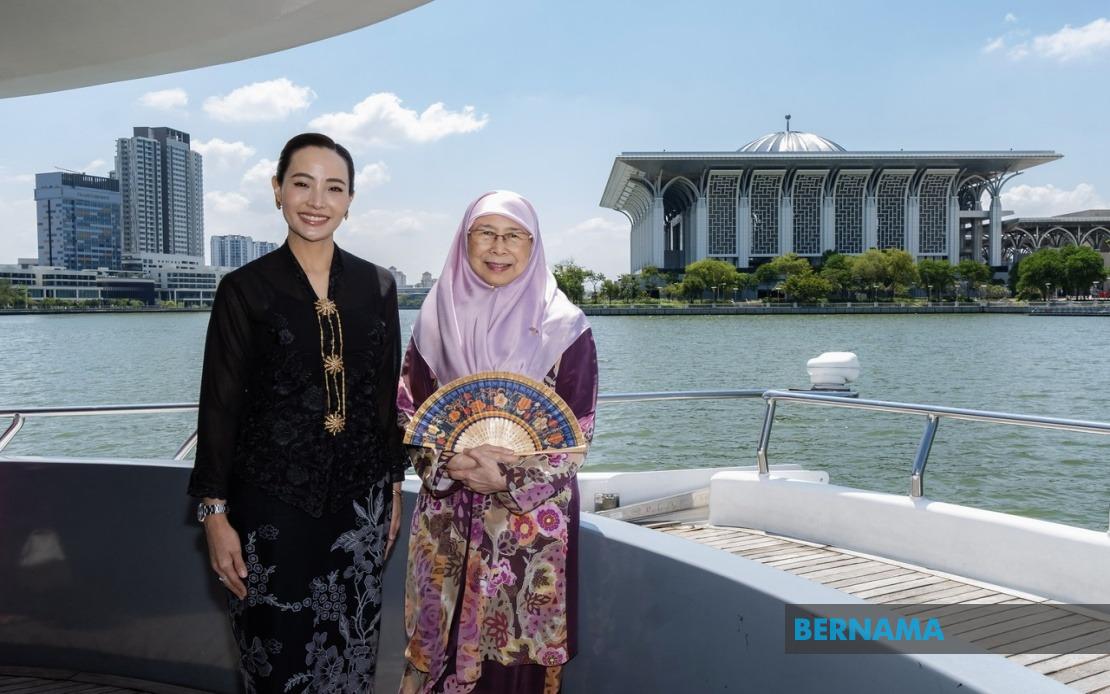
Thananon Charnvirakul experienced a carefully curated introduction to Malaysia's administrative heart on Thursday, embarking on a leisurely 45-minute journey across Tasik Putrajaya. The lake cruise, which commenced at approximately 12:10 pm, offered her an intimate perspective of Putrajaya's distinctive architectural and landscape features. The carefully planned itinerary reflected the hospitality extended to high-ranking international guests, allowing the Thai First Lady to appreciate Malaysia's purpose-built capital from one of its most scenic vantage points.
The Prime Minister's wife Datuk Seri Dr Wan Azizah Wan Ismail graciously received Thananon upon her arrival at the lakeside venue. The two women engaged in animated conversation throughout the cruise, creating a relaxed diplomatic atmosphere that characterised the informal portion of the official programme. Their interaction provided a platform for personal connection between the families of both nations' leaders, a dimension often overlooked but crucial in building genuine bilateral goodwill.
Minister in the Prime Minister's Department (Federal Territories) Hannah Yeoh also participated in the reception and cruise, representing the Malaysian federal government's involvement in hosting the distinguished guest. The presence of Yeoh, who oversees the Federal Territories portfolio encompassing Putrajaya, Kuala Lumpur, and Labuan, highlighted the formal nature of the visit while ensuring the administrative capital was represented at the highest level.
The choice of venue itself carried significance. Tasik Putrajaya, an integral feature of the capital's urban design, showcases Malaysia's modern governance infrastructure and environmental planning. The lake's vantage points offer panoramic views of government buildings, the iconic Putra Mosque, the Perdana Putra complex, and the meticulously landscaped surroundings that define contemporary Putrajaya. For a visiting dignitary, the cruise provides both aesthetic appreciation and subtle messaging about Malaysia's development and administrative capabilities.
Thailand and Malaysia share a complex but evolving relationship characterised by geographic proximity, cultural interchange, and periodic bilateral challenges. This official visit at the highest levels signals a deliberate effort to reinvigorate cooperation and dialogue between Bangkok and Kuala Lumpur. The inclusion of spouses in the programme, though ostensibly ceremonial, reflects confidence in the relationship's trajectory and a commitment to strengthening people-to-people bonds alongside official channels.
Anutin's position as Prime Minister carries particular importance for Southeast Asian dynamics. Thailand's political trajectory influences regional stability and intra-ASEAN cooperation, where Malaysia also plays a central role. His reappointment in March 2026 represented a significant political development in Thailand's often-turbulent governance landscape, and this visit demonstrates his administration's focus on regional diplomacy and bilateral relationship cultivation during a period of domestic consolidation.
The timing of this state visit carries implications for Malaysia-Thailand cooperation across multiple domains. Both nations share interests in regional security, economic integration through ASEAN frameworks, and bilateral trade arrangements. The two-day schedule, while modest in duration, typically encompasses substantive discussions on areas ranging from border security and labour migration to economic partnerships and cultural exchange programmes. The leisurely cruise element allows relationship-building in a more relaxed setting before engaging in formal bilateral talks.
From a Malaysian perspective, hosting high-level Thai delegations reinforces Kuala Lumpur's role as a regional diplomatic hub and signals the importance placed on Thailand relations within Anwar Ibrahim's administration's foreign policy matrix. The involvement of Datuk Seri Dr Wan Azizah and Hannah Yeoh demonstrates a whole-of-government approach to receiving the Thai delegation, emphasising that bilateral engagement extends beyond the Prime Minister's office to encompass ministries overseeing development, federal territories, and other key portfolios.
The Tasik Putrajaya cruise, while appearing as a simple sightseeing interlude, serves multiple diplomatic purposes. It provides informal space for candid conversation away from the formalities of state banquets and bilateral meetings, allows the Thai delegation to experience Malaysian hospitality in an authentic setting, and generates positive imagery for both nations' media coverage. Such gestures, though seemingly minor, contribute to the cumulative goodwill that underpins long-term diplomatic relations.
Thailand and Malaysia's relationship has historically navigated periods of tension alongside periods of cooperation. Both nations maintain complex positions within ASEAN, oversee significant regional constituencies, and manage intricate bilateral issues including maritime boundaries and labour movements. This visit, initiated by Malaysia's invitation, suggests current engagement is on an upward trajectory, with both governments prioritising dialogue and expanded collaboration frameworks.
The official welcoming ceremony that preceded the Putrajaya cruise took place at the Bunga Raya Complex of Kuala Lumpur International Airport, signifying the visit's official status. Such ceremonial protocols distinguish state visits from routine diplomatic engagements, indicating that Anwar Ibrahim and his government view strengthening ties with Thailand as a foreign policy priority. The coordination of multiple ministerial-level participants in receiving arrangements further underscores this commitment.
Moving forward, the substantive outcomes of this two-day visit will likely shape Malaysia-Thailand cooperation trajectories across numerous sectors. Beyond the immediate diplomatic exchanges, observers should monitor any joint statements, memoranda of understanding, or concrete commitments emerging from the bilateral discussions. Such visits often produce tangible results in areas including defence cooperation, trade facilitation, educational exchanges, and collaborative regional initiatives, each contributing to the broader architecture of Southeast Asian stability and prosperity that both nations depend upon.

