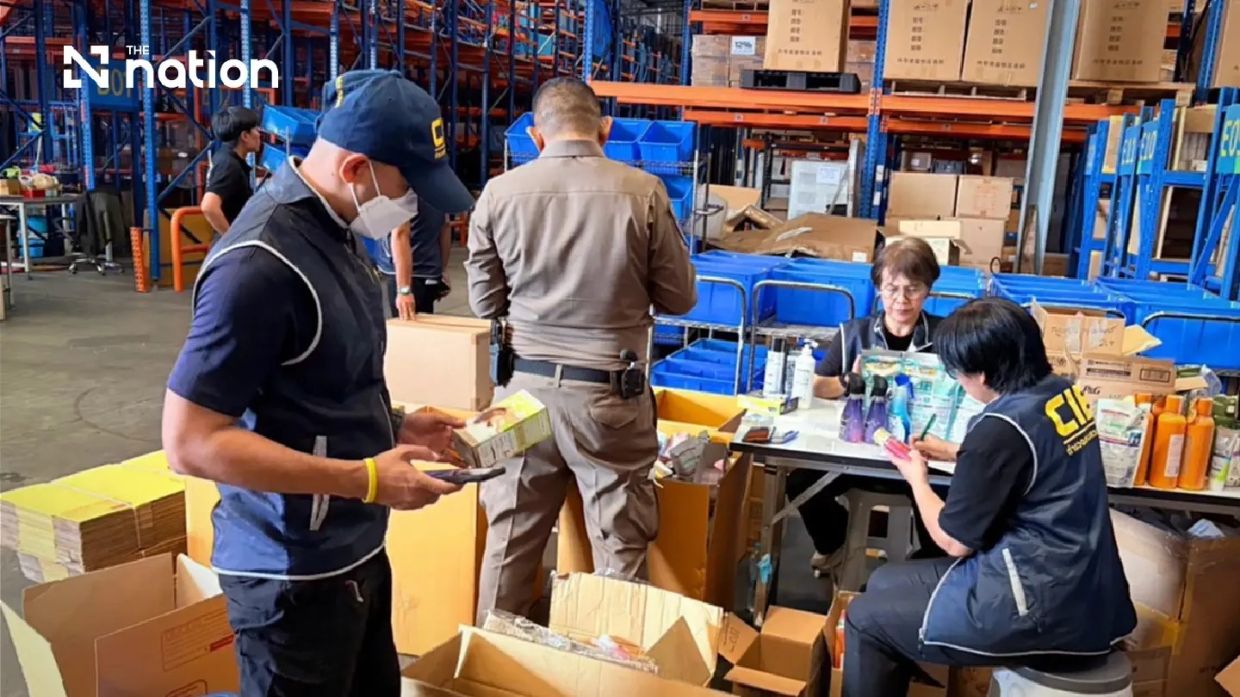
Thai authorities have cracked down on a sprawling distribution operation that supplied tens of thousands of unapproved Japanese cosmetics, supplements and medicinal products to online retailers across the kingdom. The Consumer Protection Police Division conducted a raid on Thursday in Bang Phli district, Samut Prakan, resulting in the seizure of 83,483 items worth over 8.34 million baht. The confiscation marks a significant enforcement action targeting the murky supply chain that connects illicit imports with the booming e-commerce sector.
The operation was coordinated under the direction of Pol Maj Gen Kongkrit Lertsittikul, commander of the Consumer Protection Police Division, following mounting complaints from consumers who had purchased cosmetics and health products lacking proper Thai-language labelling from online platforms. The 116 different product lines seized included imported Japanese beauty items, dietary supplements, and pharmaceutical products that had circumvented Thailand's mandatory safety approval processes. Investigators discovered that the illicit goods represented a substantial commercial enterprise, with the warehouse processing between 200 and 300 items daily for distribution across multiple online selling channels.
What made this case particularly significant was the systematic nature of the distribution network. The Bang Phli warehouse had originally functioned as a simple storage facility but had gradually evolved into a full-service logistics operation offering packing and processing services to online sellers. The operators charged between 10 and 12 baht per box for these services, generating steady revenue while enabling the rapid movement of unauthorised products to consumers nationwide. Evidence suggests the illicit operation had been functioning without interruption for more than four years, suggesting substantial gaps in regulatory oversight and enforcement prior to this intervention.
The fundamental issue at the heart of the enforcement action concerns consumer safety and the circumvention of Thailand's strict regulatory framework for imported health and cosmetic products. All cosmetics, dietary supplements and medicines entering Thailand must pass rigorous safety inspections, obtain proper certification from relevant authorities, and carry appropriate labelling in Thai language. The seized Japanese products failed on all these counts, having been imported without undergoing required safety checks or receiving official approval. This created significant potential health risks for unwitting consumers who believed they were purchasing legitimate goods from trusted online sellers.
The warehouse operation exposed vulnerability in Thailand's e-commerce regulatory architecture, particularly the disconnect between online retail platforms and supply chain oversight. Many online sellers appear to have been either unaware of or indifferent to the legal requirement that products carry proper Thai-language labels and authentic safety certifications. The investigation traced most of the confiscated inventory directly to Japanese imports that had bypassed official customs and regulatory procedures, suggesting either sophisticated smuggling techniques or casual disregard for import compliance requirements. The scale of the operation—processing hundreds of items daily across multiple seller accounts—indicates that regulatory authorities were previously unaware of or unable to monitor this particular trafficking route.
The case carries broader implications for Southeast Asian consumers increasingly purchasing from online retailers without robust verification systems. As cross-border e-commerce expands throughout the region, similar warehouse operations supplying unapproved cosmetics and supplements may be operating in other countries, including Malaysia. The Bangkok operation demonstrates how online marketplaces can become unwitting distribution channels for potentially harmful products when supply chain verification is minimal. Thai authorities' discovery of this four-year operation suggests that such hubs may continue operating undetected in other jurisdictions.
Legal proceedings against those involved in the distribution network will proceed under multiple statutes: Thailand's Cosmetics Act, the Hazardous Substances Act, the Food Act, and the Drug Act. These comprehensive legal frameworks provide authorities with multiple angles of prosecution, recognising that unapproved health and cosmetic products can violate several regulatory domains simultaneously. The referral to Sub-Division 4 of the Consumer Protection Police Division for formal investigation indicates that prosecution will pursue those directly responsible for the warehouse operation as well as the broader network of individuals involved in importing, storing and distributing the contraband goods.
The financial dimension of the seizure—8.34 million baht—underscores the commercial significance of the illicit trade in unapproved cosmetics and supplements. This figure likely represents only a fraction of the total value that moved through the warehouse over its four-year operational history. Conservative estimates suggesting 200 to 300 items processed daily, at an average retail value of perhaps 500 baht per item, would imply annual throughput exceeding 365 million baht. The actual criminal proceeds may have been substantially higher, making this operation financially comparable to drug trafficking enterprises.
The enforcement action also highlights the persistent challenge facing regulatory authorities across Southeast Asia regarding the intersection of e-commerce expansion and consumer protection. Online shopping platforms have created unprecedented opportunities for fraudulent sellers to reach mass audiences without traditional retail accountability mechanisms. The Bangkok warehouse case demonstrates that comprehensive enforcement requires cooperation between customs authorities, online platforms, consumer protection agencies and law enforcement. Identifying such operations often depends on consumer complaints, as evidenced by the multiple allegations that prompted this investigation.
For Malaysian consumers and regulators, the Thai case offers cautionary lessons about the risks inherent in purchasing cosmetics and health supplements from online sources lacking transparent verification of product authenticity and regulatory compliance. Similar unapproved Japanese cosmetics operations may be operating within Malaysia or supplying Malaysian buyers through cross-border e-commerce channels. The case demonstrates that visual product presentation online provides no guarantee of regulatory compliance or safety certification, particularly when products originate from overseas suppliers with minimal accountability to receiving country authorities.
The Bangkok operation ultimately reflects systemic vulnerabilities in how Southeast Asian regulatory frameworks address the realities of modern cross-border commerce. Traditional regulatory mechanisms developed for brick-and-mortar retail operate poorly when applied to online sales involving multiple jurisdictions, numerous intermediaries, and sophisticated logistics networks designed to obscure product origins and supply chains. Unless coordinated regional enforcement approaches improve, similar warehouse operations supplying unapproved cosmetics and supplements will likely continue proliferating across Southeast Asia, with consumers bearing the health and safety consequences.

