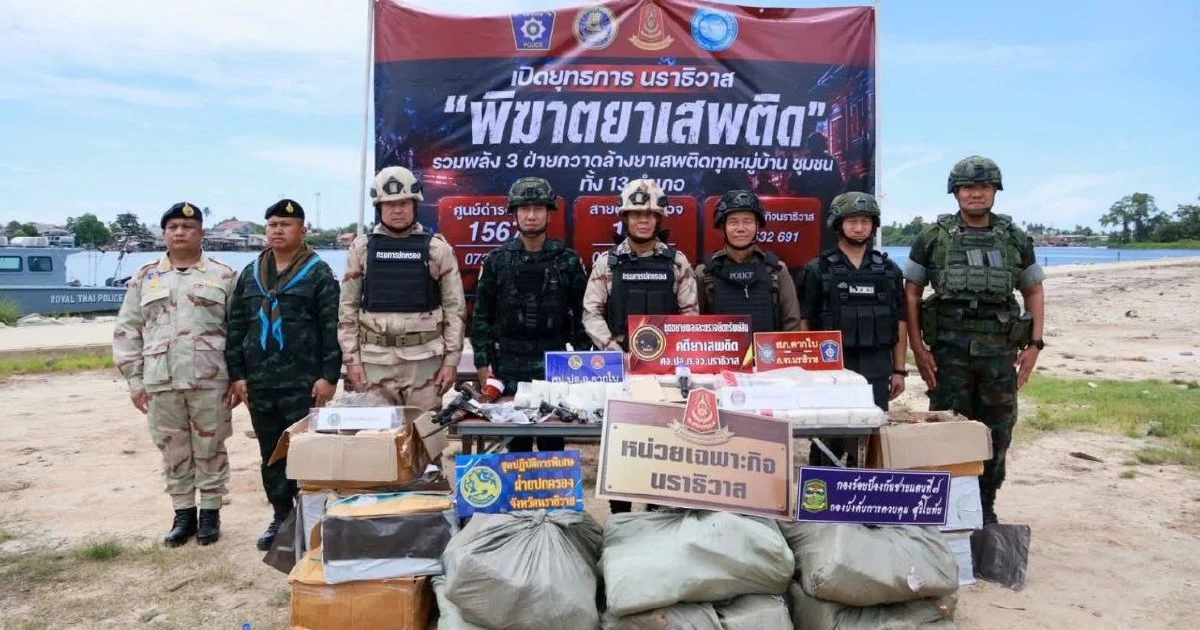
In a significant blow to transnational drug operations across the region, Thai law enforcement has dismantled a major trafficking network operating in Narathiwat province, arresting 233 suspects during an intensive four-week enforcement campaign. The scale of the operation underscores the persistent challenge posed by organised crime syndicates that exploit porous borders and established smuggling corridors connecting Thailand with Malaysia and other neighbouring countries.
The Narathiwat province operation, located in Thailand's southernmost region adjacent to Malaysian territory, represents a strategic focus for authorities combating the flow of narcotics northward into Thailand and southward into Malaysia. Intelligence gathered during the crackdown suggests several arrested individuals maintained direct operational links with Malaysian-based trafficking networks, indicating the sophisticated coordination required to move drugs across international borders. These connections reveal how criminal enterprises operate as interconnected franchises, with distinct roles assigned across multiple jurisdictions to maximise profit while minimising individual exposure to prosecution.
The confiscation of RM1.2 million in drugs during the campaign demonstrates the substantial volume of contraband continuously in transit through Southeast Asian smuggling networks. The value of seized material reflects not merely the street worth of narcotics but the profit margins that drive criminal entrepreneurs to invest heavily in logistics, corruption, and violence. For Malaysian authorities, the interception of drugs destined for domestic markets highlights how enforcement gaps in one jurisdiction directly enable supply pressures in another, creating a cascading effect across the region.
Narathiwat's geography makes it particularly vulnerable to trafficking operations. The province's proximity to Malaysia's Perlis and Kedah states, combined with extensive coastlines and river systems, provides multiple vectors for smuggling. Local communities and port facilities become inadvertent infrastructure for regional drug networks, with traffickers often recruiting economically marginalised residents as couriers and storage managers. The recruitment of local operatives complicates enforcement, as distinguishing between serious organised criminals and subsistence-level participants becomes increasingly difficult.
The month-long enforcement operation reflects a resource-intensive approach requiring sustained coordination among Thai police, military, and intelligence units. Such extended campaigns face logistical challenges and resource constraints that limit how frequently authorities can maintain high operational tempo. This cyclical enforcement pattern—alternating between intensive crackdowns and reduced vigilance—inadvertently creates predictable windows during which trafficking networks intensify operations before enforcement momentum builds again.
For Malaysia, the arrest of individuals with documented connections to domestic trafficking networks carries immediate implications. Each apprehended suspect potentially represents a disrupted supply chain, at least temporarily, and provides interrogation material that could yield intelligence about Malaysian-based kingpins, distribution channels, and financial networks. However, the structural incentives driving the drugs trade remain largely unchanged; the removal of 233 operatives, while operationally significant, constitutes a fraction of personnel engaged across the entire region.
The operation illustrates how Malaysian traffickers strategically utilise Thai territory as a staging ground and transshipment point rather than as a final destination. This external processing approach helps insulate major trafficking organisations from direct exposure to drugs within Malaysian borders, shifting arrest and asset seizure risks onto lower-level operatives working in neighbouring jurisdictions. Thai authorities essentially provide an enforcement service that Malaysian organised crime delegates outward.
Cross-border cooperation remains essential, yet remains inconsistently implemented across Southeast Asia. Intelligence sharing, joint operations, and coordinated asset freezes require bureaucratic frameworks that develop slowly and face persistent diplomatic friction. The Thai operation's success in identifying Malaysian connections suggests adequate bilateral communication functioned in this instance, yet systemic challenges persist in establishing permanent task forces or integrated intelligence databases that would enable real-time response to shifting smuggling patterns.
The composition of the arrested cohort—allegedly spanning various criminal networks rather than representing a single trafficking organisation—indicates the fragmented nature of regional drug operations. Multiple syndicates compete for market share and smuggling route access, sometimes cooperating on specific transactions, occasionally engaging in violent conflict over territorial rights. This atomised structure actually complicates law enforcement response, as dismantling one network leaves market share available for competitors to expand operations.
Economic and social dimensions underlying the drug trade require attention beyond enforcement alone. The persistent recruitment of impoverished residents as trafficking operatives reflects limited legitimate employment opportunities in Narathiwat and adjacent Malaysian border communities. Until regional development initiatives address poverty and create viable alternatives to criminal enterprise participation, enforcement operations will inevitably generate replacement workers willing to accept trafficking-related risks.
Looking forward, the significance of Thailand's Narathiwat operation extends beyond immediate arrests and seizures. The documented Malaysian connections provide both opportunities and cautionary lessons. Malaysian authorities can utilise the intelligence to pursue domestic investigations, yet should recognise that each enforcement action generates adaptive responses from trafficking organisations. Smuggling routes shift, operational security improves, and recruitment networks adjust to minimise exposure to arrested individuals.
Regional cooperation frameworks must evolve to address the dynamic nature of transnational drug trafficking. Static enforcement approaches prove insufficient against organised crime networks that rapidly adapt to enforcement pressure. Sustainable progress requires integrated strategies combining immediate law enforcement action with long-term border security improvements, financial intelligence capabilities targeting money laundering networks, and development initiatives addressing root causes of trafficking participation.

