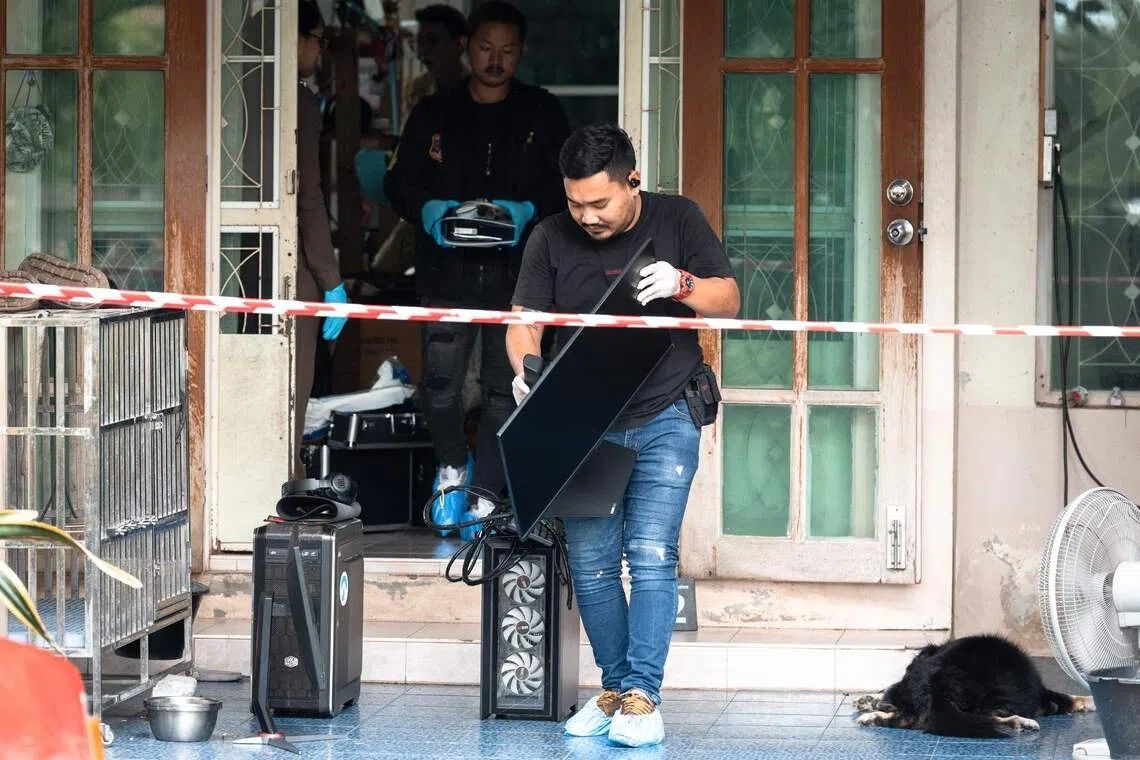
Thai authorities have intensified their investigation into the shooting at Debsirin Nonthaburi School by closely scrutinising the digital footprint of the 14-year-old suspect, whose online searches included queries about mass shootings in the United States. Police are conducting a comprehensive analysis of the teenager's computer and browsing history as they attempt to construct a clearer picture of what drove the violent acts that unfolded on the morning of August 7.
The investigation has revealed a troubling sequence of events. Authorities believe the suspect first killed his grandparents at their residence in Bang Khu Rat subdistrict, Bang Bua Thong district, before making his way to the school where the shooting subsequently took place. Officers and forensic teams discovered the bodies after gaining entry to the property. Wattana Yichin, commissioner of Provincial Police Region 1, personally inspected the residence as part of the ongoing investigation.
According to police findings, the front entrance of the grandparents' home had been secured from the outside, suggesting the teenager departed the premises after the killings and travelled to the school. This timeline indicates a deliberate movement from one location to another, raising questions about premeditation and planning. Investigators remain focused on establishing the precise sequence of these events and identifying potential triggers that may have contributed to the violence.
Preliminary examination of the suspect's digital activity has uncovered concerning patterns. The teenager had engaged extensively with video games featuring violent content and conducted multiple searches relating to a school shooting incident in the United States, with records indicating these searches occurred around July 30. However, police have been careful not to draw direct causal links between this online behaviour and the attacks, recognising the need for a more nuanced investigation that considers multiple factors.
School-related difficulties represent another area of investigative focus. Police are exploring whether the teenager experienced conflicts or problems within his educational environment that might have contributed to his actions. This line of inquiry reflects a broader understanding that such incidents rarely stem from a single cause but rather emerge from a confluence of stressors and environmental factors.
Familial context provides crucial background to understanding the suspect's circumstances. His uncle has informed authorities that the teenager had resided with his grandparents throughout his childhood, spending substantial amounts of time playing computer games and maintaining a generally withdrawn lifestyle. Prior to the incident, no obvious signs of distress or family conflict were apparent to those around him, and no recorded history of disputes emerged from family discussions.
The weapon used in the shooting was legally registered to the teenager's grandfather, according to police records. This fact underscores an important dimension of the case: access to firearms within the home environment. The grandfather, described by relatives as a gentle former bank manager, would not have anticipated that the firearm he lawfully possessed would be used in such circumstances.
Thananyaporn, 60, the sister of the deceased grandfather, has provided family perspective on the teenager's background and character. She emphasised that the boy had been raised by his grandparents following his parents' separation and that the three maintained an exceptionally close relationship. The grandfather, a retired bank manager known for his gentle demeanour, and the grandmother, who worked as a teacher, both invested considerable love and attention in raising the teenager. Thananyaporn characterised her grand-nephew as ordinarily quiet and polite, noting that he rarely ventured outside the home and had no established peer group or social circles beyond his immediate family.
The suspect's limited social engagement stands as a notable feature of his profile. Rather than participating in typical childhood activities, he remained largely housebound, with his grandfather responsible for transporting him to and from school. This pattern of isolation and restricted social interaction contrasts markedly with the activities of typical adolescents and may indicate underlying mental health concerns that went unrecognised or unaddressed. His preference for computer-based entertainment over external socialisation suggests a significant withdrawal from normative peer relationships.
Despite the apparent closeness of family bonds, Thananyaporn disputed suggestions that domestic strife played a role in the incident. She maintained that the family unit was fundamentally sound and that the teenager's daily life, whilst structured around his grandparents' routines and his own gaming pursuits, showed no obvious fractures or tensions. The grandmother's profession as an educator and the grandfather's professional background as a bank manager suggest a household with reasonable stability and resources.
Police investigators remain cautious about establishing definitive causal relationships between any single factor—whether violent gaming, online research, school difficulties, or family dynamics—and the violent outcome. Instead, authorities are treating the investigation as a multifaceted examination of the teenager's psychological state, environmental circumstances, and access to means. The case has prompted broader reflection within Thai society about adolescent mental health, digital safety, and the recognition of warning signs in young people experiencing severe distress.
As the investigation continues, the focus remains on completing a comprehensive timeline and identifying which factors, if any, materially contributed to the attacks. Thai police have indicated that determining the full sequence of events and understanding the teenager's motivations will remain central to their work, with implications for how similar incidents might be prevented in the future.

