A secondary school student in Thailand's Nonthaburi province fatally shot his grandparents before launching an attack at Debsirin Nonthaburi School on Friday morning that claimed seven lives and wounded 15 others, according to police investigating the incident. The Mathayom 2 student, whose identity has not been disclosed, allegedly retrieved a CZ 9mm handgun registered to his grandfather from their family residence in Bang Bua Thong district before heading to the school to conduct the assault.
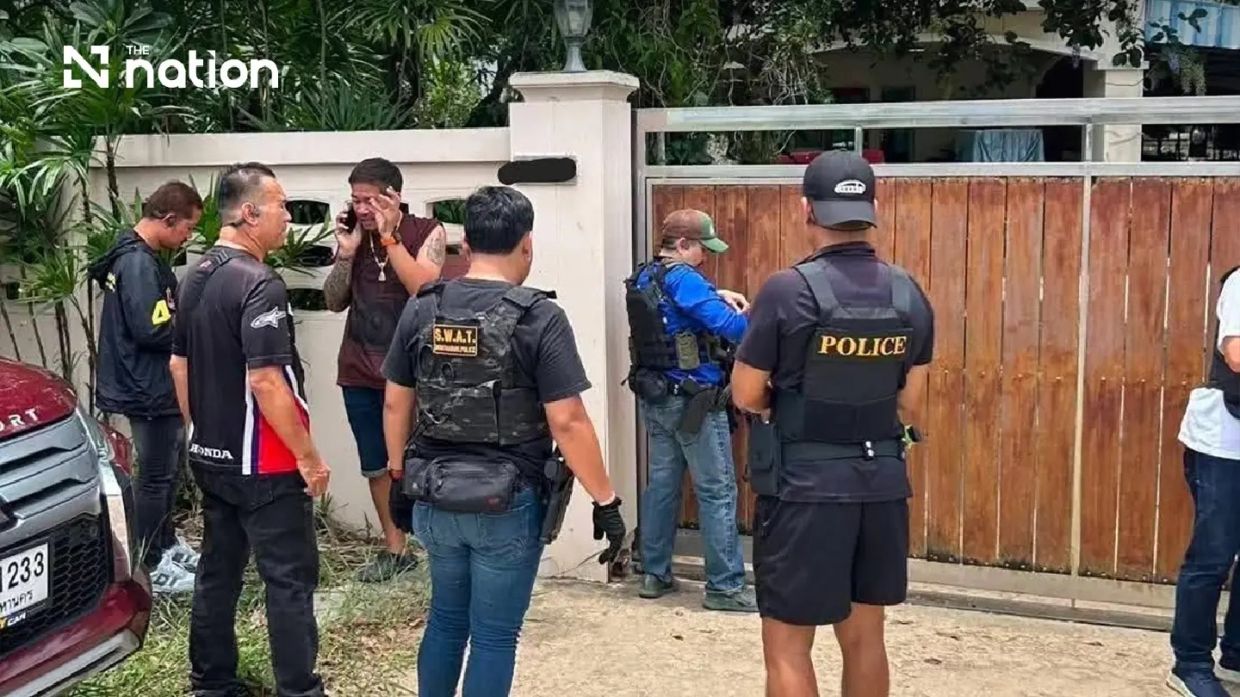
Investigators discovered the bodies of both grandparents at their home in a residential estate along Soi Wat Lat Pla Duk in Bang Khu Rat subdistrict during the initial response to the school shooting. Police believe the elderly relatives were killed with the same weapon used in the subsequent attack, establishing a direct connection between the domestic tragedy and the school violence. The discovery transformed what initially appeared to be an isolated school shooting into a more complex family tragedy with multiple victims across two locations.
Royal Thai Police spokesman Pol Lt Gen Trairong Phiwphan confirmed that officers had brought the situation under control by the time the violence concluded on Friday morning. Emergency response teams removed all injured persons and deceased victims from the school grounds, while authorities initiated a comprehensive investigation into the circumstances surrounding the attacks. The scale of the incident, with both deaths and injuries concentrated across a single morning, represents one of Thailand's more serious armed violence incidents in recent memory.
The student had been residing with his paternal grandparents rather than with parents or other guardians, a family arrangement that authorities are now examining as a potential factor in understanding his actions. Police have established contact with the suspect's guardians and begun collecting preliminary information about his living situation and relationships with family members. However, investigators emphasised that determining the psychological and emotional factors that may have motivated the attacks would require extensive examination of his behaviour, social connections, and personal circumstances prior to the incident.
A central investigative focus concerns how the secondary school student gained access to the firearm and ammunition, particularly given that such weapons are typically secured under adult supervision in Thai households. While police have confirmed the handgun's registration to the grandfather, they must now reconstruct the precise sequence through which the suspect removed the weapon from family custody, how it had been stored, and the source of the ammunition he obtained. These procedural questions will form the backbone of the forensic investigation and may reveal gaps in firearms safety protocols within the household.
Pol Lt Gen Trairong acknowledged that establishing a clear motive remained impossible at the preliminary stage and would demand deeper investigation into multiple aspects of the suspect's life. The inquiry would encompass his mental state, any academic or social pressures he faced at school, relationships with peers and teachers, and his interactions with family members including his grandparents. Police were not willing to speculate on psychological factors without concrete evidence, recognising that premature conclusions could misdirect the investigation.
National Police Chief Pol Gen Kitrat Phanphet issued comprehensive directives to ensure thorough evidence collection and scene documentation, ordering officers to clear and examine the school premises methodically. He further mandated that psychologists and mental-health specialists from Police General Hospital be deployed to the affected area to provide counselling to surviving students, traumatised teachers, and community members. This psychological response component reflects Thai authorities' recognition that mass casualty incidents generate significant emotional trauma requiring professional intervention to mitigate long-term psychological consequences.
The incident underscores persistent challenges in firearm access and security across Southeast Asia, where household gun ownership, though regulated, remains a reality in numerous countries including Thailand. Unlike some regional neighbours with stricter weapons controls, Thailand permits civilian firearm ownership under licensing requirements, yet the case raises questions about the adequacy of secure storage standards and supervision protocols. The ease with which a secondary school student accessed a registered family handgun suggests potential gaps between legislative requirements and actual household practice regarding gun safety measures.
For Malaysian readers and observers across the region, this incident serves as a sobering reminder of the potential consequences when young individuals gain unsupervised access to firearms during moments of personal crisis or emotional disturbance. The dual tragedy of killing close relatives before a broader attack also highlights the importance of mental health services and early intervention systems that might identify warning signs in troubled youth. Schools and communities throughout Southeast Asia have increasingly recognised the need for better psychological support infrastructure and threat assessment protocols to prevent similar incidents.

