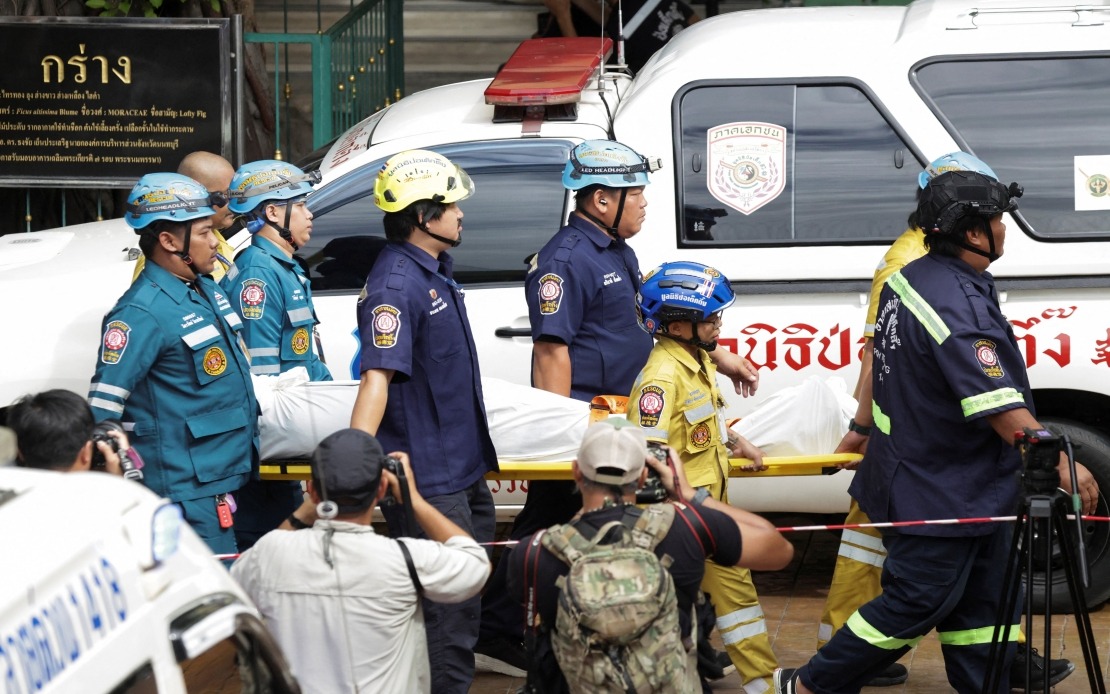
A devastating school shooting in Nonthaburi province has left Thai authorities piecing together one of the country's deadliest recent gun violence incidents. Police investigations suggest that the student gunman, who opened fire at Debsirin Nonthaburi School around 10 a.m. on Friday, may have committed murders at his grandparents' residence before proceeding to the educational institution, though the precise sequence and timing of events remains under official scrutiny.
The incident unfolded with particular brutality. The suspect discharged his weapon 26 times before arriving at the school premises, according to Lieutenant General Trairong Piwpan, the Royal Thai Police Deputy Inspector-General. Once at the school, the gunman systematically shot multiple victims, ultimately claiming the lives of three educators and three students. Additionally, 15 others sustained injuries during the rampage. The suspected shooter was subsequently found dead at the school.
The discovery of a secondary crime scene at the suspect's family home in Bang Bua Thong district added another layer of tragedy to the unfolding investigation. When officers searched the residence, they discovered the bodies of both the suspect's grandfather and grandmother. Both elderly victims bore fatal gunshot wounds to the head, suggesting a calculated execution rather than a crime of passion. These findings convinced investigators that the student likely murdered his grandparents before carrying out the attack at school.
Forensic evidence recovered during the investigation provides additional insight into the alleged crime spree. Officers discovered a 9mm handgun and 34 rounds of ammunition, separate from magazine-loaded rounds, during their search of the suspect's residence. The presence of such substantial ammunition reserves raises questions about premeditation and planning that police are working to clarify as their investigation progresses.
The incident carries profound implications for school safety across the region. Thailand, like many Southeast Asian nations, has generally experienced lower rates of gun violence compared to some Western countries, making mass shootings at educational institutions relatively uncommon. This event, however, signals a concerning security vulnerability in Thai schools and may prompt broader discussions about access to firearms and mental health interventions.
Lieutenant General Trairong indicated that investigators are actively pursuing several critical investigative leads. The motive behind the violence remains unclear, and authorities are working systematically to establish a coherent timeline of events. Understanding why the suspect first targeted his family members before turning his attention to the school community may provide essential insight into his psychological state and potential warning signs that may have been missed.
For Malaysian observers, the tragedy underscores the ongoing importance of stringent firearm regulations and school security protocols. While Malaysia maintains relatively strict gun ownership laws, the incident in Thailand demonstrates how rapidly a single individual with access to weapons can inflict mass casualties within a confined institutional setting. The vulnerability of schools—spaces traditionally associated with safety and learning—becomes starkly apparent.
The Nonthaburi shooting stands as a sobering reminder of the intersection between personal crises, access to weapons, and institutional vulnerability. The fact that a student perpetrated the violence suggests potential undetected distress signals within the school community itself. Whether through bullying, academic pressure, family dysfunction, or untreated mental health conditions, schools often serve as observation points where behavioral changes might be identified before they escalate to violence.
As Thai authorities continue their detailed investigation, several urgent questions remain. Why did the suspect choose to murder his grandparents before targeting his school? Were there previous incidents or threats that authorities should have monitored? What access controls existed around the weapon used in the shooting? These answers will likely inform national discussions about firearm regulations, school safety measures, and mental health support systems throughout Thailand and potentially across Southeast Asia.
The casualties—six deaths and 15 injuries—represent a significant loss for the local community and the broader Thai society. Each victim's story, whether teacher or student, represents a life interrupted and families devastated. The incident will undoubtedly trigger emotional responses and policy discussions that extend far beyond the immediate crime scene investigation. For regional education officials and security specialists, the Nonthaburi shooting will likely serve as a case study in school security protocols and early intervention strategies for identifying potentially dangerous individuals before tragedy strikes.

