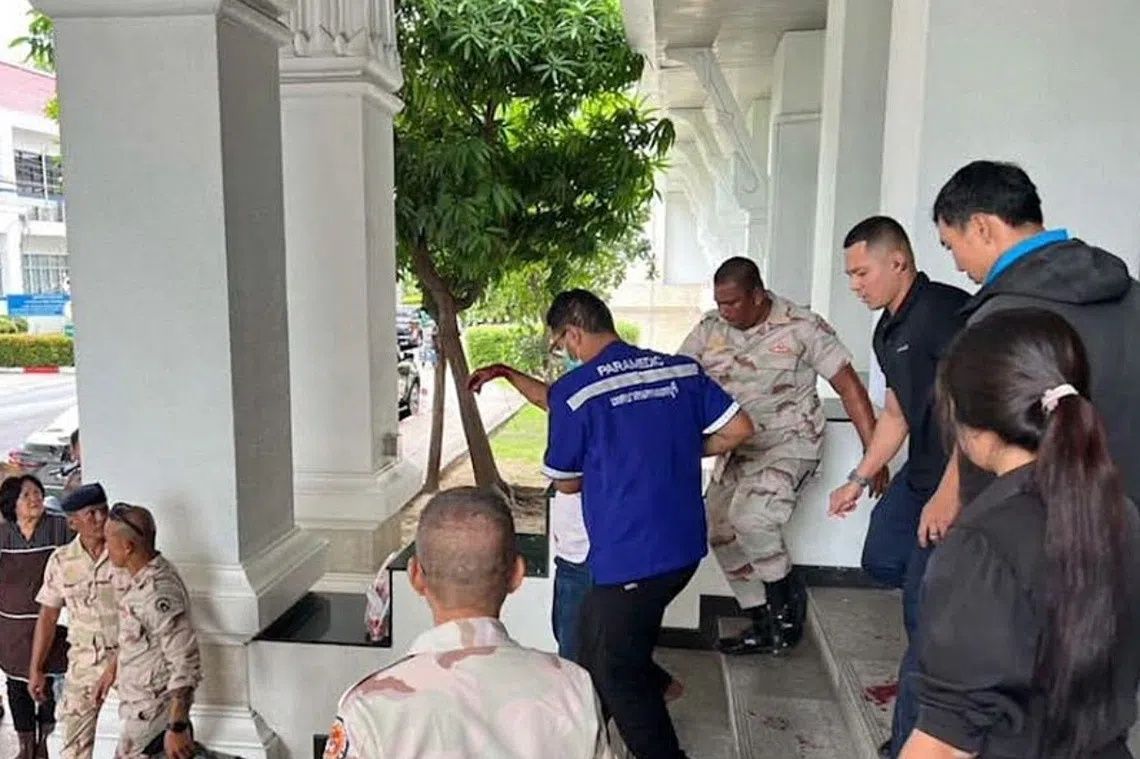
Thailand is confronting a deepening crisis over firearms access following Monday's attack on a provincial government office near Bangkok, where a gunman opened fire at officials just three days after a teenager's rampage at a school left nine people dead. The arrested suspect, identified as a former lawmaker, targeted a senior provincial official and his driver at the government building on the capital's outskirts, according to Major General Dejrapee Kongdee, the provincial police commander. Two individuals sustained injuries in the shooting and were transported to hospital for medical care, marking the second violent incident in as many days to shake public confidence in Thailand's approach to firearm regulation.
The escalating violence underscores mounting public anxiety over the ease with which individuals can access firearms in Thailand. Friday's shooting at Debsirin Nonthaburi School, located in the same province as Monday's incident, stands as Thailand's deadliest mass shooting event in nearly four years. A 14-year-old student allegedly shot his grandparents before arriving at the school and opening fire on students and staff, leaving nine people dead and injuring over 20 others. The teenager subsequently turned the weapon on himself, ending the rampage. The proximity of these two incidents within the same region has intensified public alarm and political scrutiny of Thailand's current gun ownership and licensing frameworks.
The back-to-back shootings have reignited fierce debate among policymakers and the public about whether Thailand's gun control measures are sufficiently stringent. Prime Minister Anutin Charnvirakul has pledged to strengthen regulations governing firearm access in response to the school tragedy, signalling the government's recognition that current laws may inadequately address public safety concerns. The commitment to tightening controls reflects mounting political pressure from concerned citizens and civil society groups demanding action to prevent future mass violence. However, Thailand's gun culture, shaped by historical factors and the prevalence of firearms in rural communities for hunting and self-defence, presents complex challenges to implementing comprehensive restrictions without encountering significant resistance from various constituencies.
Schools across Thailand have moved swiftly to implement enhanced security measures in the wake of Friday's massacre. Students returning to classrooms on Monday encountered metal detectors and additional security checks, reflecting the immediate institutional response to the tragedy. Such measures, while offering visible reassurance to parents and educators, represent a reactive approach that addresses symptoms rather than underlying causes of gun violence. The presence of security infrastructure at educational institutions, once unthinkable in Thailand's schools, marks a sobering shift in the country's approach to student safety and reflects the perceived severity of the threat posed by firearm access.
The arrest of a former lawmaker in connection with Monday's shooting introduces a troubling dimension to Thailand's gun violence crisis, suggesting that firearms possession extends across multiple social strata and professional backgrounds. This detail challenges any assumption that mass shootings in Thailand stem solely from marginalised or socially disadvantaged individuals. The involvement of someone with prior political office and likely elevated social standing raises questions about how thoroughly authorities vet firearm license applications and monitor weapons ownership among the country's elite and well-connected citizens. It also complicates the narrative around gun violence as purely a symptom of socioeconomic desperation.
Thailand's situation reflects broader challenges confronting Southeast Asian nations as they balance traditional cultural practices involving firearms with the imperative to prevent mass violence. Unlike some neighbouring countries that have implemented strict gun control measures, Thailand maintains relatively permissive regulations governing civilian firearm ownership, though licensing requirements exist. The two shootings within 72 hours have demonstrated the human cost of this approach and created political momentum for policy reform. Prime Minister Charnvirakul's stated intention to pursue stricter controls suggests the government recognises that public tolerance for the status quo has reached its limit following the school massacre.
The international dimensions of this crisis warrant consideration as well. Thailand's experience will likely influence discussions about gun policy throughout Southeast Asia, where mass shootings remain comparatively rare but public concern about firearm access is rising. Regional observers will scrutinise how effectively the Thai government implements promised reforms and whether such measures succeed in reducing gun violence while respecting legitimate self-defence and hunting interests. The credibility of Thailand's political leadership depends partly on translating emergency pledges made in the aftermath of tragedy into durable legislative and regulatory changes.
Looking forward, authorities face the dual challenge of addressing immediate security concerns while designing comprehensive long-term policy solutions. The speed with which the alleged gunman was apprehended in Monday's incident demonstrates the capacity of Thai law enforcement to respond effectively once shootings occur. However, prevention remains superior to responsive enforcement, suggesting that future policy emphasis should prioritize screening mechanisms, licensing standards, and ammunition accountability. The involvement of a former lawmaker in the Monday shooting also raises questions about whether political connections have previously insulated certain individuals from rigorous scrutiny of their firearm eligibility, a concern that future reforms must explicitly address.
The psychological impact on Thai society cannot be overlooked. The concentration of two significant shooting incidents within the same province and timeframe has created a sense of vulnerability among ordinary citizens, particularly parents concerned about children's safety at school. This collective anxiety will likely persist unless visible progress on gun control measures emerges in coming weeks and months. Prime Minister Charnvirakul's government recognises that failure to deliver meaningful reform could undermine public confidence and fuel broader criticism of its governance capacity. The window for decisive action exists now, while public attention is focused and political will appears mobilised, but implementing effective solutions will require navigating competing interests and longstanding cultural attitudes toward firearms.

