Thailand's government has indefinitely postponed peace negotiations with southern insurgent groups that were set to begin in September in Malaysia, marking a significant setback for reconciliation efforts in the country's turbulent border region. The decision comes after a coordinated assault last week in Narathiwat province claimed the lives of five military rangers and wounded six civilians, including a young child, forcing policymakers to reconsider the viability of continued dialogue while violence persists.
Thanat Suwannanont, who directs the National Intelligence Agency and oversees Thailand's Southern Border Provinces Peace Dialogue Panel, characterised the suspension as a necessary pause rather than an abandonment of peace efforts. Speaking to journalists on Tuesday, he emphasised that while the preliminary stages of negotiation had shown promise, the severity of the Narathiwat incident rendered continuation untenable at present. The attack fundamentally altered the calculus of engagement, creating conditions where trust between parties deteriorated and the foundation for productive talks effectively crumbled.
The timing of the violence proved particularly damaging to diplomatic momentum. Officials had invested considerable effort in arranging the September meeting and establishing channels for discussion, making the assault during an active peace process appear deliberately provocative. Thanat suggested that regardless of whether the perpetrators were acting independently or under organisational orders, the reality of escalated violence required Bangkok to essentially restart negotiations from an earlier position. "Once violence occurs, we have to start all over again," he stated, acknowledging the cyclical nature of conflict and peacemaking in the region.
Responses from Thailand's leadership underscored a complex balancing act between maintaining commitment to dialogue and responding to security threats. Prime Minister Anutin Charnvirakul has repeatedly stressed that long-term resolution of the southern conflict depends on sustained negotiation rather than short-term military reactions to specific incidents. However, this philosophical stance confronted immediate political pressure following the ranger deaths. The government formally requested an explanation from the insurgent group, signalling that accountability and clarity regarding the attack's origins would precede any resumption of formal talks.
The attack itself unfolded with brutal efficiency on Wednesday evening at approximately 6:45 pm local time. Six assailants, dressed in dark clothing and faces covered, targeted a security checkpoint at Ban Bukit Sami in Rangae district with firearms and improvised explosive devices fashioned from pipes. The assault demonstrated tactical sophistication and coordination, characteristics that concern security analysts who view such operations as potentially orchestrated rather than spontaneous. The selection of a ranger checkpoint suggested deliberate targeting of government security personnel rather than indiscriminate violence.
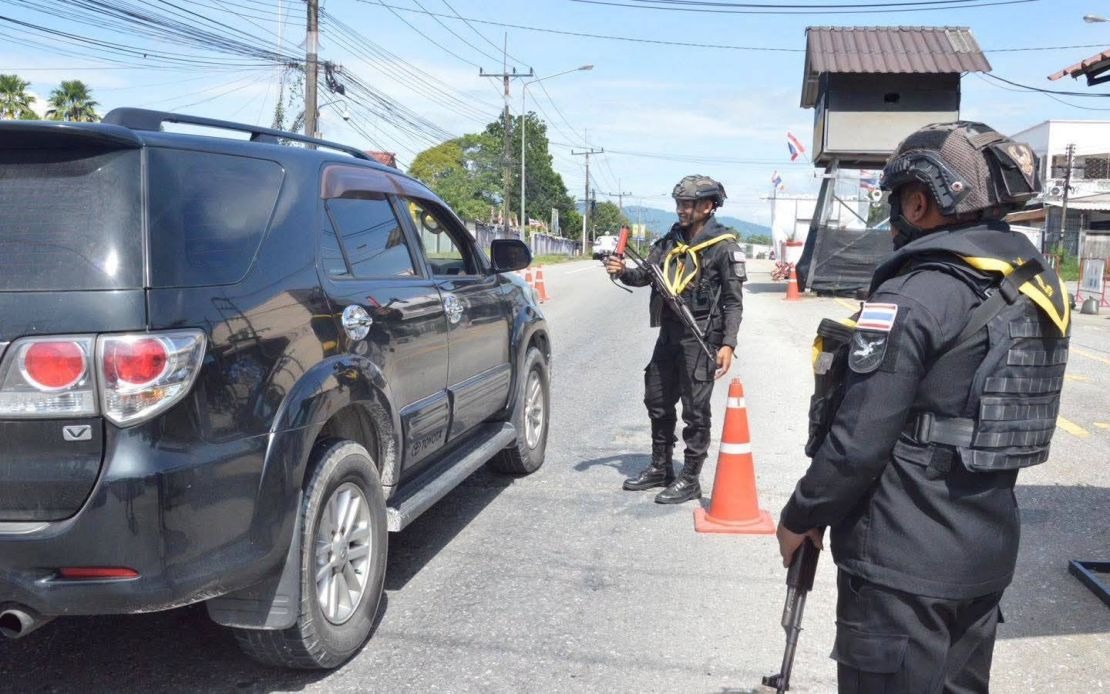
Bangkok's response to the incident expanded beyond postponing diplomatic engagement to encompass broader security measures. Authorities declared Martial Law across thirteen districts in Narathiwat province, granting military forces expanded powers to conduct operations, establish checkpoints, and detain suspects without standard civilian judicial oversight. This escalation reflected the government's assessment that the attack represented a significant security breach and required proportionate force to prevent further incidents and apprehend those responsible.
Investigative work proceeded rapidly in the attack's aftermath, with the Narathiwat Provincial Court issuing arrest warrants for two men aged 43 and 45 believed to have participated in the assault. Security authorities linked both suspects to the July 22 violence through investigative findings that had not been fully disclosed publicly. Charges filed against them encompassed multiple serious offences: terrorism, premeditated murder of government officials, armed robbery resulting in death, and violations involving firearms and explosives. The breadth of charges indicated prosecutorial intent to secure maximum penalties if conviction succeeded.
The Internal Security Operations Command's Region 4 division oversaw manhunt operations while maintaining flexibility regarding suspect locations. Military forces received authorisation to establish roadblocks throughout Narathiwat whenever intelligence suggested the wanted individuals might be present, effectively placing the province under heightened surveillance protocols. This security posture remained indefinite, persisting until suspects faced capture or were confirmed dead or dispersed beyond Thai territory.
For Malaysia and the broader Southeast Asian region, Thailand's decision carries significant implications for regional stability and cross-border security coordination. The Malaysian government has hosted previous rounds of talks and maintains interest in southern Thailand's stabilisation, understanding that persistent conflict generates refugee flows, criminal networks utilising porous borders, and general instability affecting neighbouring jurisdictions. Postponement of the September talks in Malaysia indirectly affects Kuala Lumpur's diplomatic objectives and reduces opportunities for regional powers to mediate between Thai authorities and insurgent representatives.
Analysts observe that the pause in negotiations reflects a perpetual challenge in conflict resolution: violence deployed strategically by spoilers can derail diplomatic processes regardless of good faith efforts by other parties. The attack's occurrence during an active peace process suggests either that elements within insurgent structures reject dialogue, or that coordinated orchestration aimed specifically at sabotaging negotiations occurred. Either scenario complicates future resumption, as trust deficits widen and suspicion hardens on both sides.
The broader context of Thailand's southern insurgency stretches back decades, involving competing claims to territory, religious identity, and governance legitimacy between the Buddhist-majority Thai state and Muslim-majority populations in Narathiwat, Pattani, and Yala provinces. Previous peace initiatives have achieved limited success, often interrupted by cycles of violence that reset negotiations to earlier stages. The current suspension extends this historical pattern, though officials maintain that dialogue represents the only viable long-term solution despite repeated disruptions.
Moving forward, questions persist regarding preconditions for resuming talks. Authorities have not specified whether apprehension of the named suspects, their conviction, explicit denunciation of violence by insurgent leaders, or other conditions would suffice to restart negotiations. Thanat's emphasis on following "an established process" that "requires time" suggests no rushed timeline exists, potentially leaving the peace initiative in indefinite limbo. This ambiguity itself creates uncertainty for all parties invested in southern stability, from government officials to insurgent representatives to regional neighbours watching developments.

