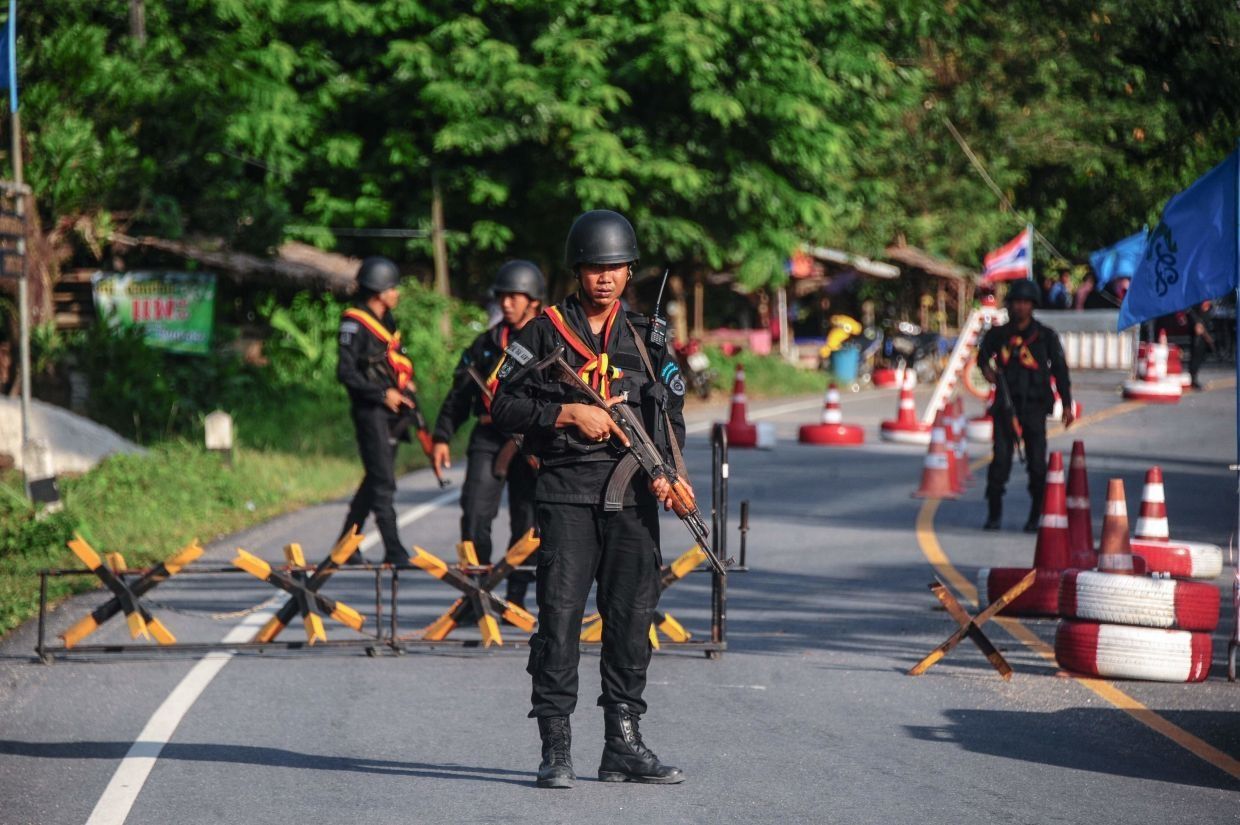
The government of Thailand has shelved preparations for scheduled peace discussions with the country's southern insurgent group, reversing diplomatic momentum that had been building prior to a devastating attack that claimed the lives of five paramilitary rangers in Thailand's troubled southernmost region. The talks, which were arranged to take place on Malaysian soil next month, have been indefinitely postponed following an armed assault in Narathiwat province that reignited security concerns and prompted a reassessment of the viability of negotiations at this juncture.
Thanation Authority officials convened by Thanat Suwannanont, the director of the National Intelligence Agency and head of the Southern Border Provinces Peace Dialogue Panel, revealed the suspension on Tuesday while grappling with the operational and strategic implications of the previous week's violence. The attack, which unfolded in a manner that suggested calculated planning rather than spontaneous action, has complicated efforts to maintain the dialogue framework that observers and regional analysts had regarded as a potentially significant breakthrough in addressing the protracted insurgency.
According to Thanat's account, discussions between government representatives and the insurgent faction had been progressing constructively before the assault derailed momentum. The official emphasised that the severity and coordination of the assault—which targeted a checkpoint in Ban Bukit Sami, Rangae district—represented a fundamental breach of the implicit understanding that underpinned the negotiation process. He articulated a position reflecting Bangkok's assessment that meaningful dialogue cannot proceed simultaneously with acts of armed violence, suggesting that the attack necessitates a return to foundational discussions about the feasibility of sustained engagement.
The incident occurred last Wednesday evening at approximately 6:45 p.m. local time when six assailants, their faces concealed and dressed entirely in dark attire, descended upon the security checkpoint with small arms fire and improvised explosive devices in the form of pipe bombs. The assault resulted in the deaths of five rangers and left six civilians wounded, among them a three-year-old child, highlighting the civilian toll of the insurgency's asymmetric tactics. The brazen nature of the operation, conducted with apparent military precision, underscored the capacity of the insurgent network to inflict damage even as formal peace channels were being established.
In response to the attack, Thai authorities moved swiftly to expand their security posture across the affected region. Martial Law declarations were imposed across thirteen districts within Narathiwat province, granting military and security forces expanded powers to conduct operations aimed at locating those responsible and reinforcing defensive measures at vulnerable installations. The use of such broad security measures reflects the government's determination to prevent further similar incidents and to regain control over the security environment in a province that has experienced recurring cycles of violence over more than two decades.
Law enforcement agencies have already identified suspects believed to be connected not only to last week's attack but potentially to an earlier armed assault that occurred on July 22. The Narathiwat Provincial Court has authorised arrest warrants for two men, aged 45 and 43 respectively, whom investigators have linked to both incidents. Prosecution authorities have laid serious charges including acts of terrorism, premeditated murder of government personnel, armed robbery resulting in death, and violations of weapons and explosives regulations—offences carrying substantial penalties under Thai law.
The Internal Security Operations Command (ISOC) Region 4 indicated that apprehension operations for the suspects remain active, with military units authorised to establish vehicle checkpoints throughout Narathiwat should intelligence suggest the fugitives' presence in particular areas. This operational posture suggests that security services view the suspects as posing an ongoing threat and may be operating from locations within the province rather than having fled across international borders into Malaysia or other neighbouring jurisdictions.
Thailand's Prime Minister Anutin Charnvirakul has previously articulated a strategic vision in which dialogue constitutes a long-term pillar of policy toward resolving the southern insurgency, rather than serving as a reactive or short-term mechanism. However, the suspension of the September discussions reflects the practical challenge that this aspiration encounters when confronted with cycles of violence. The government's position, articulated through Thanat, suggests that resumption of formal negotiations will require not merely a passage of time but substantive efforts to reconstitute the foundation of mutual commitment upon which productive dialogue depends.
For Malaysian observers and Southeast Asian analysts, the suspension carries implications beyond bilateral Thailand-insurgent dynamics. Malaysia has historically served as a venue for Thai-based peace initiatives and has hosted previous rounds of talks aimed at addressing the southern border conflict. The postponement of the September meeting thus represents a setback for regional diplomatic efforts to de-escalate one of Southeast Asia's most persistent internal security challenges. The resumption of violence during an active peace process raises questions about the insurgent group's internal coherence and whether factions within the movement disagree about the wisdom of engaging in negotiations.
Thailand's approach to restarting negotiations will likely depend on tangible steps by the insurgent group to demonstrate commitment to the peace process and to explain or disavow the recent attack. Thanat's statement that authorities had requested clarification from insurgent representatives about the assault suggests that Bangkok views the attack as potentially inconsistent with official statements by leadership figures within the movement regarding their commitment to dialogue. This assessment implies that the government may distinguish between hardline elements within the insurgency and more moderate elements potentially open to negotiation.
The temporary suspension, while presented as such by officials, carries the risk of becoming indefinite should security incidents continue or should the political environment in Bangkok shift toward prioritising military solutions. Thailand's history with peace processes in the south demonstrates that momentum toward dialogue can erode rapidly, particularly when public opinion or military leadership perceives threats from unresolved insurgent activity. The coming weeks and months will be critical in determining whether the September derailment represents a brief interruption or a more fundamental breakdown in efforts to move toward political settlement of a conflict that has claimed thousands of lives since its modern escalation in 2004.

