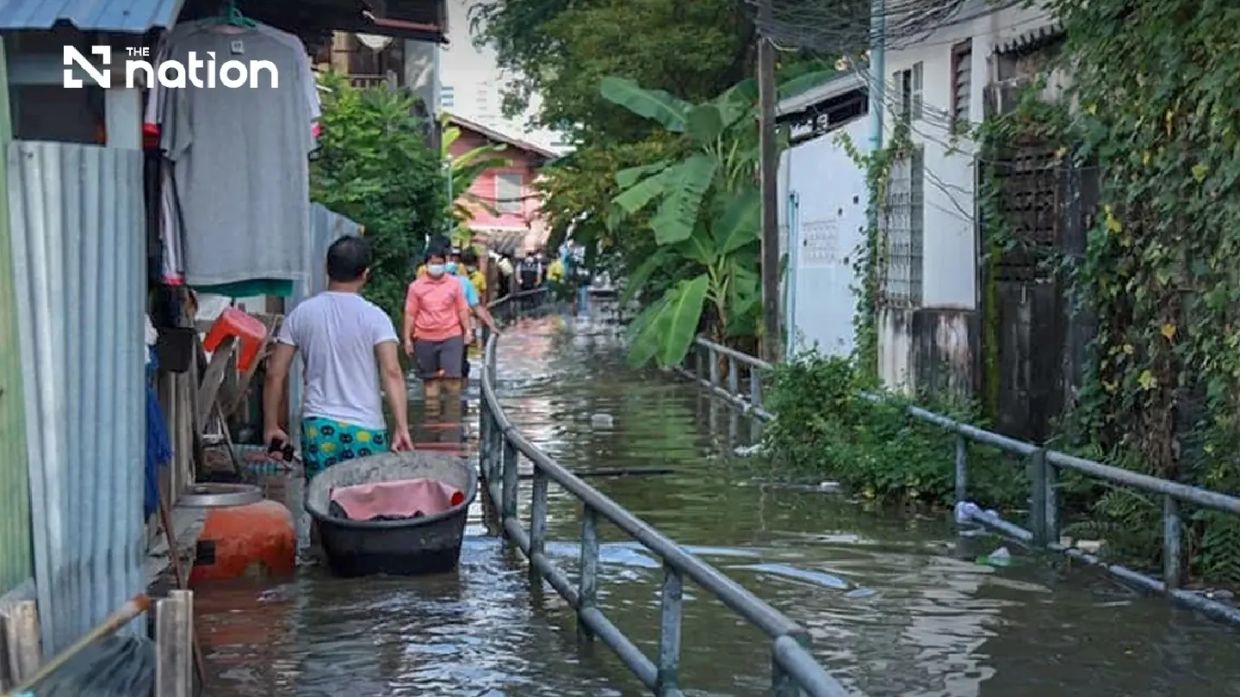
Thailand's Department of Disaster Prevention and Mitigation has activated a comprehensive alert system across six central provinces and the capital in response to forecasted high-tide conditions. The warning, which encompasses Pathum Thani, Nonthaburi, Nakhon Pathom, Samut Sakhon, Samut Songkhram, and Samut Prakan alongside Bangkok, instructs regional authorities to maintain heightened vigilance from Monday, July 13 through Sunday, July 19. The advisory came from the DDPM's director-general Theerapat Kachamat, who announced the precautionary measures on Saturday morning based on data supplied by Thailand's Royal Thai Navy Hydrographic Department.
The underlying concern centres on anticipated water level surges in the Chao Phraya River system, particularly around the Phra Chulachomklao Fort vicinity. During the designated period, sea levels are expected to peak between 6 pm and 10 pm each evening, creating conditions where waterway levels could breach embankments and inundate adjacent terrain. For communities relying on river infrastructure—from humble riverside dwellings to commercial enterprises—such tidal episodes present genuine economic and safety challenges that warrant official coordination and public awareness.
The geographic scope of the threat reveals the interconnected vulnerability of Thailand's central lowlands. In Pathum Thani, officials must monitor Mueang Pathum Thani and Sam Khok districts where densely populated zones depend on flood management infrastructure. Nonthaburi's Mueang, Pak Kret, and Bang Kruai districts face similar pressures, while Nakhon Pathom's Bang Len, Nakhon Chai Si, and Sam Phran divisions likewise require supervisory attention. All districts within Samut Songkhram have been flagged as requiring close observation, whereas Samut Prakan's Mueang, Phra Samut Chedi, Phra Pradaeng, and Bang Bo districts represent particularly sensitive zones given their proximity to the Chao Phraya estuary.
These particular areas have been identified because they encompass low-lying terrain inadequately protected by permanent defence structures or situated outside formal flood barriers. The distinction matters considerably: residents in such zones cannot rely on engineered protections during peak water episodes and instead depend on early warning systems and community-level preparedness. The DDPM's strategy therefore emphasises keeping people informed about specific high-tide windows so households and businesses can implement protective measures proactively rather than reactively.
Thailand's approach to the impending tidal event illustrates institutional coordination between national and regional authorities. The Central Disaster Prevention and Mitigation Command, working through the DDPM, has tasked provincial governments with broad dissemination responsibilities. Officials must communicate tidal timing to business operators, particularly those running floating restaurants and implementing riverbank fortification projects—activities that generate economic value but simultaneously create vulnerability during water emergencies. The notice underscores that private-sector entities working on waterways require advance notice to suspend or modify operations safely during critical hours.
For Malaysian readers familiar with monsoon-driven flooding in Peninsular Malaysia and the complexities of cross-border river management, Thailand's experience offers instructive parallels. Both nations contend with seasonal water variability, densely settled river corridors, and the challenge of protecting economically important urban zones. The Chao Phraya system's significance to Bangkok and central Thailand mirrors the importance of the Rajang, Perak, and Muar rivers to Malaysian development and settlement patterns. Consequently, observing how Thai authorities mobilise disaster response infrastructure carries direct relevance for understanding regional flood-management best practices.
The DDPM has equipped the public with multiple communication channels for both receiving warnings and reporting emergencies. The THAI DISASTER ALERT application enables residents to access real-time advisories directly through smartphones, reducing reliance on traditional media or word-of-mouth information that may prove unreliable during crises. For those requiring immediate assistance or wishing to report impacts, the system provides LINE-based communication at ID @1784DDPM alongside a dedicated 24-hour hotline numbered 1784, ensuring round-the-clock responsiveness during the seven-day alert window.
The emphasis on advance notification reflects contemporary understanding that flood and tidal disaster mitigation depends fundamentally on awareness and preparation rather than reactive emergency response alone. By specifying the precise timing of peak water levels between 6 pm and 10 pm, authorities enable individuals and organisations to arrange protective barriers, relocate valuables, suspend vulnerable operations, or evacuate when necessary. This temporal precision transforms an abstract weather phenomenon into actionable intelligence that empowers communities to protect themselves and their livelihoods.
Beyond immediate warning dissemination, the DDPM's mobilisation strategy acknowledges that effective disaster management requires coordination across multiple stakeholder groups. Provincial authorities must liaise with business chambers, community organisations, and neighbourhood leaders to ensure information reaches not merely official channels but also informal networks where vulnerable populations—the elderly, economically disadvantaged households, and non-Thai residents—may obtain practical guidance. The involvement of private-sector operators in advance notification processes likewise reflects recognition that modern flood management extends well beyond government agencies into the commercial sphere.
Such alert systems, while necessary during immediate crisis periods, also serve longer-term policy purposes. The data generated during high-tide episodes, combined with observed flood impacts and community responses, feeds into Thailand's broader understanding of climate variability and urban resilience. As Southeast Asia confronts accelerating sea-level rise and increasingly erratic precipitation patterns driven by climate change, systematic documentation of tidal surges and flooding consequences helps planners and policymakers anticipate future challenges and design more robust protective infrastructure.
For the resident populations and business operators across the affected provinces, the coming week will test both the effectiveness of existing flood defences and the responsiveness of official warning systems. Success will be measured not by dramatic interventions but by the absence of preventable casualties and economic losses—outcomes achievable when communities receive timely, accurate information and possess adequate time to implement protective measures. The DDPM's proactive approach, initiated well before peak tidal conditions arrive, reflects recognition that disaster prevention depends ultimately on preparation rather than crisis management.

