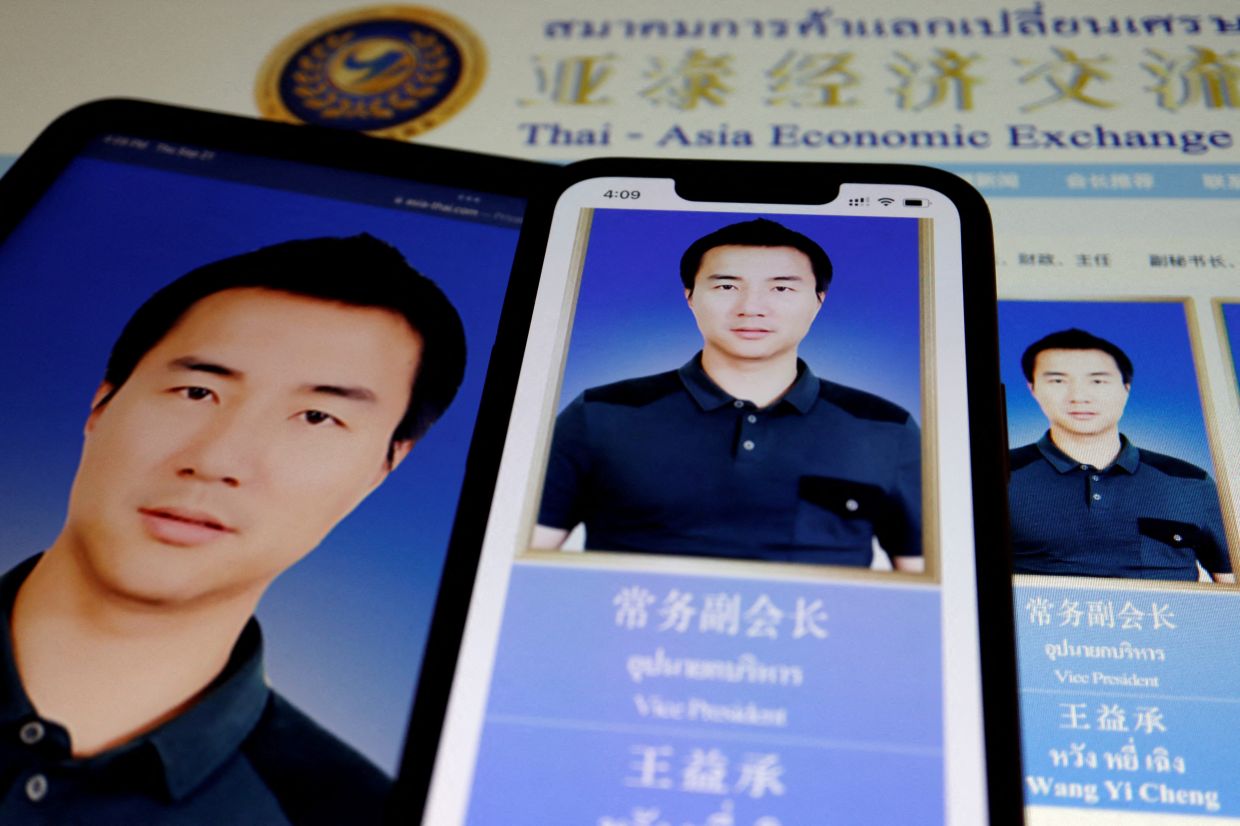
Thailand's Department of Special Investigation has issued an arrest warrant for Wang Yicheng, a Chinese businessman implicated in a sprawling transnational cryptocurrency-laundering scheme that authorities believe ties together illegal mining operations, investment fraud, and proceeds from online gambling syndicates. Police Major Woranan Srilam disclosed the development on June 23, stating that Wang had been formally charged with theft and violations of the Computer Crimes Act in November, though investigators now believe he has absconded from the country. Thai authorities are coordinating with international law enforcement agencies to track down the suspect, underscoring how regional crime networks have become increasingly mobile and difficult to contain.
Wang's prominence in this investigation stems from a Reuters investigation published in 2023 that traced suspicious financial flows through cryptocurrency accounts registered in his name. Blockchain analysis firms, including TRM Labs, identified a crypto wallet associated with Wang that received at least US$9.1 million between 2021 and 2022 from accounts directly linked to "pig-butchering" scams, a deceptive scheme in which fraudsters pose as romantic interests to convince victims to invest money in fake cryptocurrency platforms. The investigation documented how a 71-year-old California man lost his entire life savings of US$2.7 million after being manipulated by someone impersonating a young woman, with funds ultimately traced to accounts connected to Wang's name. However, investigators acknowledged they could not conclusively determine whether Wang personally controlled the accounts or whether his identity had been fraudulently appropriated, a distinction that often complicates prosecution of such transnational cases.
The scope of the criminal network uncovered by Thai authorities extends beyond Wang himself. The DSI revealed it had issued arrest warrants for four unnamed Chinese nationals and four Myanmar nationals as part of the broader investigation, which centres on illegal cryptocurrency mining operations that siphoned approximately US$28 million worth of electricity—a figure that places this among the most significant illicit mining cases documented in Southeast Asia. Thai investigators identified Wang as a pivotal figure orchestrating the use of cryptocurrency mining as both an income-generation mechanism and money-laundering vehicle for proceeds derived from scams and online gambling enterprises. This operating model, in which criminal groups exploit computational resources to convert illegally obtained funds into seemingly legitimate digital assets, has become increasingly prevalent across the region.
The timing and scope of Thailand's action reflects mounting pressure from regional governments to dismantle Chinese-led transnational crime syndicates that have flourished across Southeast Asia. The United Nations has documented that these operations, often headquartered in industrial compounds like KK Park straddling the Myanmar-Thailand border, generate an estimated billions of dollars annually while employing trafficking victims in forced labour conditions. Thailand, alongside neighbouring countries, has substantially escalated enforcement actions against these networks over recent months, recognizing that their operations destabilize societies through both direct financial losses to victims and the broader corrosion of trust in digital financial systems. The crackdown reflects political will to address what has become a signature transnational organized crime challenge of the region.
Wang's background and connections further illuminate how these networks operate at the intersection of business, technology, and political access. Before his alleged involvement in the crypto scheme came to light, Wang held the position of vice president at the Thai-Asia Economic Exchange Trade Association, an organization ostensibly dedicated to promoting legitimate business ties between Thailand and China. The association cultivated relationships with senior officials across both nations, including prominent figures within Thailand's police hierarchy. This positioning—leveraging ostensibly legitimate business frameworks to establish networks that provide both cover and political insulation—represents a sophisticated approach to transnational organized crime. When Reuters first published findings connecting Wang to the fraud networks in 2023, the trade association stated he had departed from its board and claimed background checks had revealed no criminal history, while maintaining that senior Thai officials served only as advisers and friends rather than having direct financial interests.
The involvement of major technology companies adds another layer of complexity to the investigation. Bitmain, one of the world's largest manufacturers of bitcoin mining equipment, confirmed to Reuters in 2023 that Wang was a significant business partner and customer, emphasizing that any equipment supplied had been transferred through lawful commercial channels. This detail raises questions about whether Bitmain had conducted adequate due diligence regarding the end-use of its products, particularly given that illicit mining operations require substantial quantities of specialized hardware. The distinction between legal manufacturing and sale of mining equipment versus awareness of or facilitation of its criminal application remains a contested area in enforcement efforts, as companies argue they cannot systematically police downstream customer behaviour while regulators increasingly expect greater corporate responsibility for supply-chain transparency.
U.S. law enforcement has independently identified Wang as a suspect in digital-asset fraud matters, demonstrating that the investigation extends beyond Thai jurisdiction. In June 2023, U.S. authorities seized approximately US$500,000 in cryptocurrency from an account registered in Wang's name after tracing funds stolen from a Massachusetts resident to that wallet. The U.S. Department of Justice, however, declined to comment on the Thai arrest warrant or the broader investigation, adhering to standard practice of not publicly discussing ongoing cases. This restraint does not diminish the significance of coordinated international action, as the seizure itself constitutes meaningful enforcement pressure and signals to financial institutions that assets associated with Wang's accounts face high risk of government forfeiture.
China's response to the investigation remains notably muted. When queried by Reuters, China's Foreign Ministry stated it was unaware of the situation, a response that may reflect either genuine lack of engagement with Thai authorities or diplomatic caution regarding cases involving Chinese nationals abroad. This dynamic creates asymmetries in enforcement, as Thailand must navigate both criminal investigation and diplomatic considerations when pursuing suspects with citizenship ties to China. The apparent lack of proactive cooperation from Beijing in locating or returning Wang, if he has indeed departed Thailand, illustrates how transnational criminals exploit jurisdictional gaps and the reluctance of some nations to facilitate extradition processes.
The broader implications for Southeast Asia are substantial. As digital currency infrastructure becomes increasingly integral to legitimate commerce, its exploitation by organized crime creates negative externalities that extend far beyond individual victims. The integration of illegal mining, investment fraud, and money laundering into coordinated syndicates demonstrates how criminal networks have evolved to exploit technological change. Governments in the region must simultaneously strengthen cryptocurrency regulations, enhance cross-border law enforcement coordination, and improve due diligence requirements for firms supplying technology to high-risk markets. Thailand's aggressive pursuit of Wang and his associates signals recognition that these networks constitute a priority threat, yet sustained effectiveness requires consistent resource commitment and political courage to pursue cases that may implicate well-connected individuals and established business entities.

