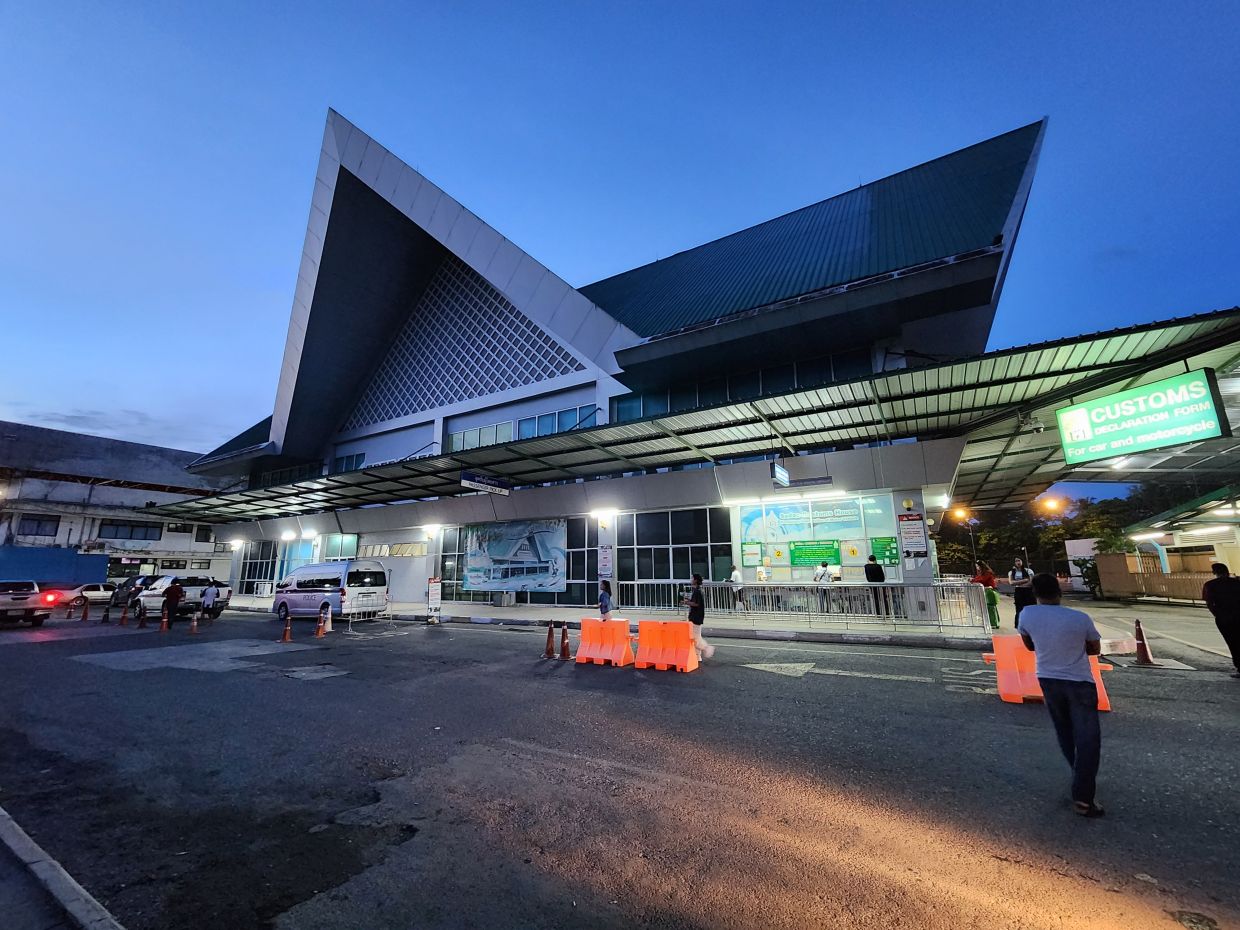
Thailand has taken a significant step towards deepening economic integration with Malaysia by establishing a new permanent land crossing at Sadao, a move formally approved by the Thai cabinet on Tuesday. Set to begin operations on July 11, the checkpoint represents a strategic investment in regional connectivity and reflects both nations' commitment to facilitating seamless movement of goods, services, and people across their shared frontier. The decision underscores growing recognition among Southeast Asian policymakers that efficient border infrastructure is foundational to competitive trade performance and tourism development in an increasingly integrated regional economy.
The relocation of the Sadao crossing from its existing position at boundary markers 22-23 to a new site between markers 23/9 and 23/10 reflects careful planning aimed at improving operational efficiency. Operating hours have been set from 05:00 to 23:00 daily, extending accessibility compared to many traditional border posts in the region and providing commercial operators with an extended window for cross-border transactions. This timing structure is particularly significant for supply chain coordination, allowing businesses to synchronise shipment schedules across both territories and reducing the holding costs associated with delayed border clearance—a persistent challenge in mainland Southeast Asia.
Thailand's government spokesperson Ratchada Thanadirek emphasised that infrastructure development extends well beyond the checkpoint itself. Thai authorities have instructed relevant agencies to accelerate construction of feeder roads connecting the new crossing to existing highway networks, a critical measure given that border efficiency depends heavily on the quality of surrounding transport infrastructure. The Songkhla provincial government, which oversees this southern border region, has been assigned responsibility for monitoring project execution and addressing traffic congestion points that currently plague the approach routes. These efforts acknowledge that a modern checkpoint surrounded by inadequate road systems would represent wasted investment and continued bottlenecks for bilateral commerce.
Beyond physical infrastructure, Thai officials recognise that successful border operations require coordinated facilitation across multiple government functions. Shuttle service arrangements have been approved to aid travellers and small traders who lack private transport, a particularly important consideration for rural communities and informal traders who sustain substantial cross-border economic activity. Simultaneously, government agencies have received directives to launch comprehensive information campaigns targeting the private sector, business operators, and local populations. These communication initiatives aim to familiarise stakeholders with new traffic routing, updated customs procedures, immigration protocols, and government support mechanisms designed to ease commercial movement and tourism flows.
The timing of this checkpoint approval is closely linked to advancing bilateral relations at the highest political level. Thai Prime Minister Anutin Charnvirakul is scheduled to make an official visit to Malaysia on July 9-10, invited by Prime Minister Anwar Ibrahim. The cabinet simultaneously approved a draft joint statement to be finalised during this visit, which will establish a cooperative framework spanning border development, physical connectivity, and security coordination against transnational organised crime. This diplomatic sequencing is deliberate—border infrastructure improvements are typically most effective when underpinned by high-level political commitment and complementary agreements addressing regulatory harmonisation and dispute resolution.
The bilateral agenda extends substantially beyond border logistics. The proposed joint statement emphasises security cooperation addressing transnational challenges that have long afflicted the Thailand-Malaysia borderlands, including human trafficking, drug smuggling, and weapons trafficking. These criminal activities have historically undermined economic development in border regions and deterred legitimate investment. Coordinated law enforcement efforts, supported by improved intelligence sharing and joint operational protocols, promise significant benefits for both nations' security interests. Malaysian readers will recognise these concerns as directly relevant given Peninsular Malaysia's role as both a transit point and destination market for regional trafficking networks.
Economic partnership provisions within the draft statement focus particularly on food and energy security, sectors of substantial strategic importance to both economies and the broader Southeast Asian region. Thailand's substantial agricultural productivity and energy infrastructure, combined with Malaysia's downstream processing capabilities and market access, create natural complementarities. Formalising cooperation in these areas through bilateral agreements enables both nations to build more resilient supply chains, reduce dependence on non-regional suppliers, and strengthen their negotiating positions within regional trade frameworks such as ASEAN. For Malaysian businesses, improved access to Thai agricultural inputs and energy resources could reduce production costs and enhance competitiveness in regional and global markets.
The tourism dimension of this initiative warrants particular emphasis, as it reflects post-pandemic strategic thinking about economic recovery and diversification. Thailand's tourism sector, traditionally a major foreign exchange generator, has benefited substantially from Malaysian visitor numbers, while Malaysian outbound tourism spending has consistently ranked among the highest regionally. Removing logistical friction at border crossings—reducing processing times, clarifying documentation requirements, and improving transport connectivity—directly encourages leisure and business travel. The extended operating hours and improved facilities signal both governments' intention to compete effectively for regional and international tourism investment against alternative destinations and transport corridors.
From a Malaysian perspective, this development carries implications for several economic sectors. Southern Thai provinces adjacent to the border have historically served as transshipment points for Malaysian commerce reaching Northeast Thailand and Laos. Improved border efficiency will particularly benefit manufacturing enterprises in Johor and Kedah that depend on efficient supply chain operations spanning both nations. Retailers and hospitality businesses in border towns such as Kota Setar will likely experience increased cross-border consumer traffic, particularly given currency factors and price differentials that incentivise Malaysian shoppers to visit Thai commercial centres. Educational and healthcare institutions in border regions may also experience increased patronage from cross-border users seeking services.
The checkpoint development also reflects broader Southeast Asian patterns of border infrastructure modernisation. Regional governments have increasingly recognised that efficient cross-border movement constitutes competitive infrastructure analogous to ports, airports, and digital systems. Countries including Vietnam, Cambodia, and Indonesia have simultaneously invested in border checkpoint upgrades. Thailand's decision to prioritise the Malaysia crossing demonstrates strategic focus on the nation's most developed and economically significant bilateral relationship, positioning it as a model for potential future initiatives. For Malaysian policymakers, this cooperation model may offer valuable precedents for negotiations with other neighbouring countries regarding border infrastructure and facilitation mechanisms.
Implementation challenges remain significant despite cabinet approval and political backing. Coordinating construction timelines, ensuring regulatory alignment across Thai and Malaysian customs authorities, and managing expectations among local populations regarding increased cross-border movement require sustained attention. The compressed timeframe before July 11 launch necessitates efficient project execution on the Thai side, with Songkhla province facing demanding implementation schedules. Maintenance of momentum through the bilateral diplomatic engagement during the July 9-10 visit will be critical for sustaining bureaucratic focus and resolving inevitable coordination challenges that emerge during complex infrastructure transitions.
The broader significance of this initiative extends to regional integration architecture and ASEAN cohesion. The Thailand-Malaysia border has historically represented both opportunity and tension point, requiring careful management of security, labour, and resource issues. Investment in facilitative infrastructure and associated diplomatic frameworks signals confidence in bilateral partnership and commitment to mutual prosperity. As ASEAN nations navigate evolving geopolitical complexities and seek alternative sources of growth, strengthening intra-regional connectivity and economic interdependence represents a strategic priority. The Sadao checkpoint thus exemplifies the type of practical, mutually beneficial cooperation that can deepen regional bonds and generate tangible benefits for businesses, travellers, and communities in border areas.

