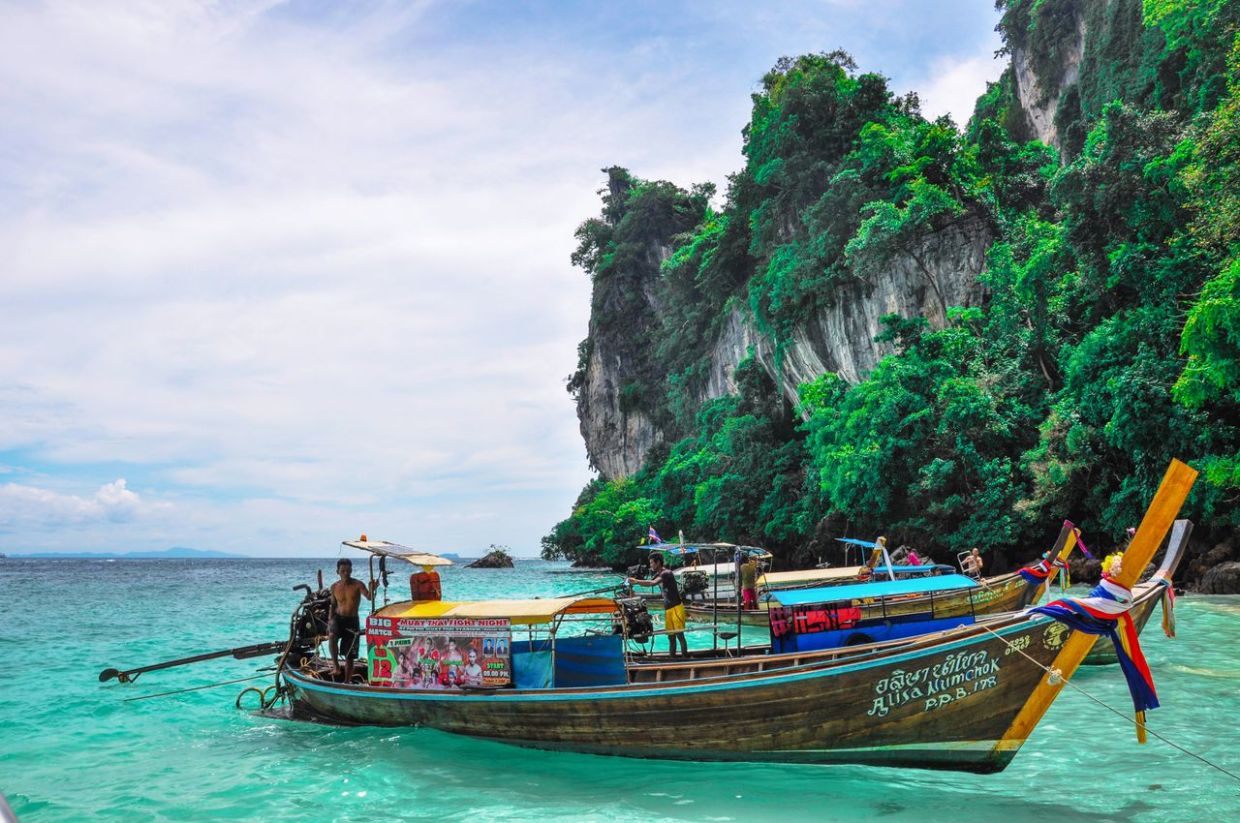
Thailand has fundamentally reshapen its tourism philosophy, marking a decisive break from the volume-driven strategy that built the kingdom into a global travel powerhouse. Rather than chasing ever-climbing arrival statistics, Southeast Asia's second-largest economy is now deliberately constraining visitor numbers in pursuit of a far more lucrative goal: attracting wealthier tourists who spend substantially more per visit. This strategic recalibration reflects both the opportunities and constraints facing Thailand's tourism-dependent economy in an increasingly complex geopolitical environment and competitive regional landscape.
The numerical shift tells the story plainly. Thailand is projecting approximately 33 million international arrivals for the current year—a figure that remains stubbornly below the nearly 40 million tourists who descended on Thai beaches, temples and night markets in 2019 before the pandemic upended global travel. Should actual arrivals dip beneath last year's 32.97 million figure, Thailand would experience consecutive annual declines in visitor numbers for the first time in at least three decades excluding the Covid-19 disruption. For a nation accustomed to measuring tourism success through relentlessly climbing arrival numbers, this represents a philosophical watershed moment.
The reasoning behind this counterintuitive policy adjustment stems partly from external pressures beyond Bangkok's control. Geopolitical tensions across Asia have created unpredictability in travel patterns, while Thailand faces intensifying competition from regional alternatives that offer comparable beach experiences, cultural attractions and hospitality services at increasingly competitive price points. Nithee Seeprae, Deputy Governor of the Tourism Authority of Thailand, articulated the government's reasoning in recent remarks, explaining that revenue per visitor matters far more than raw headcount. Rather than worrying about whether a specific arrival target gets met, officials are concentrating resources on cultivating tourism segments characterised by higher expenditures and longer stays.
The deliberate repositioning targets affluent demographic cohorts drawn by experiences Thai tourism officials believe command premium pricing: medical tourism and wellness retreats that appeal to affluent regional and international clientele seeking world-class healthcare or rejuvenation services; cultural and entertainment experiences including concerts and festivals that generate substantial ancillary spending; and sports-oriented tourism centred on golf, marathons and specialist athletic events. This represents a complete inversion of the traditional backpacker-focused strategy that once defined Thailand's place in global tourism markets. Marketing initiatives now emphasise luxury wellness experiences, with the Tourism Authority's digital presence heavily promoting Thailand as a destination where visitors can "heal and become a warmer, happier you"—language that signals a conscious departure from the budget-conscious traveller positioning of previous decades.
To validate this reorientation, the Tourism Authority has launched targeted marketing campaigns in affluent British cities including Oxford and Manchester, signalling where officials believe high-value customer acquisition should concentrate. The calibre of visitor matters more than aggregate numbers, the official position maintains, because wealthy tourists remain longer in country, patronise premium hospitality establishments, and generate superior economic returns across accommodation, dining, entertainment and experiential sectors. Current visitor spending averages approximately US$1,500 per trip, but Thai tourism planners aim to elevate this to roughly US$2,400—a 60 percent increase that would dramatically transform the sector's economic contribution despite lower total visitor volumes.
Paradoxically, despite this strategic reorientation, Thailand's tourism revenue projections for the coming year show only marginal improvement. Tourism receipts are forecast to reach THB1.55 trillion, representing merely a modest uptick from THB1.54 trillion in 2025. This disconnect between ambition and projected outcomes reflects the fundamental challenge Thailand faces: shifting an entrenched tourism ecosystem built entirely around processing massive visitor volumes toward a model premised on serving fewer, more selective clientele. The gap between strategic intention and economic reality highlights how difficult sectoral transformation proves in practice.
The clearest policy manifestation of Thailand's changed approach appears in its dramatic reversal regarding visa liberalisation measures. During the immediate post-pandemic recovery period, Thai authorities introduced visa facilitation policies specifically designed to stimulate tourism arrivals by lowering bureaucratic barriers to entry. Yet officials have subsequently unwound many of these measures, linking them to problematic outcomes: rises in illegal employment, visitor overstaying beyond authorised periods, and criminal incidents involving foreign nationals. This willingness to restrict access represents a fundamental recalibration of priorities—a government choosing regulatory control and perceived security over visitor volume growth.
Yet implementing this strategic pivot confronts Thailand with formidable structural obstacles rooted in decades of tourism infrastructure development. The entire hospitality ecosystem—hotels, restaurants, food markets, transport operators, dive shops, tour companies—evolved in response to and around processing enormous visitor quantities. Iconic destinations like Phuket and Chiang Mai were explicitly built as mass-tourism operations, their business models, workforce configurations and service capacities all calibrated around high-volume processing. Transitioning toward a lower-volume, higher-value tourism model requires not merely marketing repositioning but potentially painful contraction across many tourism-dependent communities and enterprises.
Thailand's competitive position has also deteriorated relative to regional alternatives. The kingdom no longer commands unassailable cost advantages that once made it the obvious choice for budget-conscious travellers. Vietnam and Indonesia have progressively strengthened their tourism offerings and developed more competitive pricing structures, eroding Thailand's traditional value-for-money positioning that sustained mass tourism for decades. Meanwhile, the Thai baht's strength in recent years, while beneficial for Thai savers and importers, has undermined tourism price competitiveness—a cruel irony given the government's simultaneous pursuit of wealthier visitors.
Thailand's historical trajectory illustrates the profound challenge this transformation represents. For approximately four decades, the kingdom methodically constructed one of the world's most extensive mass-tourism industries, leveraging currency advantages, international cultural exposure generated through films and television, and an unprecedented boom in Chinese tourist arrivals that peaked just before the pandemic devastated global travel. Rebuilding from that disruption, Thai planners attempted to recapture previous momentum, but changing global circumstances and regional competition rendered that impossible. The new strategy acknowledges this new reality while attempting to salvage tourism's economic contribution through fundamentally different means.
Tourists Authority officials insist the policy shift is not hostile toward budget travellers, merely realigned. Nithee reframed Thailand's luxury tourism vision in deliberately inclusive language, proposing that luxury itself encompasses "meaningful experiences and exclusive experiences" available beyond price-point definitions. This rhetorical repositioning attempts to square a difficult circle: simultaneously narrowing the tourist market while avoiding direct rejection of lower-income visitors. Whether this sophisticated semantic reframing can obscure the underlying strategic contraction remains uncertain, particularly for the many communities whose livelihoods depend on continuous, high-volume tourism flows.

