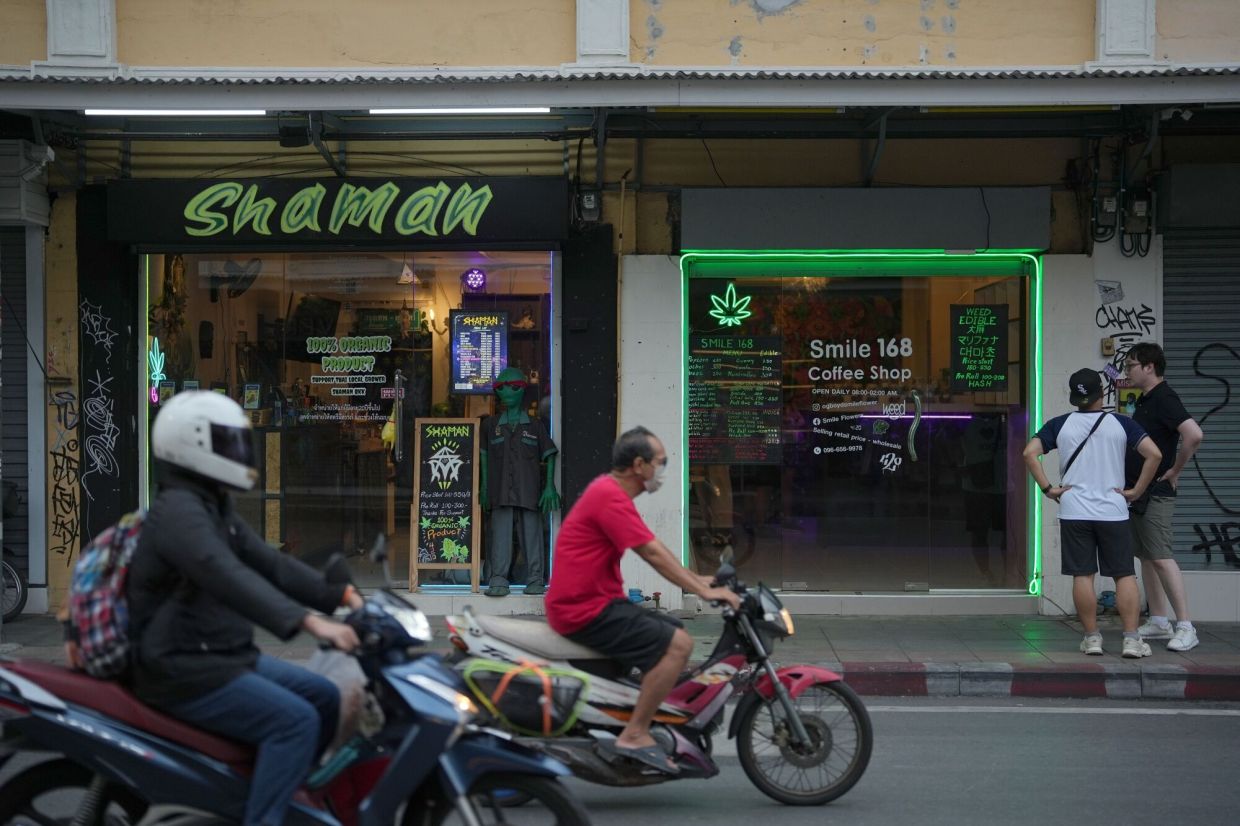
Thailand's Public Health Minister Pattana Promphat has accelerated efforts to regulate the country's cannabis industry through a comprehensive new legal framework, signalling a decisive shift towards medical-only consumption while simultaneously dismantling the flourishing recreational market. The draft Cannabis and Hemp Act, which has completed public consultation, represents the government's attempt to resolve mounting complications from Thailand's initial cannabis liberalisation, which occurred under a looser regulatory environment and has since spawned numerous unauthorised outlets and cross-border trafficking concerns.
The proposed legislation marks a fundamental departure from the current regulatory patchwork, which relies primarily on the Act on the protection and promotion of herbs and various ministerial decrees that govern sales, transfers, and extraction but notably lack provisions for controlling cultivation itself. By introducing cultivation-stage oversight, the new bill addresses what officials acknowledge as a critical regulatory gap that has allowed proliferation of cannabis production without adequate state supervision. The move reflects growing recognition within Thailand's Bhumjaithai Party-led government that initial liberalisation created unintended consequences requiring comprehensive legal correction rather than incremental adjustment.
Central to the enforcement strategy is a GPS-based registration system that has already catalogued all legitimately licensed outlets on an online database accessible to inspectors and the public. This technological approach enables rapid identification of non-compliant shops, as any cannabis retailer not appearing on the official registry is automatically considered illegal and subject to immediate enforcement action. The system also tracks licence expiration dates with precision, allowing authorities to maintain current oversight without manual record-keeping. This represents a significant departure from Thailand's traditional regulatory methods and demonstrates administrative sophistication in addressing a complex emerging industry.
The scale of illegal operations represents perhaps the most pressing enforcement challenge. Since 2023, approximately 18,000 outlets received initial licenses, but roughly one-third—around 6,000 establishments—saw their authorisations expire at the end of that year. Of these expiring operations, only about 1,500 bothered to renew their permits, suggesting that thousands continued operating in legal limbo. The licensing structure itself compounds this problem, with each permit valid for three calendar years, creating predictable waves of expiration. Officials project approximately 6,000 additional outlets will require renewal during 2026 and 2027, potentially generating another enforcement surge unless compliance improves markedly.
The illicit export problem has prompted particular ministerial concern and coordinated response involving multiple agencies. Although cannabis remains unscheduled under Thai law, it retains narcotics status in numerous destination countries, creating legal jeopardy for Thai cannabis exported without proper authorisation. Past incidents involving fraudulent licenses and illegal bulk shipments have prompted the Department of Thai Traditional and Alternative Medicine to shift entirely to electronic licensing, eliminating physical documents that could be forged or misused. However, Pattana acknowledged that despite these precautions, large-volume contraband may occasionally evade detection, particularly at borders and international airports where inspections face capacity constraints.
The proposed amended regulations would impose substantially tighter controls on legitimate cannabis dispensing operations. Licensed outlets would be required to reconfigure themselves as medical facilities with on-site doctors supervising all cannabis transactions to ensure supplies reach only patients with genuine medical requirements. This transformation is designed to prevent the current practice of repeated supplies to individual consumers, which has become a de facto recreational distribution mechanism despite the formally medical framework. Any pattern suggesting bulk accumulation or potential resale would trigger detailed examination and potential criminal referral, creating personal liability for operating personnel.
Enforcement capacity has been substantially expanded to support this intensified regulatory regime. The Ministry of Public Health has mobilised tens of thousands of authorised inspectors, including police officers, local administrative officials, and departmental staff, to conduct compliance checks and execute arrests at non-registered outlets. This represents a significant mobilisation of government resources dedicated specifically to cannabis enforcement, reflecting the administration's determination to prevent further market expansion outside the medical framework. The deployment of such extensive personnel suggests Thailand recognises that technological systems alone cannot manage enforcement of this scope without substantial human resources.
The legislative timeline remains uncertain despite substantial preliminary work. While the draft has completed public consultation, it failed to reach parliamentary deliberation in the current legislative session, indicating either procedural obstacles or competing legislative priorities. Pattana has not provided a revised timeline for parliamentary presentation, leaving uncertainty about when the comprehensive framework might take legal effect. This delay could permit continued expansion of both legitimate operations seeking to establish market position and illicit outlets attempting to consolidate customer bases before stricter rules take effect.
The relationship between cannabis control and broader narcotics policy remains unresolved and potentially contentious. Pattana noted that if cannabis were reclassified as a controlled narcotic—a possibility suggested by some government figures—such rescheduling would fall under the Ministry of Justice's narcotics law jurisdiction rather than the Public Health framework. This institutional division reflects Thailand's historical approach of compartmentalising drug policy across multiple agencies, though such fragmentation has previously complicated enforcement coordination. The possibility of cannabis reclassification remains politically live, as some factions view medical-only frameworks as insufficient safeguards against recreational normalisation.
For Malaysia and other Southeast Asian nations monitoring Thailand's regulatory evolution, the Thai experience demonstrates both the opportunities and complications inherent in cannabis liberalisation. Thailand's initial permissive approach generated rapid market development but revealed inadequate enforcement infrastructure and persistent regulatory gaps, particularly regarding cultivation oversight and licence administration. The corrective legislative framework now being advanced reflects lessons learned through unintended consequences, offering neighbouring countries cautionary insights about necessary preconditions for functional cannabis regulation. Malaysia's own cannabis regulatory discussions might benefit from observing how Thailand addresses cultivation control, inter-agency coordination, and the maintenance of medical-only parameters amid market pressures toward recreational normalisation.
The implementation timeline will prove critical to the framework's effectiveness. If the new Cannabis and Hemp Act reaches parliament and gains approval during 2026, it could reshape Thailand's cannabis sector within months through cultivation controls and accelerated outlet closures. Conversely, extended delays permit continued regulatory drift, potentially entrenching illegal operations and complicating eventual enforcement. The Bhumjaithai Party's continued commitment to medical-only policy and government backing for the comprehensive legal reform suggest institutional determination, though competing legislative priorities and potential political opposition could extend timelines unpredictably.

