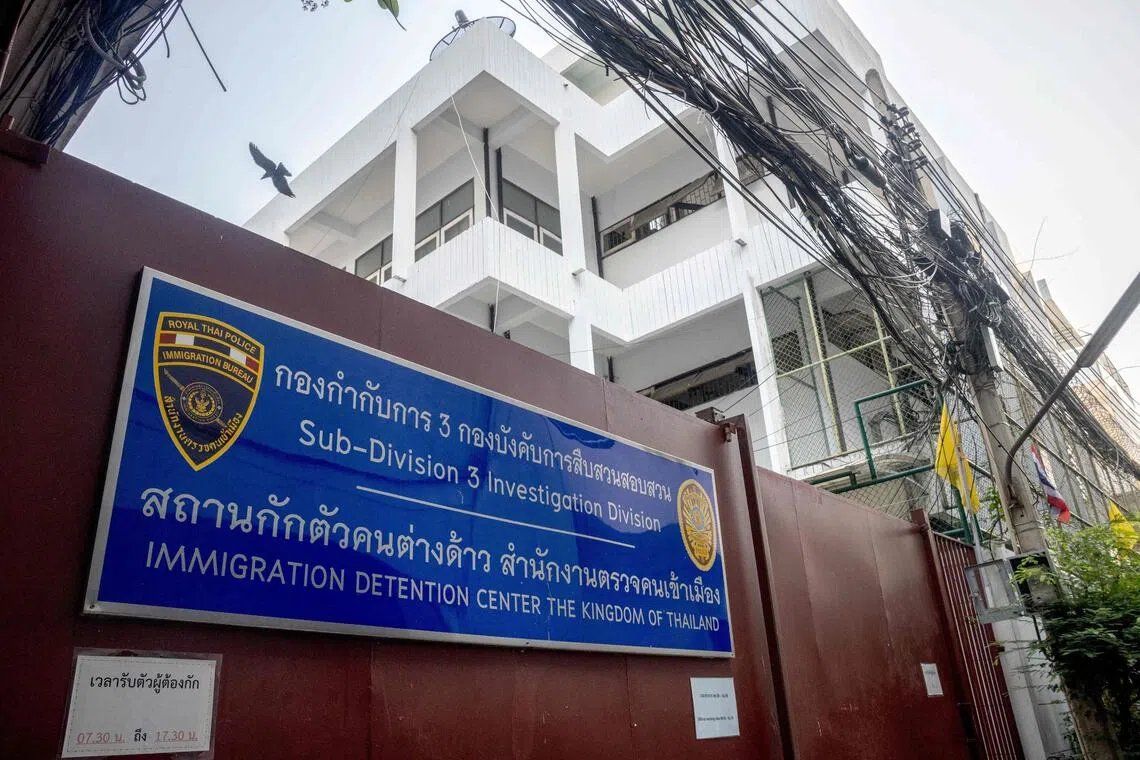
Thailand has formalized a comprehensive framework for deporting foreign nationals who breach Thai law or undermine public order, signalling the government's determination to manage the country's immigration challenges more efficiently. Prime Minister Anutin Charnvirakul signed the Prime Minister's Office Regulation on Deportation B.E. 2569 on August 26, with the measure taking legal effect two days later following publication in the Royal Gazette. The regulation establishes streamlined procedures designed to accelerate deportation decisions while ensuring consistency across government agencies involved in the removal process.
Thailand's approach reflects a delicate balancing act between maintaining its reputation as an open economy that welcomes legitimate visitors and residents, and protecting domestic stability and rule of law. The regulation's preamble explicitly acknowledges that Thailand remains hospitable to foreigners arriving lawfully for tourism, residence, work, or business purposes. However, officials grew concerned about a minority of foreign nationals who exploit Thailand's openness by violating criminal statutes, engaging in unlawful employment, running illegal enterprises, or entering the country through clandestine means. This regulation provides the institutional machinery to address such cases swiftly and systematically.
The deportation framework targets six specific categories of offences that trigger ministerial review for removal orders. These include unlawful entry or overstaying beyond immigration permit validity, unauthorized employment that violates foreign labour regulations, illegal business operations contravening the Foreign Business Act, forgery of official documents, and serious crimes carrying sentences of at least five years imprisonment. Additionally, individuals who serve as principals, instigators, or supporters of these violations become eligible for deportation. This expansive definition recognizes that criminal conduct often involves networks and conspiracies, not merely direct perpetrators, and aims to disrupt organized wrongdoing by removing all participants.
A critical innovation in the regulation concerns the Interior Ministry's enhanced coordination with the Department of Corrections. Previously, information gaps between prison authorities and immigration officials sometimes delayed deportation processing. The new system mandates that correctional officials notify the Interior Ministry's permanent secretary at least 15 days before a foreign prisoner's release, providing detailed case records and identifying information. This advance notice enables the Interior Minister to evaluate deportation eligibility and issue orders promptly upon release, eliminating bureaucratic delays that previously allowed convicted foreigners to remain temporarily in Thailand after sentence completion.
The regulation also addresses scenarios where courts suspend sentences or impose fines rather than immediate imprisonment. In such cases, the Office of the Judiciary must immediately inform the Interior Ministry, triggering the same expedited review process. This provision prevents gaps in enforcement when convicted foreigners avoid prison through suspended sentences or negotiated plea agreements. Thai policymakers recognized that incomplete coordination across judicial, correctional, and immigration authorities had historically allowed some foreign offenders to slip through administrative cracks, and this regulation systematically closes those loopholes.
Deportation decisions are not implemented unilaterally without consideration of international humanitarian principles. The regulation incorporates Thailand's treaty obligations and acknowledges legitimate humanitarian concerns about sending individuals to countries where they might face torture, cruel treatment, enforced disappearance, or violations of human dignity. Other nations or accredited international organizations may submit requests through diplomatic channels within seven days of a deportation order to receive the foreign national in their jurisdiction or arrange third-country resettlement. Such requests must be substantiated by credible evidence of safety risks and include the requesting party's commitment to cover all transfer costs.
The deportation process prioritizes returning individuals to their nationality. When nationality cannot be established definitively, authorities may send the person to the country where they last resided before entering Thailand. This provision recognizes practical realities in Southeast Asia, where migration often involves individuals from multiple nations within the region and determining precise nationality sometimes requires investigation. By permitting deportation to the last country of residence when necessary, the regulation maintains practical flexibility while establishing clear evidentiary standards.
International transfers to third countries operate under strict timeframes designed to prevent indefinite detention or limbo situations. When another country accepts responsibility for receiving a deportee, authorities have 30 days to complete the transfer. The Interior Minister may authorize up to two extensions of 30 days each, allowing for logistical complications or diplomatic negotiations. If the transfer cannot materialize within the extended timeline, Thailand reverts to standard repatriation procedures. This safeguard prevents scenarios where foreign nations or international organizations request custody of deportees but then delay indefinitely, leaving Thailand bearing the burden of indefinite detention.
The regulation assigns decision-making authority to the Interior Minister, who operates within parameters established by Cabinet resolutions and applicable law. Disputes concerning implementation are referred to the minister, whose determination becomes final and binding. This hierarchical structure creates accountability while centralizing authority to prevent inconsistent application across different provincial immigration offices. For Malaysia and other regional governments wrestling with similar immigration enforcement challenges, Thailand's regulatory approach offers instructive lessons in balancing humanitarian obligations against sovereignty and public order priorities. The framework demonstrates how detailed procedures and inter-agency coordination can improve enforcement effectiveness without necessarily becoming draconian.
For foreign nationals residing in Thailand, particularly Malaysian expatriates and entrepreneurs operating in the kingdom, the regulation underscores the importance of maintaining scrupulous legal compliance. Legitimate visitors and workers face minimal risk under the new framework, which specifically targets those who violate laws or engage in conduct undermining public welfare. However, the streamlined procedures mean that foreign nationals convicted of qualifying offences will face faster deportation processing than under previous administrative arrangements. Southeast Asian nations increasingly recognize that transparent, efficiency-focused immigration enforcement enhances investor confidence and business predictability by reducing opportunities for corruption and ensuring consistent application of rules across all foreign nationals.
The regulation represents Thailand's effort to modernize immigration administration without resorting to draconian measures that might damage its reputation as a major tourist and business destination. By focusing on clear legal violations and establishing humane humanitarian safeguards, the framework attempts to satisfy domestic constituencies demanding stronger law enforcement while preserving Thailand's international standing and commitment to human rights principles. Regional observers expect similar regulatory developments across Southeast Asia as governments balance competing pressures for tighter border management and continued economic openness.

