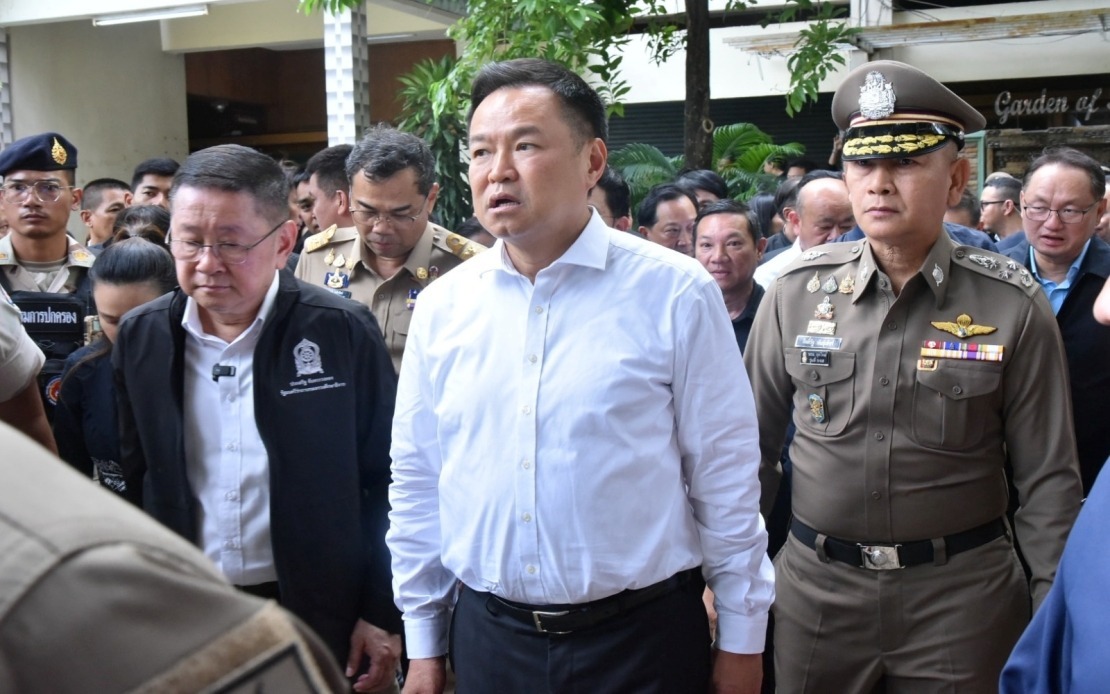
Thailand's government is moving to impose stricter firearms regulations following a devastating shooting at a Bangkok-area school that claimed seven lives, marking a significant policy response to one of the country's deadliest school violence incidents. Prime Minister Anutin Charnvirakul, who doubles as interior minister, announced the legislative push on Friday after visiting Debsirin Nonthaburi School in the immediate aftermath of the attack, signalling the administration's intent to address public safety concerns amid growing alarm over civilian access to weapons.
The incident unfolded on Friday morning around 10 am when a 14-year-old student at the school opened fire on campus, killing three teachers and three fellow students in what authorities described as a rampage. The suspected shooter was subsequently discovered dead at the school premises. In addition to those killed, twenty-one other individuals sustained injuries during the violence and were transported to nearby hospitals, with eight of the wounded reported to be in critical condition. The scale of casualties and the involvement of a minor perpetrator have intensified scrutiny on how Thailand regulates firearm ownership and school security protocols.
Charnvirakul outlined a framework for the proposed restrictions while speaking to reporters at the school, emphasizing that ordinary civilians without government duties would face significantly tighter rules governing firearm possession and use. He indicated that the revised legislation would fundamentally reshape the legal landscape by limiting gun-carrying privileges almost exclusively to on-duty government officials, thereby substantially narrowing the category of people permitted to transport weapons in public spaces. The prime minister acknowledged he would need to coordinate with Thailand's national police leadership to develop the specifics of the new regulatory framework, suggesting that law enforcement agencies would play a central role in implementation strategy.
Under the current Thai legal framework, civilian possession of firearms outside residential settings is already technically prohibited, yet Charnvirakul's statements suggest enforcement gaps and loopholes may exist that require legislative closure. His announcement that police would henceforth conduct systematic firearm checks at all checkpoint operations, with offenders facing prosecution, indicates concern that existing regulations may not be uniformly applied across the country. This enforcement-focused component of the initiative addresses a potential implementation gap between existing law and practical policing on the ground, a common challenge in Southeast Asian jurisdictions where regulatory consistency can vary significantly between urban and rural areas or across different police jurisdictions.
The prime minister's response also touched on school security measures, though he notably resisted suggestions that schools adopt airport-style screening infrastructure. Charnvirakul directed the Education Ministry to implement reassurance measures for parents while cautiously rejecting the notion of installing X-ray machines or similar technologies at school entrances, characterizing such approaches as abnormal for Thai educational institutions. This measured stance reflects a recognition that security theatre without genuine protective infrastructure might generate public anxiety rather than confidence, particularly in a Southeast Asian context where educational institutions traditionally function as open community spaces rather than fortified facilities.
For Malaysia and other regional nations, Thailand's policy response carries instructive implications regarding how governments balance civil liberties with public safety in response to mass violence. Thailand's approach focuses on tightening civilian access rather than implementing perimeter security measures, representing a different strategic choice than some global counterparts have made. This legislative pathway may provide a template for regional consideration, particularly as Southeast Asian countries grapple with occasional incidents of firearms violence and seek policy responses that avoid militarizing school environments while addressing genuine public health concerns.
The incident has reignited debate across Thailand about whether existing firearms regulations adequately protect citizens, particularly in institutional settings like schools where young people congregate in large numbers. The fact that a teenager acquired and deployed a firearm suggests either a breakdown in age-verification enforcement mechanisms or access through unregistered or illegally obtained weapons channels. These possibilities indicate that Thailand's regulatory challenges may extend beyond formal licensing frameworks to encompass black-market weapons circulation and inadequate enforcement of age-related purchase prohibitions, issues that similarly affect multiple Southeast Asian jurisdictions struggling with informal security sector activities.
Charnvirakul's timeline for developing and implementing the new legislation remains unspecified, though his immediate public commitment signals political pressure for rapid action. Thai lawmakers may face pressure to introduce emergency measures or expedited parliamentary procedures given public concern following the shooting, potentially accelerating the normal legislative process. Regional security analysts note that rapid policy responses to violent incidents sometimes generate unintended consequences if not carefully designed, making the consultation process between interior ministry officials, law enforcement, and legislative drafters a critical juncture for developing effective regulation.
The incident also highlights questions about threat detection and intervention in schools, as a 14-year-old perpetrator's access to firearms and apparent capacity to carry them to school without detection suggests possible failures in adult supervision, school security protocols, or community safeguarding mechanisms. While the prime minister's focus on civilian firearm restrictions addresses part of the causal chain, comprehensive school safety likely requires parallel initiatives addressing mental health screening, staff training, and threat assessment protocols—areas where Thai schools may benefit from technical assistance and best practice sharing with regional neighbours.
Thailand's response underscores how mass violence incidents catalyze policy innovation in the region, with governments responding to public demand for action even when data suggests specific interventions' effectiveness remains uncertain. The emphasis on stricter civilian restrictions rather than school fortification represents a policy choice that prioritizes reducing community access to weapons over transforming educational environments into security-conscious spaces, an orientation distinct from approaches adopted in some Western nations. As Southeast Asia continues modernizing and urbanizing, firearms regulation will likely remain a contentious policy area requiring governments to navigate public safety imperatives against citizen expectations regarding personal freedom and institutional accessibility.

