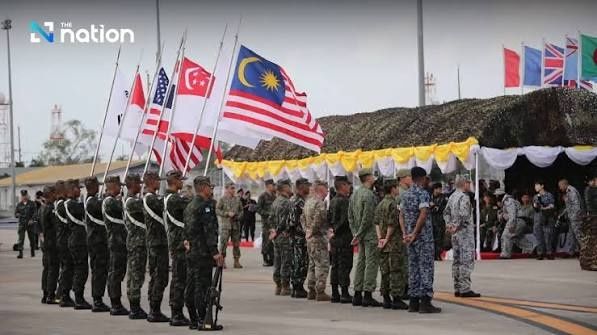
Thailand is positioning military cooperation as a strategic asset in upcoming trade negotiations with the Trump administration, signalling that punitive tariffs could force a recalibration of the countries' long-standing security relationship. Officials in Bangkok plan to present this position as part of a counterproposal when reciprocal trade talks resume later this month, with the implicit message that economic harm could diminish Thailand's commitment to joint military activities that have anchored American strategic presence in Asia for decades.
The Thai approach reflects a calculated attempt to elevate negotiations beyond traditional tariff discussions by invoking the Treaty of Amity and the broader defence partnership that has defined bilateral relations since the Cold War. Commerce Minister Suphajee Suthumpun has already begun articulating this argument publicly, contending that Thailand's strategic importance and substantial investments in the United States warrant preferential trade treatment. This whole-of-government effort, coordinated across the foreign ministry, defence ministry, and commercial agencies, aims to convince Washington that maintaining strong security ties depends partly on reciprocal economic fairness.
At stake for Thailand is a 12.5 per cent tariff imposed under Section 301, a US trade statute that Washington invokes to address what it deems unfair trading practices. Thailand, which recorded a US$51.4 billion trade surplus with America last year, stands among dozens of nations scrambling to secure better terms as the Trump administration intensifies investigations into global manufacturing overcapacity and trade imbalances. The tariff regime threatens to erode Thailand's export competitiveness precisely when regional economic growth faces headwinds from broader geopolitical tensions and shifting supply chains.
In response, Bangkok has tabled a series of concessions designed to address American concerns about market access and labour standards. The Thai government has pledged to eliminate tariffs on imported beef, lamb, and alcoholic beverages while adopting US standards for these products, moves intended to demonstrate goodwill and create opening for reciprocal trade advantages. Additionally, Thailand has committed to accelerating legislation that bans imports of goods manufactured using forced labour, a priority for the Biden and Trump administrations alike in addressing supply chain ethics and worker protections.
The introduction of military considerations into trade diplomacy marks a departure from typical negotiating patterns, though Thailand's invocation of its security alliance carries substantial weight. As one of only two US treaty allies in Southeast Asia—the other being the Philippines—Thailand hosts critical American military infrastructure and participates in exercises that underscore Washington's commitment to regional stability amid Chinese strategic expansion. This positioning is not merely rhetorical; it reflects genuine interdependencies that extend beyond commerce into questions of regional balance and American credibility as a security partner.
Cobra Gold, the centerpiece of Thai-American military cooperation, represents this strategic architecture in practice. The exercise, which the United States describes as the largest annual multinational drill of its kind across mainland Asia, draws approximately 8,000 personnel from 30 countries annually and serves as a visible demonstration of American military engagement and commitment to regional partners. For Washington, maintaining robust participation signals resolve in an Indo-Pacific region where China has steadily expanded military capabilities and geopolitical influence. For Thailand, the exercises validate its strategic positioning and provide valuable interoperability training that strengthens national defence capacity.
Thailand's willingness to reference potential constraints on Cobra Gold and other defence activities implicitly acknowledges that military cooperation, while important, remains conditional on broader reciprocal benefits. The statement carries historical resonance; Washington previously scaled back Cobra Gold and suspended several military engagements following Thailand's 2014 coup, demonstrating that political developments and strategic disagreements can interrupt even durable alliances. The subsequent gradual rebuilding of defence ties shows that both nations prefer sustained cooperation but also that such relationships require maintenance and mutual accommodation.
Defence Ministry spokesman Surasant Kongsiri has offered ambiguous public commentary on the trade leverage strategy, neither confirming nor denying the reported position while suggesting that negotiations are more likely to emphasize enhanced cooperation. This circumspection reflects genuine complexity; Thai military leadership may harbour reservations about explicitly conditioning defence ties on trade outcomes, viewing such linkages as potentially destabilizing to the alliance's credibility and durability. Pentagon officials have similarly avoided direct engagement with speculation about military-trade connections, though Undersecretary of Defense Elbridge Colby recently reaffirmed the alliance's strength during a visit to Bangkok.
Thailand's negotiating posture must navigate significant constraints. The kingdom depends on American security guarantees amid regional uncertainties and cannot afford to alienate Washington through aggressive tactics. Simultaneously, Thai economic interests demand meaningful trade relief, and the government faces domestic pressure to secure outcomes that protect exporters and maintain growth. This tension explains the carefully calibrated language in Thai proposals—broadly worded references to reconsideration rather than explicit threats, coupled with specific concessions on tariffs and labour standards that demonstrate seriousness without appearing coercive.
For Malaysia and other Southeast Asian nations, Thailand's approach offers instructive parallels and contrasts. Like Thailand, several regional economies have recorded substantial trade surpluses with the United States and face elevated tariffs under the Trump administration's trade framework. However, not all Southeast Asian countries possess equivalent security relationships that could serve as negotiating leverage. Malaysia, Indonesia, and Vietnam operate with more ambiguous strategic postures, lacking formal alliance structures comparable to Thailand's treaty arrangements. This asymmetry underscores how Thailand's unique position as a long-standing US ally provides both opportunities and obligations in navigating contemporary trade disputes.
The intersection of military and economic negotiations also reflects broader structural shifts in how great powers construct relationships with regional partners. Traditionally, defence and trade have operated through separate diplomatic channels with distinct logics and constituencies. Yet as competition intensifies, particularly between the United States and China, strategic partners increasingly find that all dimensions of bilateral relationships—military, commercial, and political—form interconnected wholes. Thailand's negotiating strategy acknowledges this reality by making explicit what analysts have long observed implicitly: that security partnerships carry economic dividends and that trade arrangements reflect underlying strategic calculations.
Looking forward, the success of Thailand's approach will hinge partly on American receptiveness to arguments about alliance maintenance and regional stability, and partly on whether Thai concessions on tariffs, labour standards, and market access prove sufficiently attractive to offset broader American concerns about trade deficits. The Trump administration's emphasis on reciprocity suggests that appeals to strategic partnership, while important, will not substitute for tangible commercial adjustments. Thailand's targeting of a 19 per cent tariff ceiling, discussed under an earlier negotiating framework, represents a measured demand that acknowledges American interests while seeking meaningful relief from current levels.

